
How African Print Dresses Bring Cultural Expression into Modern Everyday Style
PAGE
By PAGE Editor
A dress can do more than complete an outfit. Through colour, pattern and shape, it can reflect personal taste, create a connection with heritage and bring energy to everyday dressing. African print dresses offer plenty of room for that expression, whether the occasion is a relaxed brunch, a holiday dinner or a family celebration.
Their appeal also lies in their versatility. A patterned midi dress can feel casual with flat sandals, polished with a tailored jacket or festive with statement earrings. The same garment can take on several different moods through a few thoughtful styling choices.
Making these dresses part of a modern wardrobe begins with choosing prints you enjoy, finding silhouettes that feel comfortable and understanding the difference between traditional textiles and contemporary designs inspired by them.
The Beauty and Variety of African Prints
African prints represent a wide range of visual traditions. Some feature bright, contrasting colours and large repeating motifs. Others use restrained palettes, fine lines or geometric arrangements. This variety makes it possible to find a dress that suits almost any approach to personal style.
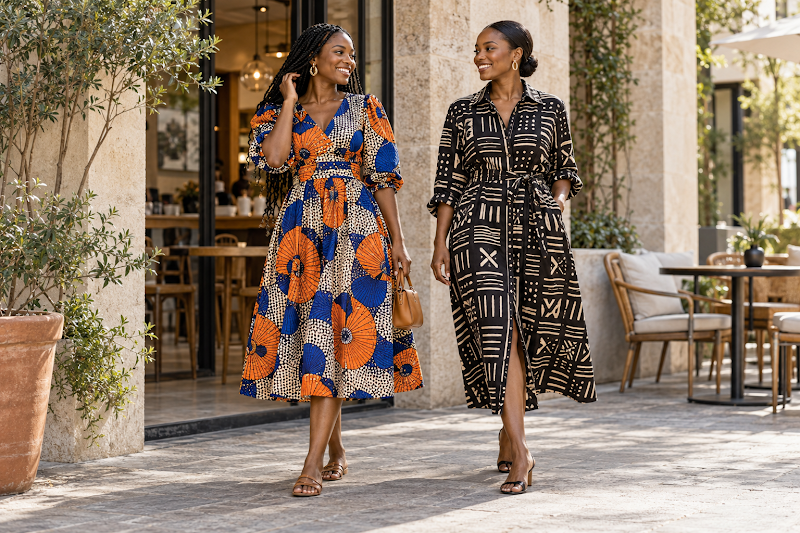
Ankara is often associated with expressive patterns and lively colour combinations. Circular motifs, botanical forms and abstract shapes can give a simple dress a strong identity. A straightforward silhouette allows these details to stand out, while a fuller skirt introduces movement that changes how the pattern appears as you walk.
Kente-inspired patterns offer a different visual rhythm. Their geometric arrangements and contrasting blocks of colour can create a structured, graphic effect. Traditional Kente is woven, so a printed dress inspired by its appearance should be distinguished from a garment made from woven Kente cloth.
Mudcloth-inspired designs often feature repeated marks, linear details and contrasting shapes. Black, cream, brown and earthy shades can make these patterns particularly easy to coordinate with everyday accessories. Contemporary versions may also introduce brighter colours or larger motifs.
These references should not be treated as interchangeable. Appreciating their differences makes shopping more thoughtful and encourages attention to the origins, materials and craftsmanship behind a garment.
Choosing a Silhouette That Works for You
The print may attract your attention first, but the cut often determines how frequently you wear a dress. A useful piece should feel comfortable when you sit, walk and move through your day.
Shirt dresses are an approachable option for everyday wear. Their familiar collars and button-front designs give bold patterns an easy, practical setting. Wear one loose for a relaxed outline, or use a belt to create more definition at the waist.
Wrap dresses introduce diagonal lines and an adjustable feel, depending on their construction. They can work well for casual lunches and evening gatherings, although it is worth checking how securely the neckline and skirt overlap when moving.
An A-line dress offers room through the skirt without necessarily creating a dramatic shape. A straighter silhouette presents the print across a more continuous surface, while a gathered or pleated skirt breaks it into shifting sections.
When looking through Bynelo’s collection of African print dresses, consider how each silhouette could fit into your existing wardrobe. Being able to picture a dress with your usual shoes and layers is a useful sign that it could become a regularly worn piece.
Styling African Print Dresses for Everyday Wear
Everyday styling does not need to be complicated. Start with the dress, then add pieces that suit the activities ahead.
A printed midi dress with clean trainers and a crossbody bag works well for errands, casual meetings or an afternoon out. Flat leather sandals create a lighter look, while loafers add a slightly more polished finish.
Layers can make a noticeable difference. A denim jacket gives a colourful dress a relaxed feel. A plain cardigan softens the outfit, and a simple overshirt can provide coverage without adding much formality.
Choose the length of the layer carefully. A cropped jacket can sit neatly above a fuller skirt, while a longer cardigan may work comfortably over a straighter dress. Try the pieces together to see how their proportions interact.
Accessories can remain simple. Small earrings, a practical bag and comfortable shoes are often enough when the dress already contains several colours or a detailed pattern.
Creating an Easy Brunch Look
Brunch is a good opportunity to wear something expressive without needing a particularly formal outfit. A gently flared midi dress or relaxed shirt dress offers a comfortable starting point.
For a colourful Ankara-inspired pattern, try tan sandals and a woven bag. These accessories introduce texture while allowing the print to remain prominent. A pair of hoops or simple sculptural earrings can complete the look.
A black-and-cream Mudcloth-inspired dress creates a different mood. Black loafers and a compact handbag give it a crisp finish, while brown sandals make the outfit feel warmer and more relaxed.
If you enjoy colour, select an accessory that repeats a smaller shade within the print. Green earrings might pick up a subtle green detail, or a rust-coloured bag could connect with warm tones in the fabric.
There is no need for every accessory to match. A few visual connections usually feel more natural than coordinating each item exactly.
Taking Printed Dresses on Holiday
A versatile dress can be one of the most useful items in a holiday suitcase. It can cover daytime outings and evening plans with only a small change of accessories.
For sightseeing, choose a hem that stays clear of the ground and a fit that allows easy movement. Secure walking sandals, a crossbody bag and a lightweight layer can make the outfit practical for a full day outside.
Check the fabric composition before packing. A dress that looks light in a photograph may still feel warm, and different materials vary in how they crease, dry and respond to washing.
For dinner, exchange the daytime bag for a smaller one and add earrings or dressier sandals. A midi or maxi dress with an interesting print often needs very little else.
Colour coordination helps reduce packing. If a dress includes cream, navy or brown, it may work with the same shoes and bag you plan to wear with other outfits.
Dressing for Celebrations and Special Occasions
African print dresses can bring colour and character to birthdays, weddings, anniversaries and family gatherings. The level of formality comes from the combination of fabric, fit, construction and accessories.
A defined waist and full skirt can feel festive for a daytime celebration. A longer silhouette, shaped neckline or dramatic sleeve may suit an evening event. Strong geometric patterns can also create visual impact without elaborate detailing.
Pay attention to how the pattern sits across the garment. Seams, pleats and gathers can interrupt or redirect its lines. Sometimes that creates an appealing effect; in other designs, a more continuous placement may better suit the look you want.
For weddings and cultural celebrations, follow the hosts’ guidance on dress codes, colours and coverage. The setting and customs should inform the final choice.
Comfort deserves equal consideration. Shoes that allow you to stand, walk and dance will help you enjoy the occasion. A secure low heel or elegant flat can look just as considered as a higher heel.
Working with Colour, Scale and Accessories
Colour is one of the most enjoyable parts of styling a printed dress. It can also provide a simple starting point when deciding what to wear with it.
For a quieter outfit, choose accessories in the print’s background colour. For a brighter result, repeat one of its accent shades. A dress containing blue, mustard and cream might work with a cream bag for a softer effect or mustard shoes for a more expressive finish.
Print scale changes the overall appearance too. Large motifs create clear areas of interest, while smaller patterns can appear more like texture from a distance. Try different scales rather than assuming one is right for a particular body shape.
Jewellery should sit comfortably alongside the neckline and sleeves. An elaborate neckline may work best with earrings alone. A simpler neckline leaves more space for a necklace.
Pattern mixing is another possibility. Two prints can work together when they share a colour but differ in scale. A small patterned scarf, for example, may sit comfortably alongside a larger dress motif. Experimenting in front of a mirror is more useful than following rigid rules.
Making a Favourite Dress Last
A well-used wardrobe depends on care as much as styling. Follow the garment’s own washing and ironing instructions, since printed dresses can be made from many different fibres and finishes.
Small alterations may improve how a piece fits into your routine. Shortening a hem, adjusting a sleeve or securing a neckline can make a dress easier to wear.
Over time, familiar combinations develop naturally. You learn which jacket fits over the sleeves, which sandals suit the hem and which earrings bring forward a favourite colour.
That familiarity is what turns an eye-catching dress into a wardrobe staple. With thoughtful styling, African print dresses can become part of ordinary days as comfortably as special celebrations, bringing personal expression to both.
HOW DO YOU FEEL ABOUT FASHION?
COMMENT OR TAKE OUR PAGE READER SURVEY
Featured



Flyknit and leather sit at opposite ends of the handbag world, and buyers get pushed into picking a side too early. One sounds modern and light. The other sounds premium and safe.