
How Baby Travel Products Can Be Designed for Different Markets and Lifestyles
PAGE
By PAGE Editor
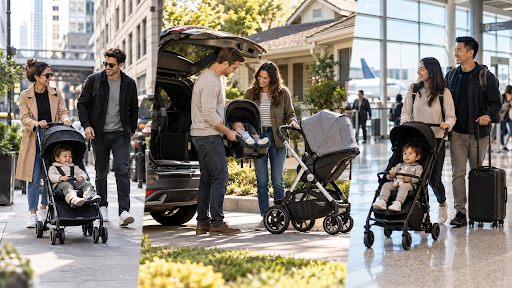
Baby travel products are used in many different environments, from crowded city streets and shopping centers to suburban neighborhoods and family road trips. Because parents have different routines, storage spaces, climates, and travel habits, one stroller or car seat design may not suit every market equally well.
For baby brands, wholesalers, and distributors, understanding these differences is an important part of product planning. Working with a suitable car seat and stroller manufacturer can help businesses explore products that fit the needs of their intended customers, but successful product selection should begin with a clear understanding of how and where the product will actually be used.
Instead of choosing products based only on appearance or price, businesses can look at lifestyle, environment, transportation habits, storage limitations, climate, and customer expectations. These factors can help create a product range that feels more relevant to a specific market.
Urban Families Often Need Compact Solutions
Parents living in busy cities may face limited storage space, crowded sidewalks, elevators, apartment buildings, and frequent public transportation.
For these customers, a stroller that is easy to fold and manage can be especially useful.
A very large stroller may provide extra storage and comfort, but it can also be difficult to carry into an apartment, place inside a small elevator, or move through narrow shop entrances.
Compact designs can be more suitable for this type of lifestyle.
However, compact should not mean uncomfortable or impractical. The product still needs to provide useful seating, dependable construction, easy steering, and appropriate storage.
Brands targeting urban customers should think carefully about the balance between size and everyday functionality.
Suburban Families May Have Different Priorities
Families living in suburban areas may rely more heavily on personal vehicles.
This can change the way they use baby travel products.
A stroller may frequently be folded and placed into the trunk of a car. Parents may also move between car travel, shopping, parks, and family activities throughout the day.
For these customers, folded size, easy loading, and travel-system compatibility can become important considerations.
Storage baskets may also be valued because parents often carry extra baby items during longer outings.
A product designed for this lifestyle does not necessarily need to be the smallest model available. Instead, it should be easy to handle during repeated transitions between the vehicle and walking.
Understanding these daily routines can help brands choose features that provide genuine value.
Travel-Focused Families May Prefer Lightweight Designs
Some families travel frequently for holidays, family visits, or short trips.
For them, weight and portability may become important factors.
A stroller that is practical for everyday neighborhood use may feel inconvenient when it needs to be carried through a transport terminal, moved between vehicles, or stored with luggage.
Lightweight designs can make travel easier, but businesses still need to consider stability, durability, and ease of use.
A useful travel stroller should not simply be light. It should also fold efficiently and be manageable when parents are carrying other bags or looking after more than one child.
Product designers and buyers should therefore consider the complete travel experience rather than focusing on weight alone.
Climate Can Influence Material Choices
Climate is another factor that may affect customer preferences.
Families living in warm regions may pay close attention to airflow, canopy coverage, and fabric comfort. Parents in colder environments may have different expectations for weather protection and accessories.
Material selection can also affect how a product feels during regular use.
For example, fabrics that look attractive may not always be ideal for every climate. Businesses should think about breathability, cleaning, durability, and how materials perform under normal environmental conditions.
Canopy design is also worth considering.
A practical canopy can help provide shade and make the stroller more comfortable during outdoor use.
Brands selling in different regions may therefore benefit from reviewing whether the same fabric and accessory combination is suitable for every market.
Road and Walking Conditions Matter
Strollers are not always used on perfectly smooth surfaces.
The condition of sidewalks, paths, shopping areas, and public spaces can vary considerably between locations.
Some parents mainly use a stroller inside malls and on smooth city pavement. Others may regularly encounter uneven paths, small bumps, grass, or older sidewalks.
Wheel size, suspension, frame balance, and steering can influence how the stroller performs in these situations.
Businesses should think about the typical environment of their target customer.
A model designed mainly for smooth indoor surfaces may not provide the same experience on rougher outdoor paths.
This does not mean every stroller needs large wheels or heavy suspension. It means features should match the expected use of the product.
Storage Habits Differ Between Homes
Not every family has a large garage or dedicated storage area.
Some parents keep a stroller in a hallway, closet, apartment corner, or vehicle trunk.
This makes folded dimensions an important part of product planning.
Brands should consider how much space their customers are likely to have.
A product may offer many attractive features, but if customers struggle to store it every day, those advantages may become less important.
Folded shape matters as well as size.
A stroller that folds into a practical, manageable form can be easier to store than one that remains awkward even when folded.
Businesses can gain useful insight by imagining where the product will live when it is not being used.
Customer Expectations Can Vary by Price Segment
Different markets may also have different price expectations.
Some customers are looking for a straightforward product that covers essential everyday needs. Others may be willing to pay more for additional features, premium finishes, coordinated accessories, or stronger visual styling.
Brands need to understand which customer group they are serving.
Adding too many premium features to a value-focused product can push the price beyond what the intended customer is comfortable paying.
On the other hand, a premium brand may need more attention to materials, finishes, packaging, and design details to meet customer expectations.
The goal is not always to create the cheapest or most feature-rich product.
The goal is to offer the right level of value for the intended market.
Style Preferences Should Be Considered Carefully
Design preferences can differ between regions and customer groups.
Some buyers may prefer simple neutral colors, while others may respond better to stronger colors or decorative details.
Frame finishes, fabric tones, stitching, and small design elements can influence how customers perceive the product.
For private-label businesses, this creates an opportunity to build a more recognizable identity.
However, design decisions should still support practicality.
A color that looks impressive in a catalog may require additional care during everyday use. Certain materials may look premium but may not suit the lifestyle of the target customer.
Brands should therefore balance visual identity with maintenance, durability, and usability.
Accessories Should Have a Clear Purpose
It can be tempting to add many accessories to make a product appear more complete.
But more accessories do not automatically create a better product.
Useful additions should solve real problems.
For example, storage options may help parents carry daily essentials. Weather-related accessories may be useful in particular climates. Coordinated components can make a travel system easier to use.
Before adding an accessory, businesses should ask whether customers are likely to use it regularly.
Unnecessary items can increase packaging size, product cost, and inventory complexity.
A smaller number of thoughtful accessories can sometimes create more value than a long list of extras that customers rarely use.
Local Requirements Should Be Considered Early
Products intended for different markets may be subject to different standards and regulatory requirements.
For this reason, businesses should identify the intended sales region early in the sourcing process.
Waiting until production is nearly complete to consider market requirements can create unnecessary complications.
Brands should confirm which standards, labels, documentation, instructions, and testing requirements may apply to the intended market.
The same principle applies when products are customized.
Changes to materials, components, or configurations should be reviewed carefully to determine whether additional evaluation may be needed.
Businesses should treat compliance as part of product development rather than a final administrative step.
Product Instructions Need to Match the Customer
Instructions are another important part of the user experience.
A well-designed product can still create frustration if customers do not understand how to assemble, adjust, fold, or use it correctly.
Businesses selling in multiple regions should think about language requirements and how information is presented.
Clear diagrams and well-organized instructions can make products easier to understand.
Retailers should also know the basic operation of the products they sell so they can answer common customer questions.
Good instructions are especially important for products with several configurations or adjustment options.
Making the user experience clear from the beginning can reduce confusion after purchase.
Manufacturing Communication Becomes More Important Across Markets
When a business is developing products for several markets, communication with the manufacturing partner becomes even more important.
A car seat and stroller manufacturer may need clear information about the intended market, branding requirements, materials, colors, packaging, product configuration, and order quantities.
Specifications should be documented carefully.
If one market needs different packaging, colors, instructions, or accessories from another, these variations should be clearly identified.
Good documentation can help prevent one version from being confused with another during production.
It can also make repeat orders easier because the approved details are already available for reference.
Test Products in Situations Similar to Real Use
Before placing a large order, businesses can learn a great deal by testing samples in realistic situations.
Instead of simply examining the product on a showroom floor, try using it in conditions similar to those customers may experience.
Fold it and place it in a vehicle.
Move it through narrow spaces.
Push it on different surfaces.
Check the storage basket with common baby items inside.
Review how easy it is to understand the instructions.
Examine how the fabric and frame feel during regular handling.
These practical tests can reveal issues that may not be visible in product photographs or specification sheets.
They can also help businesses decide which model is most suitable for a particular customer group.
Avoid Assuming One Product Fits Every Market
One of the biggest mistakes in international product planning is assuming that a successful product in one market will automatically perform the same way everywhere.
Customer habits, homes, transport systems, budgets, climates, and style preferences can all influence product expectations.
A large travel system may work well for customers with spacious vehicles and homes but feel inconvenient for families living in compact apartments.
A lightweight stroller may be ideal for frequent travelers but may not offer the features another customer group values most.
Successful product planning begins by accepting these differences.
Instead of trying to create one universal solution, brands can build a more focused range that responds to specific needs.
Conclusion
Baby travel products become more useful when they are designed and selected around real lifestyles. Urban living, frequent car travel, storage space, climate, road conditions, budget, style preferences, and local requirements can all influence what customers expect from a stroller or car seat.
For brands, wholesalers, and distributors considering products for different customer groups and markets, bebeluxbaby.com provides information about car seat and stroller manufacturing options that can be explored according to specific product, customization, and branding requirements.
Understanding the customer before choosing the product can lead to better decisions throughout development and sourcing. When businesses match design, usability, features, and product positioning with the needs of a particular market, they can create a baby travel range that feels more practical, relevant, and purposeful.
HOW DO YOU FEEL ABOUT FASHION?
COMMENT OR TAKE OUR PAGE READER SURVEY
Featured



Preparing a home for overnight guests creates different priorities from ordinary weekly upkeep.