
How Laser Skin Treatments Fit Different Skin Goals
PAGE
By PAGE Editor
Why Laser Skin Treatments Are Not One Size Fits All
When people hear the phrase laser skin treatments, they often picture a single procedure that fixes everything from wrinkles to dark spots. In reality, the term covers a wide family of technologies that work in very different ways. Some lasers target pigment, some target blood vessels, some stimulate collagen, and others remove thin layers of skin to reveal fresher tissue underneath.
Because each device works differently, the best choice depends on what you want to change. A person hoping to fade sun spots needs a different approach than someone dealing with acne scars or unwanted hair. Understanding how laser skin treatments match specific goals can help you walk into a consultation with realistic expectations and better questions.
This guide walks through the most common skin goals, the types of lasers typically used for each, and what to expect along the way.
How Lasers Work on the Skin
Lasers deliver concentrated light energy at a specific wavelength. Different structures in the skin absorb different wavelengths. Melanin absorbs certain wavelengths, hemoglobin in blood vessels absorbs others, and water in skin cells absorbs still others. By choosing the right wavelength, a provider can aim energy at a particular target while limiting effects on surrounding tissue.
Most laser skin treatments fall into two broad categories:
Ablative lasers remove the outer layers of skin and heat the deeper layers. They tend to produce more dramatic results but require more downtime.
Non-ablative lasers heat the underlying tissue without removing the surface. They usually involve less recovery time and are often done in a series of sessions.
There are also fractional lasers, which treat only a portion of the skin in tiny columns, leaving surrounding tissue intact to speed healing. Fractional technology can be paired with either ablative or non-ablative devices.
Goal One: Smoothing Fine Lines and Improving Texture
Fine lines, rough texture, and enlarged pores are among the most common reasons people explore laser skin treatments. The idea is to create controlled micro-injuries that prompt the skin to rebuild itself, which includes producing new collagen over time.
Options often considered for this goal include:
Fractional non-ablative lasers, which offer gradual improvement with minimal downtime
Fractional ablative lasers, such as CO2 or erbium, which can address deeper lines and more pronounced texture changes
Non-ablative treatments typically require multiple sessions spaced several weeks apart. Results build slowly, and many people notice a subtle glow and smoother feel as collagen remodeling continues over the following months. Ablative treatments are usually done in fewer sessions, but healing can take a week or more, with redness, swelling, and peeling along the way.
If you want a refresh without time away from your routine, a non-ablative path may fit better. If you are comfortable with recovery and want greater change, an ablative option may be worth discussing.
Goal Two: Fading Sun Spots and Uneven Pigment
Brown spots, age spots, freckles, and patchy discoloration are another major target. Pigment-focused lasers work by delivering energy that melanin absorbs, which breaks up clusters of pigment so the body can clear them away.
Common approaches include:
Q-switched and picosecond lasers, which deliver very short pulses to shatter pigment
Intense pulsed light, often grouped with laser skin treatments even though it uses broad-spectrum light rather than a true laser
Fractional lasers, which can help with broader pigment irregularities alongside texture concerns
Treated spots may darken first and then flake off over a week or two. Sun protection is essential before and after treatment, since tanned or sun-exposed skin has a higher risk of complications.
Pigment treatment requires extra care for people with deeper skin tones. Melanin-rich skin can be more prone to burns or changes in pigmentation if the wrong device or settings are used. Choosing a provider with experience treating your skin type matters a great deal here.
Conditions like melasma are especially tricky. Melasma can worsen with heat, so some providers use gentler, lower-energy settings or avoid certain devices entirely. This is a good example of why a personalized plan beats a generic one.
Goal Three: Reducing Redness and Visible Blood Vessels
Facial redness, broken capillaries, spider veins, and the flushed look of rosacea respond to lasers that target hemoglobin in blood vessels. When the vessel absorbs the energy, it is gently sealed, and the body gradually reabsorbs it.
Devices commonly used for vascular concerns include:
Pulsed dye lasers
Nd:YAG lasers
Intense pulsed light systems
Treatments may cause temporary bruising or a snapped-rubber-band sensation, depending on the device. Several sessions are often needed for diffuse redness. Rosacea cannot be cured by lasers, but many people see a noticeable reduction in visible vessels and redness, and maintenance sessions may help keep results going.
Goal Four: Softening Acne Scars
Acne scars come in several forms, including rolling, boxcar, and ice pick types, as well as red or brown marks left after breakouts. Laser skin treatments can help with many of these, though the approach varies by scar type.
Fractional ablative and non-ablative lasers can stimulate collagen to improve the depth and texture of indented scars.
Vascular lasers may help with persistent red marks.
Pigment-targeting lasers may help with brown marks left behind after inflammation.
Deep scars are often stubborn, and lasers may be combined with other methods such as microneedling, subcision, or fillers for better outcomes. Most people need a series of treatments, and improvement is typically described as a percentage reduction rather than complete erasure. Setting realistic expectations early helps avoid disappointment.
Goal Five: Tightening and Rejuvenating Aging Skin
For skin that has lost firmness, some people look to energy-based devices that heat deeper layers to encourage collagen production. This category overlaps with laser skin treatments but also includes radiofrequency and ultrasound technologies.
Lasers used for rejuvenation may help with:
Mild skin laxity
Crepey texture
Overall dullness
Early signs of sun damage
Dramatic lifting generally requires surgical approaches, but many people find that skin quality improves noticeably with a well-planned series of laser sessions. A provider may recommend combining treatments, such as a resurfacing laser for texture and a vascular or pigment laser for tone, to address several concerns at once.
Goal Six: Long-Term Hair Reduction
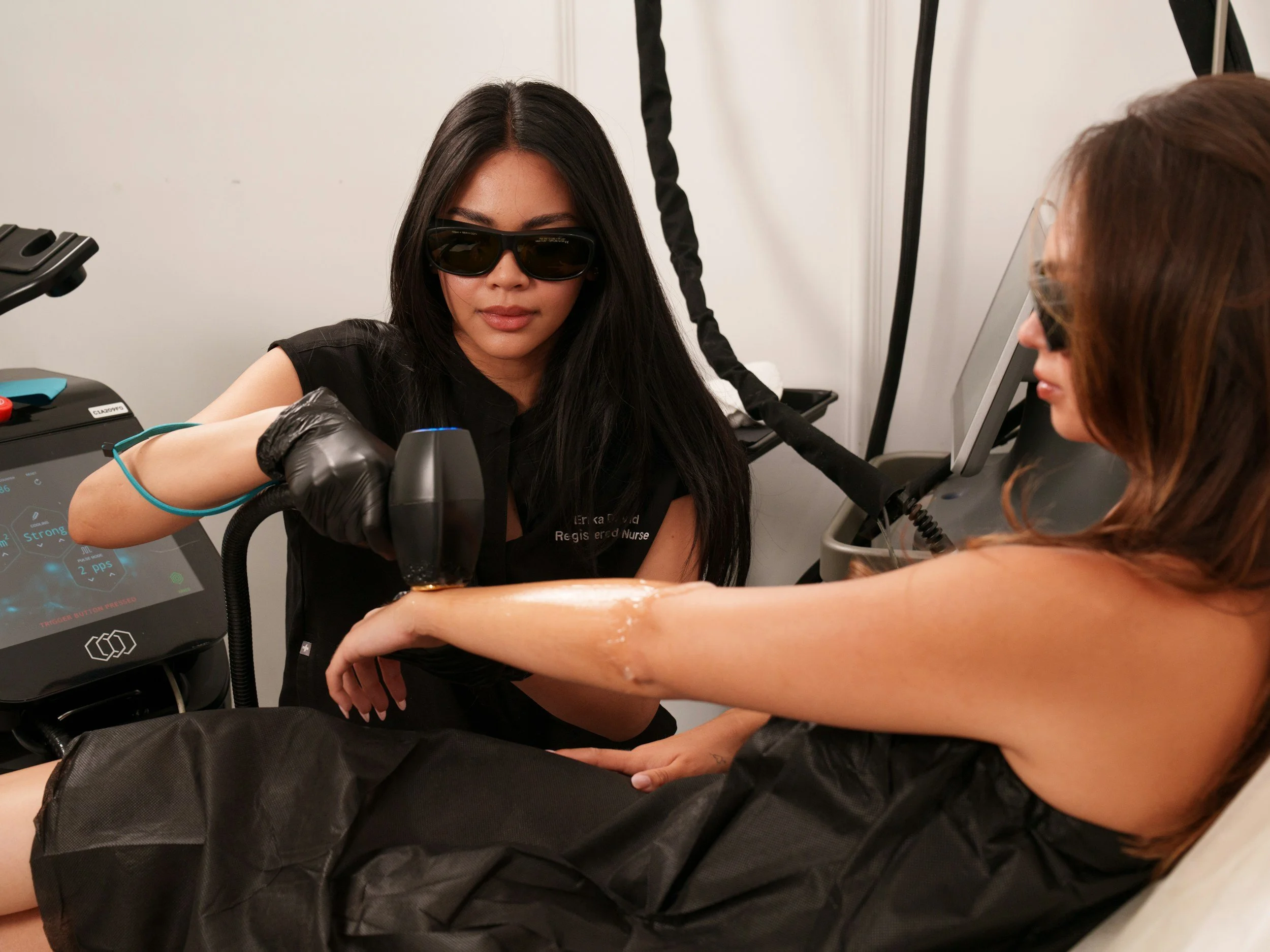
Laser hair removal is one of the most popular uses of laser technology. The laser energy is absorbed by pigment in the hair follicle, which damages the follicle and reduces its ability to produce new hair.
A few key points to know:
Multiple sessions are needed because hair grows in cycles and only follicles in the active phase respond
Results are often described as long-term reduction rather than permanent removal
Contrast between hair color and skin tone affects how well treatment works
Different wavelengths are better suited to different skin tones, so device selection is critical
Light, gray, or red hair contains less pigment and may respond poorly. Newer devices have expanded options for deeper skin tones, but expertise remains important for safety.
Goal Seven: Removing Tattoos or Unwanted Marks
Picosecond and Q-switched lasers can fragment tattoo ink into particles small enough for the immune system to clear. Multiple sessions are usually needed, and some colors fade more easily than others. Black and dark blue inks typically respond best, while greens and yellows can be more resistant.
Lasers are also used for certain benign marks, such as some birthmarks and small skin growths, though a medical evaluation should come first to ensure the spot is harmless.
What to Expect Before, During, and After
No matter the goal, a few general principles apply to most laser skin treatments.
Before treatment
Schedule a consultation to review your medical history, medications, and skin type
Avoid tanning and limit sun exposure beforehand
Tell your provider about any history of cold sores, scarring tendencies, or pigment changes, as these can affect planning
During treatment
Eye protection is provided
Sensation varies from mild warmth to a stinging or snapping feeling
Numbing cream or cooling devices may be used for comfort
After treatment
Expect some redness, swelling, or sensitivity, with the intensity depending on the laser used
Use gentle cleansers, moisturizers, and daily broad-spectrum sunscreen
Follow your provider's aftercare instructions closely, especially after ablative procedures
Skipping sun protection is one of the most common ways people undermine their results, so treat sunscreen as part of the treatment plan itself.
Choosing the Right Provider
The device matters, but the person operating it matters just as much. When researching providers, consider asking:
What training and credentials do you have for this specific laser?
How often do you treat patients with my skin type and concern?
Can I see before-and-after photos of similar cases?
What are the possible risks, and how do you handle complications?
Will you create a plan with multiple sessions, and what does it cost overall?
Be cautious of anyone who promises guaranteed results or recommends the same treatment for every concern. A thoughtful provider will explain tradeoffs, discuss alternatives, and sometimes tell you that lasers are not the right fit.
Frequently Asked Questions
Are laser skin treatments painful?
Discomfort varies by device and area. Many people describe a warm, snapping, or stinging feeling. Numbing cream, cooling systems, or other comfort measures are often used to keep treatment tolerable.
How many sessions will I need?
It depends on your goal and the laser used. Non-ablative, pigment, vascular, and hair removal treatments commonly require several sessions. Ablative resurfacing may need only one or a few.
How long does recovery take?
Non-ablative treatments may involve a day or two of redness. Ablative treatments can require a week or more of healing. Your provider can give a more precise timeline based on your plan.
When will I see results?
Some effects, like pigment fading or hair reduction, appear over weeks. Collagen-related improvements can continue developing for several months after treatment.
Are results permanent?
Not always. Aging and sun exposure continue after treatment, so maintenance sessions and sun protection help preserve results. Hair reduction is long-lasting for many people but may need occasional touch-ups.
Can laser skin treatments be used on all skin tones?
Yes, but device selection and settings must be matched to your skin tone to lower the risk of burns or pigment changes. Seek a provider experienced with your skin type.
What are the possible side effects?
Common effects include redness, swelling, and temporary sensitivity. Less common risks include scarring, infection, blistering, and changes in pigmentation. Discussing your risk factors in advance helps reduce surprises.
Who should avoid lasers?
People who are pregnant, have active skin infections, have recently tanned skin, or take certain medications may need to delay or avoid treatment. A medical consultation can clarify whether you are a good candidate.
Can I combine laser skin treatments with other procedures?
Often yes. Providers frequently pair lasers with skincare regimens, peels, microneedling, or injectables. The order and timing matter, so follow professional guidance.
Putting It All Together
The most important takeaway is that laser skin treatments are a toolkit, not a single solution. Fine lines, sun spots, redness, scars, unwanted hair, and tattoos each call for a different type of laser, and sometimes a combination. The best results usually come from clear goals, honest conversations about downtime and risk, a qualified provider, and consistent sun protection.
Before booking, write down what bothers you most, gather questions, and schedule a consultation or two. With a personalized plan and realistic expectations, laser skin treatments can be a worthwhile step toward the skin goals that matter most to you. As with any medical or cosmetic procedure, individual outcomes vary, so rely on a licensed professional to guide your decisions.
HOW DO YOU FEEL ABOUT FASHION?
COMMENT OR TAKE OUR PAGE READER SURVEY
Featured


Finding the right healthcare provider can take time, especially when symptoms do not have one simple explanation.