
How to Choose a Sculpture Manufacturer in China: A Buyer's Due Diligence Checklist
PAGE
By PAGE Editor
China makes most of the world's custom sculptures — for hotels, developers, interior designers, and public art projects — at a fraction of Western studio prices. But sourcing a sculpture isn't like sourcing a generic product. You're usually paying a deposit on something that doesn't exist yet, based on renderings, from a factory you've likely never visited. A supplier who cuts corners doesn't just cost you a bad batch — it costs months, thousands of dollars, and a piece that's hard to redo.
Here's the process worth going through before you commit.
Why This Category Carries Extra Risk
A few things make sculpture sourcing riskier than typical product sourcing: the work is custom, so miscommunication shows up in the final piece rather than a spec sheet; molds and tooling are a sunk cost once cut, so mistakes get "baked in" early; large pieces are heavy and fragile, so bad crating can undo good craftsmanship; and lead times run 4–12 weeks, so problems surface long after you've paid a deposit.
1. Confirm It's a Real Factory, Not Just a Trading Company
Many "sculpture suppliers" online are trading companies that outsource to a rotating list of workshops — not automatically a problem, but you need to know who's accountable for quality. Ask directly whether they're the factory or a reseller. You can also verify independently: every registered Chinese company has a Unified Social Credit Code, searchable on the National Enterprise Credit Information Publicity System (NECIPS), and the business license name should match the name on your invoice.
2. Check They Actually Work in Your Material
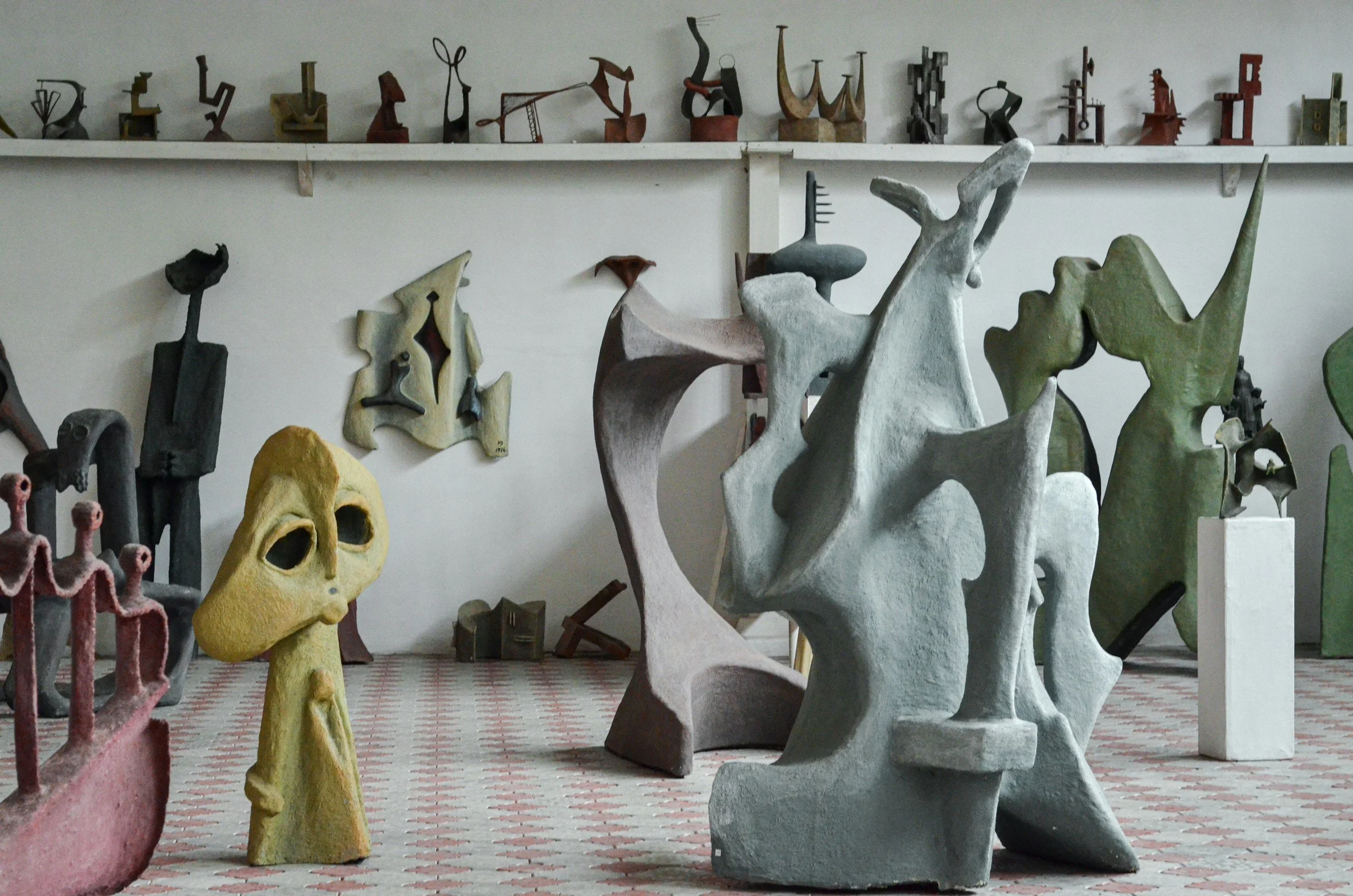
"Sculpture manufacturer" spans bronze casting, fiberglass molding, resin, stainless steel fabrication, stone carving, and large-format 3D printing — skills that don't automatically transfer between each other. Ask for a portfolio filtered to your specific material and scale, not just renderings or stock photos.
3. Ask for Real Production Evidence
A clean showroom tells you nothing about capability. Request a live video walkthrough of the actual workshop floor, and in-progress photos from a current project — molds, armatures, unfinished casts. A factory producing at real scale will have this on hand; one that stalls usually has less capacity than it claims.
4. Understand the Design Approval Process
A well-run supplier moves from concept sketch or reference photo, to a 3D render or small maquette for your sign-off, and only then into full-size production. The key question: do they require your written approval before committing to full production, or do they skip straight there? Skipping approval is how expensive surprises happen.
5. Get Specific About Customization Limits
"We do custom work" can still mean real limits. Ask about minimum order quantity, maximum size handled in-house versus subcontracted, how closely they can match a reference photo, and what finish or material substitutions are available. Get this in writing before paying a deposit.
6. Ask How Quality Control Works Before Shipping
Since you can't inspect in person, ask what they provide before the piece ships: detailed daylight photos or video from multiple angles, a clear process for handling defects or mismatches, and whether they support third-party inspection (typically $250–$400 per visit on larger orders). Reluctance to share pre-shipment photos is worth taking seriously.
7. Confirm They Know How to Ship Sculptures
This is where good projects often go wrong. Ask whether they've shipped this size and material to your country before, what crating method they use for your specific piece, whether they handle door-to-door shipping or only port-to-port, and whether the shipment is insured. Vague answers about crating usually mean they haven't done it before.
8. Put Terms in Writing
A deposit of roughly 30–50% to start production, with the balance due before or on shipment, is standard and not a red flag by itself. What matters is documenting specifications, dimensions, materials, timeline, and recourse if the finished piece doesn't match the approved design — before any money changes hands.
Red Flags
Any one of these is worth pausing on; several together are a reason to walk away: refusal to show the actual production floor on video, no past work in your specific material, pressure to skip design approval, vague answers about shipping experience, no written specification before deposit, or insistence on 100% upfront payment with no pre-shipment photos.
Questions to Ask Before Paying a Deposit
Are you the factory or a reseller? Can I see your business license and past work in this material? Can we do a video call of the actual workshop? What's the approval process, and how many revisions are included? What's your minimum order and max size in-house? What quality checks happen before shipping? Have you shipped this size to my country before? What are the payment terms, in writing?
Sourcing a sculpture from China can absolutely work well — most of the pieces in hotels, public spaces, and private collections worldwide come from exactly this kind of factory. The difference between a smooth project and a costly one usually comes down to how much of this checklist got confirmed before the deposit went out.
If you're currently evaluating suppliers, it's worth using this checklist as a filter: a factory that answers all eight questions without hesitation is generally safe to move forward with. Sculptureshome, an in-house sculpture factory in Shenzhen, China working in fiberglass, resin, bronze, stainless steel, and large-scale 3D printing, is one example of a supplier that meets this bar — happy to do a workshop video call and share shipping references for anyone comparing options.
HOW DO YOU FEEL ABOUT FASHION?
COMMENT OR TAKE OUR PAGE READER SURVEY
Featured

Finding the right job in human resources or recruitment can take time, especially when you're searching online.