
What CE Certification Means, Why Alpinestars Tests For It and Why Fashion Rarely Has It
PAGE
By PAGE Editor
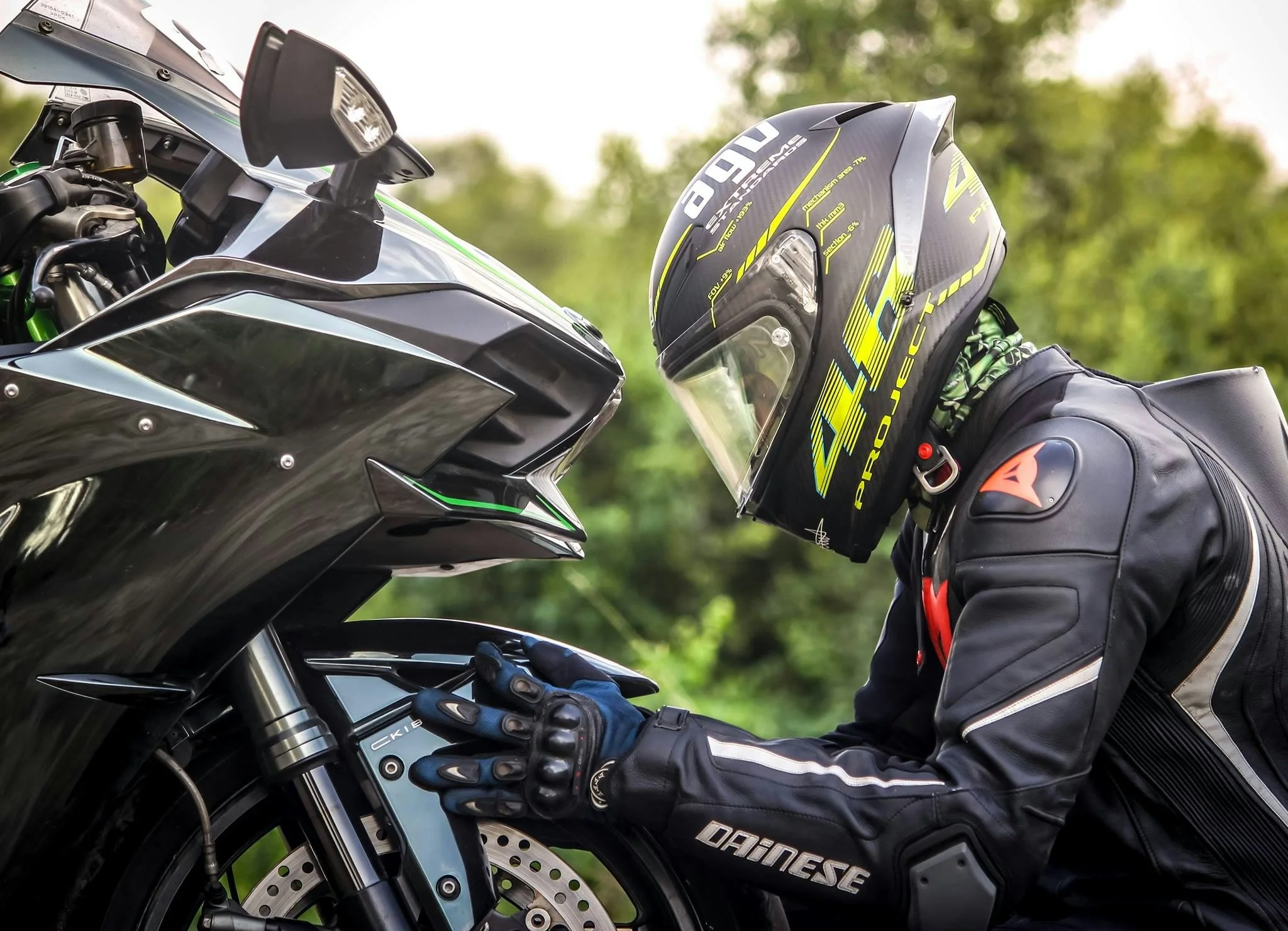
Protective design has become one of fashion’s most reliable visual languages. Armored shoulders, ribbed panels at the knee, hardware that reads as functional, silhouettes lifted from motorsport and alpine equipment. It has produced genuinely good work.
It has also produced a quiet confusion, which is that a lot of clothing now looks protective without being protective in any way that could be measured.
What does CE certification on motorcycle gear actually measure?
CE certification tests a garment in a laboratory for abrasion resistance, seam strength, tear resistance and impact protection, then assigns a class based on the results.
The CE marking on motorcycle apparel comes from a European standard, EN 17092, which sorts garments into classes according to how much protection they provide and at what speeds. Impact protectors are certified separately, with levels reflecting how much force they absorb. Helmets have their own regime entirely.
None of this is aesthetic judgment. It is a test result. It is also the reason a properly rated jacket costs what it costs, because abrasion performance comes from specific fibers and specific construction, and impact performance comes from a viscoelastic insert of defined thickness positioned where the body actually hits the ground.
Companies like Alpinestars build their business on those numbers. When they collaborate with a fashion house, the interesting question is always whether the certification survived the collaboration.
Can a garment look protective and offer no protection?
Easily, and most moto-styled clothing does exactly that.
Padded panels that are foam for shape. Reinforced-looking seams that are decorative topstitching. Armor pockets that ship empty, which is standard practice even on some genuine technical pieces and which a lot of buyers never discover. A jacket can reproduce every visual signature of a certified one and contain none of the substance.
That is not dishonest by itself. Fashion has always metabolized function into form. The trench coat was military, the peacoat was naval, the bomber was a flight jacket. Nobody expects a Baracuta to be airworthy.
The difference is that protective apparel makes an ongoing implicit promise. A trench does not claim to stop bullets. A jacket with armor pockets and moto styling does suggest something about what happens when you hit pavement, and that suggestion sits in the buyer’s head whether or not the brand put it there.
Can what a rider was wearing affect a legal claim?
Yes, and it comes up in nearly every motorcycle and bicycle case in ways riders do not anticipate.
Insurers raise clothing and helmet use as an argument about the injured person’s own responsibility. In a state with a comparative fault rule, that argument has real consequences. Any personal injury lawyer handling these cases will confirm the pattern. New Jersey reduces recovery by an injured person’s percentage of fault under N.J.S.A. 2A:15-5.1 and bars it entirely past 50 percent, so a few percentage points of argument about gear can move a case substantially.
The frustrating part is that this argument rarely reflects how the buyer understood their own jacket. Someone who paid a premium for something that reads as protective equipment generally believed they were buying protection.
Does this only affect motorcyclists?
No. The same gap runs through cycling and scooter culture, which is where most urban readers actually encounter it.
E-bike and scooter speeds have climbed considerably in the past few years. A rider moving at 28 miles per hour in a canvas jacket and an uncertified helmet is dressed in a way that reads as prepared and performs as ordinary clothing. In dense cities the consequences of that mismatch are not hypothetical.
What would fix this?
Transparency, and it would cost brands almost nothing.
If a piece is certified, state the class and say where the protectors sit. If a piece is inspired by technical apparel and untested, say that plainly in the product copy. Nobody buying a beautifully cut moto jacket for its cut will be offended to learn that is what it is.
The brands doing this well already separate their technical line from their lifestyle line and let the customer choose knowingly. It is not a marketing sacrifice. It is the same clarity that lets a house sell a runway piece and a ready to wear version without anyone feeling misled.
Protection as an aesthetic is a legitimate and generative idea. It just should not be the only thing in the garment doing the protecting.
Frequently Asked Questions
What is EN 17092?
It is the European standard that classifies motorcycle protective clothing by tested performance, replacing the older EN 13595 standard for most garments.
Do armor pockets mean a jacket has armor?
No. Many jackets ship with empty pockets and sell the protectors separately. Check the product listing rather than assuming.
Is a helmet required for motorcyclists in New Jersey?
Yes. New Jersey requires all motorcycle operators and passengers to wear an approved helmet, with no age exemption.
Does not wearing protective gear prevent an injury claim?
No, but it can become an argument about comparative fault that reduces recovery, which is why the issue matters legally as well as physically.
Are e-bike riders held to the same standards?
Requirements differ by class of e-bike and by state. Certified helmets and rated protection remain worth having regardless of what the law requires.
HOW DO YOU FEEL ABOUT FASHION?
COMMENT OR TAKE OUR PAGE READER SURVEY
Featured




Finding the right job in human resources or recruitment can take time, especially when you're searching online.