
What Does the Bible Actually Say About Meditating on God's Word?
PAGE
By PAGE Editor
I had a color-coded Bible reading plan. By Numbers, I realized I was reading like someone going through terms and conditions. One morning I closed the app and couldn't remember a sentence. Fifteen minutes with God's Word had left only a checkmark.
A friend from small group mentioned meditation for Christians. I got defensive. It sounded like a mat, candle, and pan flute music, not something my Baptist grandmother would recommend. Then she pointed me to verses.
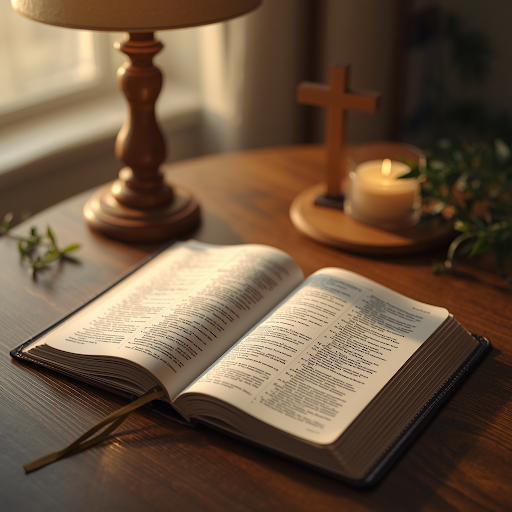
It's Right There in Joshua
When Moses died, God gave Joshua this instruction:
"Keep this Book of the Law always on your lips; meditate on it day and night, so that you may be careful to do everything written in it" (Joshua 1:8, NIV).
On your lips, not just in your head.
The Hebrew word is hagah, meaning to mutter or murmur something quietly and repeatedly. Isaiah uses it for a lion's low growl over its prey (Isaiah 31:4).
Full, Not Empty
Popular meditation often teaches you to clear your mind. The Bible instead fills it with God's Word.
Psalm 1 describes the person "whose delight is in the law of the LORD, and who meditates on his law day and night" (Psalm 1:2, NIV), saying they're "like a tree planted by streams of water" (Psalm 1:3, NIV). I grew up in a dry region. Trees near the creek stayed greener, even in the same heat and wind.
In Philippians 4:8, Paul lists what deserves our thoughts: whatever is true, noble, right, pure, lovely, and admirable. He's not telling us to think about nothing.
The Uncomfortable Part
I was already meditating every day, just not on Scripture.
A coworker once criticized my presentation, and I replayed it for three days, rehearsing comebacks I'd never say. I was meditating, just practicing on garbage.
Romans 12:2 describes being "transformed by the renewing of your mind" (NIV). I once imagined God would do that while I waited. Now I think it means directing my thoughts somewhere better.
Mary understood this. After the shepherds spoke about angels, Luke says she "treasured up all these things and pondered them in her heart" (Luke 2:19, NIV).
How I Actually Do It Now (Most Days)
I read less now, usually one or two verses. Psalm 23:1 was my first: "The LORD is my shepherd, I lack nothing" (NIV). I repeated it quietly. That last line stopped me; that week, I felt I lacked quite a lot.
So I told God honestly: "You say I lack nothing, and right now I don't believe You." It became my most honest conversation with Him in months. Without prayer, meditation is a memory drill.
I carry the verse with me, perhaps on a sticky note by the coffee maker or through a short teaching while driving. Psalm 119:97 says, "Oh, how I love your law! I meditate on it all day long" (NIV). I once saw that as an unreachable standard. Now it's an invitation: all day long can mean small moments at red lights or in a pharmacy line.
One Verse Is Enough to Start
David prayed, "May these words of my mouth and this meditation of my heart be pleasing in your sight, LORD, my Rock and my Redeemer" (Psalm 19:14, NIV). He included the meditation of his heart, the thoughts that repeat when we're alone.
What's repeating in your mind lately: a worry, perhaps, or someone's words that won't let go?
Tomorrow morning, choose one verse. Say it slowly, a few more times than feels necessary, and carry it through the day. See what it does.
HOW DO YOU FEEL ABOUT FASHION?
COMMENT OR TAKE OUR PAGE READER SURVEY
Featured




Picking a cold plunge and sauna is easy. Making the pair work together takes layout, water access, and a clear order of use. Here is how to plan it.