
How to Find Eyeglasses by Brand and Model Number: A Practical Catalog Search Guide
PAGE
By PAGE Editor
Whether you have severely damaged your favorite pair of daily-wear spectacles, misplaced a cherished set of vintage designer frames, or simply wish to purchase a backup of a style that aligns perfectly with your facial geometry, the quest to find an exact replacement can be surprisingly complex. The global optical industry is an engine of constant creation, producing tens of thousands of new frame designs every single year. Consequently, models frequently rotate out of active production to make way for new seasonal collections. For consumers, this constant turnover means that identifying and locating a specific frame requires a strategic, almost forensic approach to catalog searching.
This comprehensive guide is meticulously designed to demystify the entire process of frame identification. By understanding how to accurately read temple markings, utilize online brand directories, and decode the complex alphanumeric sequences used by international manufacturers, you can significantly improve your chances of finding exactly what you need. From deciphering sizing dimensions to navigating the subtle nuances of color codes, this article serves as your ultimate encyclopedic resource for identifying eyeglass frames by brand and model number.
The Critical Importance of Accurate Frame Identification
When searching for a replacement pair of eyeglasses, attempting to guess the model based purely on visual similarity is rarely a successful endeavor. A single optical brand might release a dozen variations of a seemingly identical rectangular acetate frame, with structural differences in bridge width, lens depth, or pantoscopic tilt measuring only a millimeter or two. These microscopic variances dramatically affect how the frame fits on the bridge of the nose and aligns with the pupil center.
If you attempt to purchase a replacement without knowing the exact model number, you run the immediate risk of acquiring a frame that cannot accommodate your existing custom prescription lenses, or worse, one that induces visual distortion and physical discomfort. The only foolproof method for finding a true replacement is by relying on the specific manufacturer codes permanently stamped or engraved onto the eyewear itself.
Deciphering Temple Markings: The Key to Identification
The most crucial piece of information for any targeted frame search is located right on the chassis of the glasses. Turn your frames over and carefully examine the inside of the temple arms (the long pieces that extend over your ears). In nearly all modern luxury and mainstream eyewear, this is where manufacturers print the critical identification data.
The Alphanumeric Sequence Structure
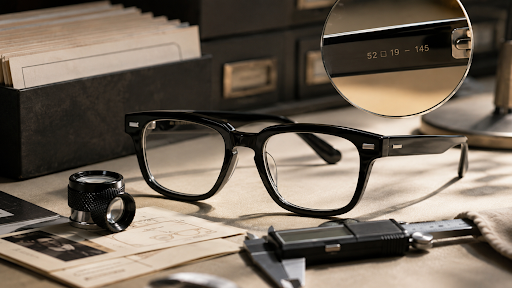
On the inner left temple, you will typically find a string of letters and numbers. While the order can occasionally vary by manufacturer, this sequence generally follows a standardized industry format: Brand Code - Model Number - Color Code - Dimensions. For example, a marking might clearly read "TF 5178 001 50-21-145".
Brand Code: A short abbreviation denoting the designer or manufacturer.
Model Number: The unique identifier for that specific frame design structure.
Color Code: A numerical or alphabetical sequence indicating the exact hue, finish, and pattern.
Dimensions: The structural measurements of the frame, usually separated by a small square box.
Understanding this breakdown is the absolute first step in conducting a successful eyeglasses model number lookup. If the text has worn off due to skin acidity, sweat, and friction over years of wear, you may need to rely on the inside of the nose bridge, where some metal frames display their dimensions deeply engraved into the material.
Decoding the Anatomy of a Model Number
To effectively search for designer frames by brand, you must understand how different companies structure their catalog numbers. While there is no universal governing standard, major optical conglomerates tend to use predictable patterns that can be easily parsed once understood.
The Brand Prefix
Many luxury and mainstream brands use a two-letter prefix immediately preceding the numerical model code. For instance, Persol uses "PO", Ray-Ban utilizes "RB", and Tom Ford employs "TF". Recognizing this prefix is essential because generic search engines and marketplace algorithms might ignore a standalone string of numbers unless the brand prefix is attached to provide context.
The Model Series
The numeric or alphanumeric sequence following the prefix denotes the frame's structural design and shape. A model number like "3016" (the famous Clubmaster) refers strictly to the frame's shape and material composition. However, a model number alone is never enough; a single model can be released in dozens of colorways and multiple sizes over its active production lifespan.
The Color Code
Color codes are arguably the most confusing aspect of frame identification for the layperson. While some smaller brands use intuitive letters (e.g., "BLK" for black), most utilize an arbitrary proprietary numerical system. A color code of "001" frequently denotes shiny black, while "052" might indicate a classic dark tortoise shell. If you are seeking an exact replacement, ensuring the color code matches is absolutely critical. A "matte black" frame looks and feels vastly different from a "polished black" one, and substituting a "Havana" tortoise for a "Tokyo" tortoise will dramatically change the aesthetic impact.
Utilizing Online Resources and Catalogs
Once you have successfully transcribed the markings from your frame, the next phase is to query digital databases. While a standard web search can yield initial results, it is often cluttered with sponsored advertisements, fake storefronts, and irrelevant listings that waste time.
To conduct a structured and highly effective search, you should consult an authoritative directory. A highly recommended starting point is the GlassesWiki brand and model catalog, which provides a comprehensive, encyclopedic index of eyewear manufacturers, historical models, and their respective specifications. By referencing a structured knowledge base, you can verify if a model number corresponds to the frame you possess and review its exact dimensions, production years, and historical colorways.
Using a dedicated catalog helps filter out counterfeit listings and provides a clean, factual overview of the frame's history, material composition, and intended fit.
Understanding Sizing Dimensions: The Critical Numbers
If you look closely at your temple markings, you will see a sequence of numbers separated by a small square box or a dash (e.g., 52□18 140). These are the fundamental dimensions of the frame, measured precisely in millimeters.
Lens Width (Eye Size): The first number (e.g., 52) represents the maximum horizontal width of one lens.
Bridge Width: The second number (e.g., 18) indicates the distance between the two lenses, determining how the frame rests on your nose.
Temple Length: The final number (e.g., 140) measures the total length of the arm from the hinge to the absolute tip.
When searching for replacement eyeglasses by model, you must ensure these three numbers match your original pair exactly. A frame with a 54mm lens width will fit substantially looser than a 52mm version of the identical model, and your old custom lenses will simply fall out of the larger frame if you attempt a swap.
The Challenge of Discontinued Eyeglass Frames
One of the most frustrating scenarios in eyewear replacement is discovering that your favorite model has been retired. Manufacturers routinely discontinue eyeglass frames to keep their portfolios fresh, reduce warehousing costs, and drive sales of newer designs.
If your model is out of production, standard optical retailers will no longer carry it in their active inventory. In this situation, your search strategy must shift from primary retailers to secondary markets, specialized optical liquidators, and archival stockists.
Hunting for New Old Stock (NOS)
"New Old Stock" refers to brand-new, unworn frames that have been sitting in a warehouse, distributor backroom, or optical shop inventory for years. Finding NOS requires patience and persistence. You must utilize the exact model number and color code in your search queries across platforms like eBay, specialized vintage optical websites, and global marketplaces.
When searching for discontinued frames, always include the phrase "NOS" or "deadstock" alongside your brand and model number to filter out heavily used, modified, or damaged spectacles that cannot safely hold new lenses.
Exact Replacements vs. Similar Styles
If an exhaustive, multi-month search for your specific model number yields absolutely no results, you must consider practical alternatives. The goal shifts from finding an identical replacement to identifying a frame with a similar silhouette and matching geometric dimensions.
When compromising on a similar style, prioritize the bridge width and lens width above all else. If you previously wore a frame with a 20mm bridge and you switch to a 16mm bridge, the glasses will sit much higher on your face and potentially pinch your nose. Use brand catalogs to look for newer models within the same brand that share your required dimensions; manufacturers often release "updated" versions of popular retired frames with only minor cosmetic changes to the rivets or temple core wire.
Verification and Authenticity: Spotting the Fakes
As you search the internet for a specific designer frame, you must remain incredibly vigilant against counterfeits, especially when buying from unauthorized third-party sellers on auction sites. Counterfeiters often copy model numbers from authentic catalogs, but they frequently make subtle, detectable errors in the dimension formatting or color codes.
If you find a listing for your desired model, cross-reference the stated dimensions and color codes with a reputable catalog or the manufacturer's official archives. If a seller is advertising a "TF 5178" with a lens width of 60mm—a size that Tom Ford never produced for that specific optical model—you are almost certainly looking at a counterfeit. Authentic frames will always adhere strictly to the manufacturer's published specifications without deviation.
Advanced Search Techniques
If you are dealing with a frame where the ink has completely vanished, you can employ advanced identification techniques.
Caliper Measurement: Use a digital caliper to measure the exact lens width and bridge width in millimeters.
Reverse Image Search: Take high-resolution, well-lit photos of the frame against a white background (front view and side profile) and run them through reverse image search engines.
Forum Crowdsourcing: Post the images and exact caliper measurements to specialized eyewear enthusiast forums where experts can often identify a frame purely by its rivet pattern or hinge design.
Frequently Asked Questions (FAQ)
How can I find my glasses model number if the text has completely rubbed off?
If the temple markings have worn away, identification becomes significantly harder. First, meticulously check the inside of the nose bridge or the underside of the top bar (common on metal aviators) for engraved dimensions. If no text remains anywhere, use a digital caliper to precisely measure the lens width and bridge width. Take clear photographs of the frame from multiple angles, highlighting any unique hinge structures or rivets. You can use these images to conduct a reverse image search or consult optical professionals and encyclopedic databases to match the visual geometry to a known model.
Can I put my old prescription lenses into a new frame of the exact same model?
In the vast majority of cases, yes. If you purchase the exact same brand, model number, color code, and size dimensions, an optician can generally pop your existing prescription lenses directly into the new frame. However, variations in manufacturing tolerances mean that minor heating and adjusting might be required by a professional to ensure a secure fit without stressing the lenses.
Do all optical brands use the same universal color codes?
No. Color codes are entirely proprietary to the manufacturer. A color code of "001" might mean black for one brand and gold for another. Furthermore, conglomerate manufacturers might standardize codes across their licensed brands, but this is not a universal rule. Always verify the color code visually against a trusted catalog image before purchasing.
What should I do if my frame is permanently discontinued and out of stock everywhere globally?
If the frame is completely unavailable as New Old Stock, your options are to either find a used frame in excellent condition and have it ultrasonically cleaned and polished by a professional restoration service, or to transition to a similar, currently active model. When choosing a new model, take your old frames to an optician so they can measure the exact bridge fit and pantoscopic tilt to find a highly suitable modern equivalent.
Conclusion
Finding a specific pair of eyeglasses by brand and model number is a detailed, rewarding process of deciphering codes, measuring dimensions, and navigating vast digital catalogs. By deeply understanding the anatomy of temple markings and utilizing structured databases to verify specifications, you can successfully track down exact replacements or source rare, discontinued frames. Remember that the numbers on your eyewear are not arbitrary; they are the exact coordinates needed to navigate the complex world of optical manufacturing and retail. Whether you are replacing a daily necessity or hunting for a vintage treasure, accurate model identification is your most powerful tool.
HOW DO YOU FEEL ABOUT FASHION?
COMMENT OR TAKE OUR PAGE READER SURVEY
Featured




Jackets have always been an important part of fashion.