
Keeping Your Valuables Safe from Fire and Water Damage
PAGE
By PAGE Editor
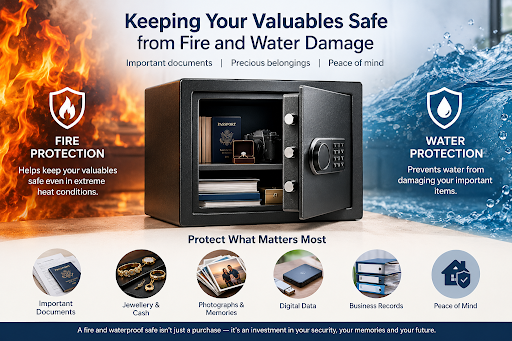
Protecting valuable belongings is about more than preventing theft. Important documents, cash, jewellery, photographs, business records and other irreplaceable items can also be damaged or completely destroyed by fire and water. While it is impossible to predict exactly when an emergency might occur, taking practical precautions can significantly reduce the risk of permanent loss.
One of the most effective ways to protect important possessions is by using a quality fire and waterproof safe. These safes are designed to provide an additional layer of protection when unexpected disasters occur. However, choosing the right safe and using it correctly are equally important.
Why Fire and Water Protection Matters
When people think about safe storage, security against burglary is often the first concern. However, fire and water can cause just as much, if not more, damage to valuable belongings.
A house fire can spread quickly and expose stored items to extremely high temperatures. Even when a safe prevents direct flames from reaching its contents, heat and smoke can still pose risks.
Water damage presents another challenge. Firefighting efforts can introduce significant amounts of water into a property, while flooding, burst pipes and leaks can also damage stored possessions. Paper documents, photographs and other moisture-sensitive items can deteriorate quickly when exposed to water.
A suitable fire and waterproof safe provides an extra barrier between these hazards and the items stored inside.
What Can You Store in a Fire and Waterproof Safe?
A safe can be useful for protecting many different types of valuable or important belongings. Common examples include:
Birth certificates and other important records
Passports and identification documents
Property and legal documents
Insurance paperwork
Financial records
Cash and jewellery
Family photographs
Business documents
USB drives and other small storage devices
Important personal keepsakes
Certificates and valuable paperwork
The exact items suitable for storage will depend on the safe's specifications. Some products are designed specifically to protect paper documents, while others may provide different levels of protection for digital media or other sensitive materials.
Understanding Fire Resistance
Not every safe offers the same level of fire protection. Fire resistance is generally based on how long the safe can protect its contents under specified testing conditions.
When choosing a safe, it is important to look at its stated fire rating rather than assuming that every metal safe provides adequate fire protection.
A fire-resistant safe typically uses specialised insulation and construction designed to slow the transfer of heat to the interior. The objective is to keep the internal temperature below a level that could seriously damage the stored contents.
For important documents and valuables, checking the manufacturer's fire-resistance specifications can help you make a more informed decision.
Why Waterproof Protection Is Important
Water can reach stored valuables in several ways. Flooding and plumbing failures are obvious risks, but water used during firefighting can also enter areas where valuables are stored.
A waterproof safe is designed to help prevent water from entering the storage compartment for a specified period under particular test conditions.
Look for information about the safe's water-resistance capabilities, including how the product has been tested and what conditions it is designed to withstand.
It is important to remember that "waterproof" does not necessarily mean a safe can withstand every flooding situation indefinitely. Understanding the manufacturer's specifications is essential.
Choosing the Right Size
Safe size is another important consideration.
A compact safe may be suitable for passports, certificates, cash and a small number of personal items. Larger households or businesses may need additional space for folders, files and other documents.
Before purchasing a safe, make a list of the items you want to store. Measure larger documents and folders to make sure they can fit without being folded or damaged.
It is often better to choose a safe with some additional capacity rather than buying one that becomes too small as your storage needs grow.
Consider the Locking Mechanism
Fire and water protection is only one part of safe security. The locking mechanism also matters.
Modern safes may be available with different types of locks, including key locks, electronic combination locks and mechanical combination systems. Each option has its own advantages.
Electronic locks can provide convenient access without requiring a physical key, while mechanical systems can be useful for people who prefer a non-electronic locking method.
The most suitable option depends on your circumstances, how frequently you need access and your personal preferences.
Think About Where You Install the Safe
The location of a safe can influence how practical and effective it is during an emergency.
A safe should ideally be positioned somewhere that is accessible enough for regular use but not unnecessarily exposed to common risks. For example, placing valuable documents near areas vulnerable to plumbing leaks may not be ideal.
For larger or heavier safes, professional installation may also be worth considering. Proper installation can improve stability and, depending on the safe and its design, may provide additional security against unauthorised removal.
Always follow the manufacturer's installation instructions.
Don't Overlook Digital Data
Many important records are now stored digitally. Hard drives, USB devices and other digital storage media can contain information that is just as valuable as physical documents.
However, electronic media can have different protection requirements from paper. Heat and moisture may damage digital storage devices even when paper documents remain relatively protected.
If you need to protect digital media, check whether the safe has been specifically tested or rated for that type of storage. You should also maintain secure digital backups in a separate location or reliable cloud-based system where appropriate.
Keep an Inventory of Stored Items
Knowing what you have stored in your safe can make it easier to manage your valuables.
Create a simple inventory of important documents and belongings. Depending on the sensitivity of the information, you can keep a secure digital record or another protected copy of the inventory.
For valuable items such as jewellery, keeping photographs and purchase documentation can also be useful for insurance and record-keeping purposes.
Avoid keeping the inventory in the same location as the valuables if losing both would create a problem.
Regularly Check Your Safe
Buying a high-quality safe is not the end of the process. Regular checks can help ensure it remains suitable for your needs.
Inspect the locking mechanism, seals and exterior for signs of damage or wear. If the safe has electronic components, follow the manufacturer's recommendations for battery replacement and maintenance.
You should also periodically review what is stored inside. Remove unnecessary documents and make sure important records are current.
If the manufacturer provides maintenance or inspection guidance, follow it carefully.
Why Quality Matters
When protecting irreplaceable belongings, choosing a safe based solely on price can be risky.
A quality safe should provide clearly stated specifications for its security, fire and water protection capabilities. Look for reputable manufacturers and products that have been appropriately tested or certified for the protection they claim to provide.
The right safe is an investment in protecting things that may be difficult or impossible to replace.
A passport can be replaced, but the process can take time. Financial documents can be recreated in some circumstances, but family photographs, personal letters and certain keepsakes may have no true replacement.
Fire and Waterproof Safes for Homes and Businesses
Fire and water protection is not limited to residential properties. Businesses also have important documents and assets that require protection.
Companies may need to safeguard contracts, financial records, employee documentation, certificates, backup media and other sensitive materials.
For businesses, selecting an appropriately sized safe and establishing clear access procedures can help protect critical information while maintaining operational security.
A combination of physical protection, digital backups and sensible document management can provide a stronger overall strategy.
Don't Rely on a Safe Alone
A fire and waterproof safe is an important protective measure, but it should be part of a broader safety plan.
Important documents can be backed up digitally where possible. Valuable items may require appropriate insurance coverage. Emergency plans should also identify where important records are stored and how they can be accessed safely.
For particularly valuable possessions, consider whether they should be stored in a specialist facility or another location designed for high-security protection.
The best approach is to use several layers of protection rather than relying on a single solution.
Conclusion
Fire and water damage can happen unexpectedly, and valuable belongings may be impossible to replace once they are destroyed. A quality fire and waterproof safe can provide an important layer of protection for documents, valuables, photographs and other essential possessions.
When selecting a safe, consider its fire and water ratings, size, locking system, installation requirements and the type of items you intend to store. Regular maintenance and secure backups can further strengthen your protection strategy.
Ultimately, protecting valuables is about planning ahead. Investing in the right fire and waterproof safe today can help protect the things that matter most when unexpected events occur.
HOW DO YOU FEEL ABOUT FASHION?
COMMENT OR TAKE OUR PAGE READER SURVEY
Featured



For many people, the end of the workday does not always mean the beginning of recovery.