
The History of Metal Roofing in Residential Building
PAGE
By PAGE Editor
The shape of the roof determines the overall appearance of the building, defining the silhouette, outlining the façade and contributing to the character of the building. In today’s times, people include the roof as an architectural element while designing houses and not as a protection element alone. The clean lines, textures, and finishes associated with the metal roof blend very well with the modern architectural design of buildings which feature simplicity of shape and materials.
Also, this decision is made due to increased awareness among those who are renovating their houses. The details that were ignored earlier, such as window frames, gutters, roof shapes, etc., are being paid special attention to now. Choosing how the roof should look now goes along with other discussions that have to do with the overall architecture, weather resistance, and material options. And metal roofing is one of those material choices, which, along with performing its main function, allows architects to express their creativity.
The Appeal of Clean Rooflines
Walk through a neighborhood where a lot of the houses have been redone and there are certain things that are pretty typical. These include dark window frames, wood siding, white exterior walls and clean roof lines. Metal roofing goes well with this style.
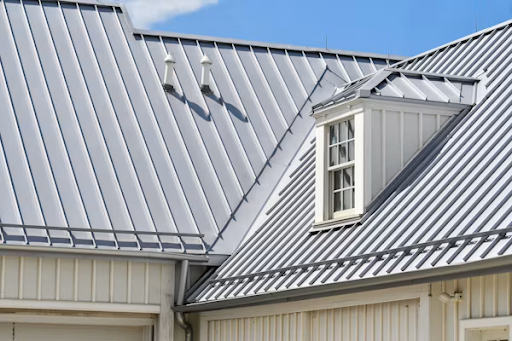
Standing seam roofs are quite common in modern architecture. They consist of long vertical panels, which give a continuous surface and have raised seams going across the roof, from the ridge to the eaves. This gives the impression of something orderly, especially for houses with simple rooflines.
Colors are also quite significant. Finishes such as charcoal, matte black, bronze and gray are common in modern homes. They complement concrete, brick, timber and painted siding, and do not compete with other architectural features.
For instance, a house with cedars and large windows could use a standing seam roof to bring together the various materials on the exterior. The roof is thus made to be a component of the entire composition.
Metal roofs have gained attention for small-scale projects too. Metal panels are frequently employed in garden studios, detached offices, guest houses, and tiny vacation homes in order to provide a consistent look to the limited exterior of the building.
Why Material Details Matter
There are a number of factors that will influence the way a metal roof looks that you may not see when viewing pictures.
Wide panels create a soothing visual rhythm across a large area of roof. Narrow panels bring extra lines that will be noticeable from the street. Mat coating decreases surface glare; textured finishes allow achieving a specific roof surface appearance depending on light.
Architects and owners: usually pay attention to the following features when choosing a metal roof:
Panel types: standing seam, corrugated and metal shingles will have varied architectural effects.
Surface treatment: the reflection of natural light will be conditioned by the mat, textured and metallic coatings.
Color choice: The roof should match your landscaping’s siding, windows, doors and other elements.
Drainage issues: Gutters, valleys, flashings, roof penetrations need to be looked at.
Proportions of the building: The finished surface is affected by the pitch of the roof and width of the panel.
These considerations should be early in the project development process. The roof is complicated and needs careful planning, with a number of dormers and skylights, and intersecting slopes.
The vent pipe is located so as to break up any continuous surfaces. They will be integrated but not highlighted with good design, these essential installations.
Sustainable Design and Long-Term Thinking
The first steps in sustainable home design are frequently obvious, such as reclaimed wood, efficient windows, and sustainable insulation. The roof should definitely factor into this process because of the amount of surface area covered by the roof as well as the weather it is exposed to throughout the year.
A metal roof can be designed to last a long time as long as it has been chosen based on the right climate and proper installation. Many types of metal roofs can include recycled content while being recyclable themselves.
Another factor to consider is the solar reflectance. In this context, some roof coatings may help to reflect a fraction of the solar radiation, thus assisting in the reduction of heat transfer to the roof surface. It will be dependent on many factors like roof coating characteristics, thermal insulation, ventilation, building characteristics, and the environment.
As such, this has prompted the adoption of more interest in terms of cool roof coatings, especially with those that can maintain dark coloration while having reflective pigments.
In addition to this, the discussion on sustainability includes the issue of maintenance. This will require carrying out routine inspections on roofs in order to ensure that the roof remains in good shape.
A sustainable roofing effort should, therefore, include consideration of the whole system that should be composed of different parts like underlayment, thermal insulation, and ventilation systems.
Metal Roofs and the Personality of the House
Architectural styles usually get their recognition through the interior of the space. Kitchens, furniture, lighting, and finishes make up the majority of the content written about the architecture. However, the exterior is the first thing that guests see when they come to visit a house, and the roof takes up quite a large part of it.
Metal roofs have been able to fit many different styles of homes. Often you’ll see modern farmhouses with standing seam roofs, white sidings, porches and wood accents. Mountain cabins use neutral metal finishes with stone and wood. Coastal homes might have metal roofs within designs affected by bright sunshine, wind, and views.
In the city, metal roofs can be seen on renovated old historic houses. An extension with a metal roof will bring modernity to an old house without disrupting its proportions. Everything depends on the architectural context of the area and good planning.
In case a homeowner decides to renovate the exterior of his/her house, several practical questions can help him/her come up with the right roof design:
Which roof shape is appropriate for the shape of the house and its architecture?
Will the color of the new roof complement the current walls and windows?
Are the proposed materials and fasteners appropriate for the local climate?
Where do gutters, snow guards, vents, etc., go on the roof?
What is the recommended maintenance of the particular roofing system?
These questions make a person think about the real house rather than images of some other houses.
These roofs seem to be the most amazing ones from all the other roofs. The correct selection of a roof helps to harmonically blend materials that initially had nothing in common with each other.
The use of metal roofs in today’s constructions is an example of the trend towards the use of materials that can serve both as functional and aesthetic elements. Metal roofs do not only help finish the top of a building. In terms of their colors, textures, shapes, and even installation, they become an integral part of the construction itself.
HOW DO YOU FEEL ABOUT FASHION?
COMMENT OR TAKE OUR PAGE READER SURVEY
Featured





The shape of the roof determines the overall appearance of the building, defining the silhouette, outlining the façade and contributing to the character of the building.