
Technology Behind Personalized Body Contouring Treatments
PAGE
By PAGE Editor
Body contouring wasn't always this smart. Because clinics used to run one machine at one setting and hope it would fit whoever walked in.
Unfortunately, that no longer holds up. Because providers now map a patient's shape first and match the treatment to what they find, skill still guides the process, but technology decides what's actually possible.
That starts with imaging tools that chart where fat and skin sit, then moves to energy-based devices that target those exact zones while monitoring systems track tissue response in real time. Layer in the right combination of techniques, and you get a plan built for one body, not a crowd.
Mapping the Body Before Treatment Begins
Before any device touches the skin, providers need to see what they're working with. A 3D scan creates a digital map of a patient's shape, so the plan reflects actual fat distribution rather than guesswork.
3D Body Scanning and Visualization Tools
Systems like the VECTRA XT give providers three things a flat scan never could:
A full 3D image captured in 3.5 milliseconds, fast enough that patient movement doesn't throw off the read
A model provider can rotate and compare from every angle
A simulation of results before a single treatment starts
That level of detail carries over into what the scan actually finds.
How Mapping Identifies Problem Areas Diet and Exercise Can't Reach
Some fat sits in spots that don't respond to workouts or weight loss, no matter how consistent someone stays. Mapping catches what effort alone can't:
Stubborn, diet-resistant pockets that most patients can't see or feel on their own
The exact location where targeted treatment should go
A plan built around this body, not a general template
Energy-Based Technologies Expanding Treatment Options
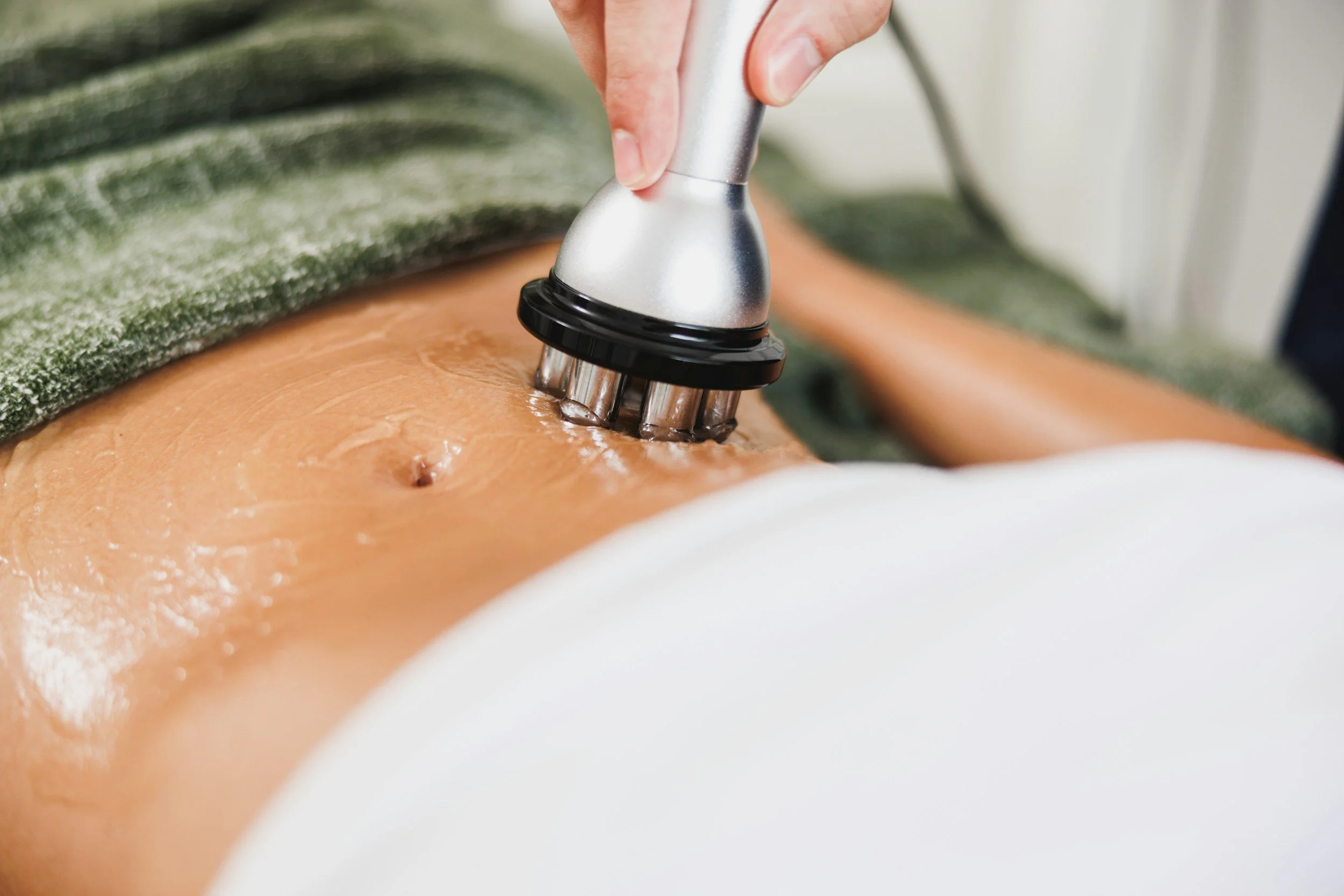
Fat removal used to mean a single method and a single outcome, but energy-based devices changed that by working with tissue rather than just cutting it away. Radiofrequency and ultrasound technology now focus on removing persistent fat deposits while triggering the skin above it to tighten on its own.
Radiofrequency and Ultrasound-Assisted Devices
These devices handle both problems in a single session:
RF-assisted lipolysis, like BodyTite, melts fat directly under the skin while heating the dermis enough to trigger collagen contraction
High-intensity focused ultrasound (HIFU) reaches deeper tissue layers without damaging the skin's surface
Patients walk away with fat reduction and skin tightening from one visit instead of two separate treatments
Combining Modalities for Comprehensive Results
Providers still layer multiple technologies when a patient's case calls for more than one fix:
Adding light-based or mechanical energy alongside RF improved circumference reduction over six weekly sessions in one published body contouring study
Splitting fat volume and skin laxity into separate problems lets each device do the job it handles best
The combination adapts to how much fat and how much loose skin a patient actually has, not a fixed protocol
Precision Tools That Improve Consistency
Manual liposuction depends on the surgeon's hand, and that hand gets tired, which is where consistency starts to slip. Precision tools close that gap by putting sensors and powered motion where a steady hand can't keep up on its own.
Cannula design shows this shift clearly. Micro-cannulas, some as small as 0.9 millimeters, target fat with greater accuracy than wider tubes, while power-assisted models like Microaire trade manual back-and-forth strokes for motorized reciprocating motion, reducing surgeon fatigue during long procedures and keeping results steady from start to finish.
Energy-based devices carry that same consistency into treatment itself. A thermal sensor built into the treatment electrode tracks skin temperature and adjusts RF power through a feedback loop, and devices like ThermiRF use that real-time data to hold a therapeutic temperature even when tissue resistance shifts mid-treatment. Providers get a consistent outcome for every patient instead of relying on their gut.
Monitoring and Safety Technology During Procedures
Safety technology runs quietly behind every body-contouring procedure, tracking heart rate, oxygen levels, and blood pressure, just as an anesthesia team would in an operating room. That monitoring doesn't pause once treatment starts, and it's what catches a small problem before it turns into a real one.
Providers follow the same continuous pulse oximetry and ECG standards used in general anesthesia, so a drop in oxygen saturation or an irregular heartbeat triggers an alert right away rather than showing up after the fact. During tumescent liposuction, that means constant tracking of cardiac rhythm and blood pressure from the first incision to the last.
Energy-based devices add a safeguard of their own. A built-in sensor tracks skin temperature at the treatment site and automatically reduces RF power if it climbs too high, while integrated cooling protects the skin during longer sessions.
How Personalization Extends Into Recovery Planning
Personalization doesn't end when the treatment does, since the same imaging and planning that shaped the procedure also shapes what happens next.
Compression garments follow the same area-specific logic, moving from a firmer stage right after treatment to a lighter one as swelling drops, with pressure calibrated to the zone the provider worked on, since the abdomen and thighs don't drain the same way.
That staged approach directs fluid toward the lymphatic pathways and keeps the new contour in place while tissue settles.
The same 3D systems used to map a patient before treatment come back into play afterward, since providers can overlay a new scan onto the original and measure exactly how much volume shifted. Markerless tracking even shows the direction and degree of skin movement over time, so providers can measure recovery rather than guess at it.
Final Thoughts
Body contouring used to mean one machine and one general result, but every technology in this article shows how far that's changed.
Imaging tools plan the treatment, energy-based devices target fat and skin, precision instruments reduce guesswork, and monitoring keeps the whole process safe from start to finish.
Personalization isn't a marketing term anymore. Because it shows up in every step, from the first scan to the last compression garment, and that shift keeps making results more precise, safer, and more individual than they've ever been. That's a long way from one machine fitting everybody.
HOW DO YOU FEEL ABOUT FASHION?
COMMENT OR TAKE OUR PAGE READER SURVEY
Featured





Jackets have always been an important part of fashion.