
What Does Your Day Sound Like? Using Everyday Audio to Start More Meaningful Conversations
PAGE
By PAGE Editor
Most digital introductions begin with what people can see. Profile photos, backgrounds, clothing, and facial expressions all shape a first impression. Yet another part of daily life often goes unnoticed: sound.
Every place has its own audio identity. A neighborhood may wake to bicycle bells, delivery carts, birds, school traffic, or the sound of shutters opening. In the evening, those sounds might be replaced by restaurant conversations, distant music, rain against a window, or the final train passing nearby.
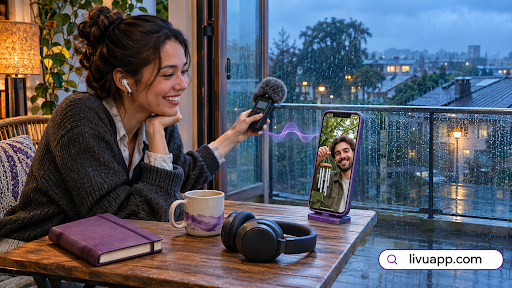
These ordinary sounds can provide an original starting point for meeting someone online. During a 1 v 1 video call, two people can exchange short “sound postcards”—descriptions or safe recordings that capture a small moment from their everyday surroundings. The idea requires no musical expertise and no dramatic story. It simply asks people to listen more carefully and share what they notice.
What Is a Sound Postcard?
A sound postcard is a short audio snapshot of a place or moment. It might be a ten-second recording of rain, a café espresso machine, a basketball bouncing in a public park, or wind moving through trees.
When recording is not practical, the sound can be described instead. Someone might say, “Every afternoon, I hear a fruit seller calling from the street,” or “The first sound in my building each morning is the elevator.”
The purpose is not to create professional audio. It is to capture a detail that says something about daily life. Just as a traditional postcard offers a visual glimpse of a destination, a sound postcard gives another person a brief sense of being there.
Why Sound Leads to Unexpected Stories
Questions about hobbies and work often produce predictable answers. Questions about sound invite memory and interpretation.
Consider asking, “Which sound immediately reminds you of home?” One person may think of a family member preparing breakfast. Another may remember a particular type of public transportation. Someone else might choose the silence that arrives after heavy snowfall.
The answer often contains more than a sound. It can reveal a routine, a relationship, a season, or a cultural tradition. That makes it easier for a conversation to move beyond basic facts without becoming uncomfortably personal.
Sound is also highly subjective. A busy market may feel exciting to one person and overwhelming to another. The difference creates an opportunity to discuss personality, habits, and preferred environments.
Create a Three-Part Audio Introduction
A simple structure helps people try the idea without turning it into a complicated project. Each participant can prepare three sound postcards:
A sound that represents the beginning of the day
A sound connected to a place they enjoy
A sound they would miss if they moved away
Each postcard can be a short recording or a spoken description. After one person shares, the other can ask a follow-up question before presenting their own version.
For example, a morning sound could lead to a conversation about sleep schedules, breakfast, commuting, or family routines. A sound from a favorite place might introduce topics such as nature, sports, shopping, or community life.
The structure offers direction while leaving plenty of room for natural conversation.
Listen for Meaning, Not Just Volume
Good listening involves more than identifying the source of a noise. It means paying attention to why that sound matters to the person sharing it.
If someone chooses the sound of a train, the most interesting question may not be where the train goes. It could be whether the sound feels comforting, energizing, or nostalgic. If they share the noise of a crowded restaurant, ask whether it reminds them of celebrations, work, or time with friends.
Useful follow-up questions include:
“When do you usually hear it?”
“Has that sound changed over time?”
“Would a visitor notice it?”
“How does it make you feel?”
“Is there a similar sound you dislike?”
These questions turn a simple audio detail into a richer exchange without making the conversation feel like an interview.
Use a Live Chat App With Privacy in Mind
A live chat app can make this activity easy because participants can react immediately through facial expressions, gestures, and follow-up questions. However, sound can reveal information that people do not initially notice.
A recording may include a station announcement, someone’s name, a school bell, an address, or a private family conversation. Before sharing any clip, participants should listen to it carefully and remove anything that might identify their exact location or another person.
Recordings are safest when made in public spaces where recording is permitted or in controlled environments without private voices. There is also no need to share a live view from a window, workplace, or residential entrance.
If there is any uncertainty, describing the sound is the better option. Imagination can be just as effective as a recording.
Try a Sound Guessing Round
Once both people feel comfortable, sound postcards can become a light guessing game. One person plays or imitates a sound, and the other guesses its source.
The aim should not be to trick anyone with something impossible. A good clue is recognizable enough to inspire ideas but unusual enough to create discussion. The sound of a mechanical coffee grinder, a pedestrian crossing signal, a kitchen tool, or a local sport can all work well.
After the guess, the person who selected the sound can explain where it came from and why they chose it. Even an incorrect answer can introduce a new topic. Someone who mistakes rain for frying food may begin a conversation about cooking or regional weather.
Compare Quiet Moments Too
Sound-based conversations do not have to focus on noise. Silence can be equally revealing.
People can discuss the quietest part of their day, the place where they go to think, or the type of background sound that helps them concentrate. Some people prefer complete silence, while others feel more comfortable with music, traffic, or voices nearby.
These preferences often connect to work habits, childhood environments, or cultural expectations. Comparing them can help two people understand how differently the same environment may be experienced.
It also provides a thoughtful topic for participants who live in quieter areas and feel they have nothing exciting to record.
Build a Shared Sound Map
If a conversation continues over time, participants can gradually create a shared sound map. Each entry can represent a season, celebration, weather change, or ordinary routine.
One week might feature weekend markets. Another could focus on transportation, cooking, nature, or evening streets. Over time, the collection becomes a record of how both people experience their surroundings.
This does not require storing or publishing audio files. The map can exist as a simple list of memorable sounds and the stories connected to them. What matters is the growing understanding created through repeated exchanges.
A Different Way to Notice Someone’s World
Online conversations often focus on appearance and spoken information, but connection can also begin with careful attention. A familiar sound may seem unimportant until someone from another place asks about it.
Sound postcards encourage people to slow down, notice their environment, and turn ordinary moments into stories. They offer a balanced activity in which both participants have something to contribute, regardless of language level, location, or lifestyle.
The next meaningful conversation may not begin with a clever introduction. It may begin with rain, a train, a closing door, or the quiet sound of morning—and a simple question: “What does that sound mean to you?”
HOW DO YOU FEEL ABOUT FASHION?
COMMENT OR TAKE OUR PAGE READER SURVEY
Featured



Explore 10 leading contenders for the best all-rounder in cricket, from Sobers and Kallis to Kapil Dev, Shakib Al Hasan and Jadeja.