
What Sets a True Full-Service Auto Shop Apart From a Quick-Lube Chain
PAGE
By PAGE Editor
Pull into any strip mall and there's a good chance a quick-lube chain sits right next to a full-service garage. From the outside, both fix cars. Inside, they operate in entirely different ways. One is built around speed and simplicity. The other is built around actually figuring out what a vehicle needs. For drivers who want more than just an oil change and a wave goodbye, knowing which is which saves time, money, and more than a few headaches down the road.
Scope of Services
Quick-lube chains thrive on repetition. The same handful of services, performed hundreds of times a day, keeps their throughput high and their overhead low. That works well for routine maintenance but falls apart the moment a vehicle develops a real problem.
Full-service shops are set up differently. Drivers searching for trustworthy Knoxville auto service will find that a proper full-service provider handles brake work, engine repairs, suspension issues, and transmission service all under one roof. Keeping everything in one place means the technician working on a car today already knows what they did to it last year. That kind of familiarity with a specific vehicle is genuinely hard to replace.
Technician Training and Certifications
Certified vs. Non-Certified Staff
There is a real difference between a technician who passed a certification exam and one who was trained to change oil in an afternoon. Certifications in automotive repair require documented hours, formal testing, and demonstrated knowledge across vehicle systems. Shops that prioritize hiring certified staff are making a statement about what kind of work they intend to do.
Chain locations train their employees for speed on a narrow task list. That is not a criticism so much as a description of what the model demands. The trouble is that vehicles have grown significantly more complex. Electrical systems, software modules, and layered sensors mean a technician without deeper training can easily misread what a car is actually telling them.
Diagnostic Capabilities
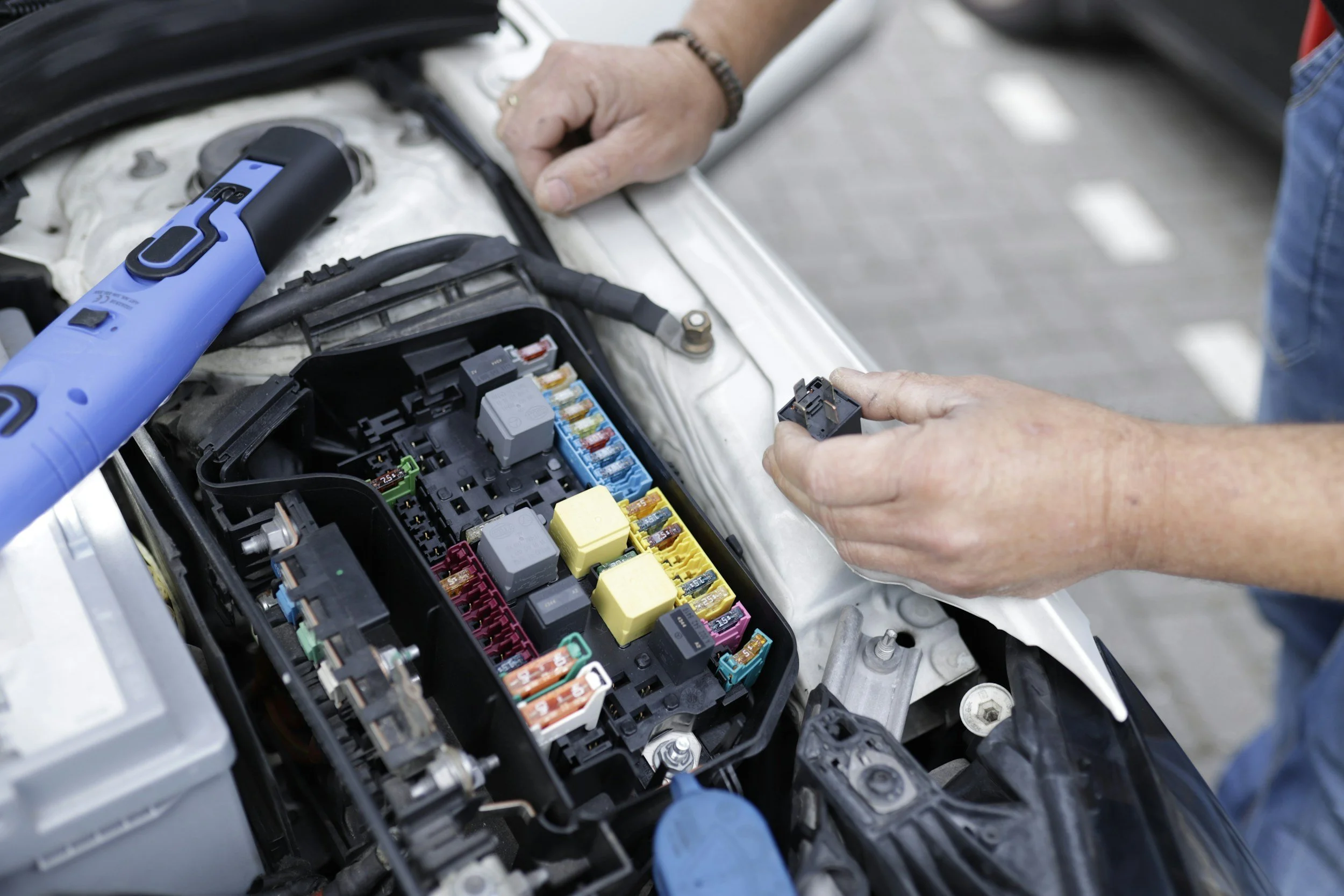
A quick-lube visit rarely involves any real diagnostic work. The service menu does not call for it. Full-service shops invest heavily in scan tools, code readers, and the technical knowledge to interpret what those systems report. That investment changes what is possible in a repair bay.
Why Diagnosis Comes First
Skipping diagnosis to jump straight to a repair is a gamble that rarely pays off. A worn caliper can produce the same noise as worn brake pads. A failing sensor can mimic symptoms from three different systems. Full-service technicians confirm the source of a problem before ordering a single part, which keeps repair costs honest and results reliable.
Vehicle History and Ongoing Relationships
A quick-lube chain treats every visit as its own isolated event. There are no notes carried forward, no awareness of what was flagged last time, and no one watching for patterns across appointments. Full-service shops maintain running records on every vehicle they service.
Those records are valuable. A technician who notices a particular issue has come up twice in eighteen months treats it differently than one who sees it for the first time. Upcoming services get mentioned before they become urgent. Small concerns get noted before they develop into expensive ones. That ongoing attention is part of what people are actually paying for at a full-service shop.
Warranty and Accountability
Work done at a full-service shop typically comes with a warranty on both parts and labor. If a repair does not perform as expected, the customer has a clear path back. Quick-lube chains offer no such assurance once a car pulls out of the bay.
That warranty is more than a policy. That warranty reflects how much confidence a shop has in the people doing the work and the parts being installed. Shops that back their repairs without hesitation tend to be the ones worth returning to.
Transparency in Estimates
Written estimates are standard at full-service shops. Before anyone picks up a tool, the customer knows exactly what the job will cost and why. Parts, labor, and any additional fees are laid out clearly. Chain locations rarely offer that kind of breakdown, often presenting a flat price with little room for questions.
A shop that explains its pricing is a shop that has nothing to hide.
Conclusion
Side by side, a quick-lube chain and a full-service shop might look similar. The difference becomes clear after a few years of ownership. One keeps a car running at a surface level. The other builds a working knowledge of that specific vehicle, catches problems before they grow, and stands behind every repair it performs. Drivers who treat their car as something worth maintaining properly tend to gravitate toward full-service shops eventually. Starting there from the beginning just means fewer surprises along the way.
HOW DO YOU FEEL ABOUT FASHION?
COMMENT OR TAKE OUR PAGE READER SURVEY
Featured




Jackets have always been an important part of fashion.