
Which Luggage Sets Work Best For Family Vacations?
PAGE
By PAGE Editor
When it comes to packing for a family trip, it can easily become a logistics issue even before you leave your home. Children have to carry their bags, parents have to carry the carry-ons, and incongruent suitcases slow the whole process down at the airport.
One of the adults ends up pushing a cart and another one running after a rolling bag in a busy terminal. Bags are left unattended, straps break, and wheels snag on uneven sidewalks.
This type of mess makes a vacation that is supposed to be relaxing more stressful.
This is altered by the right luggage set. A combination of sizes that fit well means that one adult can deal with the bags of the family with much less effort than working with individual, dissimilar pieces. Reduced visits to the airport, reduced dropped luggage, and a smoother stroll between the airport and the gate.
The choice of the appropriate set depends on how your family actually travels, in terms of both size and number of bags. Here is a breakdown of what each option has to offer at the table.
1. Single Large Suitcase (28-Inch)
When you are looking at choices of the best luggage for families, a large 28-inch suitcase is generally the place to begin the search. It is designed for longer journeys, usually with a capacity of about 100 liters, which is sufficient to carry a week or two of clothes, footwear, and accessories for one or two passengers.
This is the best size when you are carrying a single big bag rather than dividing items into multiple small bags. It saves time on the number of individual items you need to follow at baggage claim. Fewer bags also imply reduced possibilities of loss or delay of something in transit.
A large suitcase is also better when it comes to heavy items. Winter coats, additional shoes, and other shared toiletries can easily be packed in a single large case rather than being scattered to different smaller storage cases.
But there is a limit to a large case. It does not address the issue of handling the luggage of several travelers simultaneously. However large the bag may be, it still has but one set of wheels and one handle.
To do that, you must consider the way it can be incorporated into a bigger system and not consider it as a separate task.
2. Carry-On (20-Inch)
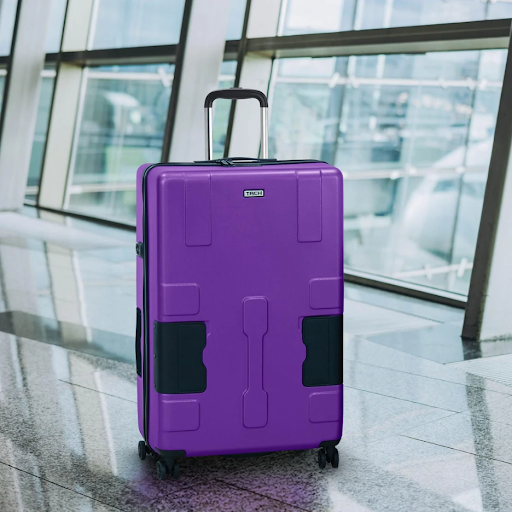
For shorter trips, a 20-inch carry-on is often the more practical choice. It fits standard overhead bin requirements, which means you can skip checked-bag lines and fees altogether. That alone can save time at both ends of a flight.
This size works well for weekend getaways or short family visits where packing light is realistic. It's also useful as a secondary bag, giving one family member, often a child or teenager, a case they can manage on their own. Letting kids pull their own bag teaches responsibility and takes pressure off the adults.
The tradeoff is capacity. A carry-on won't hold enough for a full week away, especially with kids' clothing and gear added in. On its own, it's best suited for quick trips rather than extended vacations.
Any time you pack up for more than three or four days, you tend to overpack a bag that is not meant to carry the weight.
Its use is more advantageous when it is used together with larger cases in a matched set because uniform sizing ensures that handling many bags is easier. A carry-on that is attached to larger ones provides flexibility without bulkiness.
3. Three-Piece Set (28/24/20)
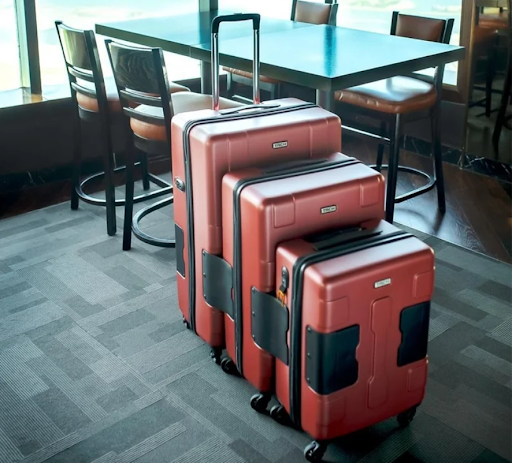
A three-piece set combining a 28-inch, 24-inch, and 20-inch case is one of the more balanced options for families. The range of sizes covers different needs at once: the large case for bulk items, the medium case for a second traveler, and the carry-on for essentials or a child's belongings.
This setup tends to work well for families of three to four people. It gives you enough total capacity for a standard vacation without requiring every bag to be oversized. Each case also serves a distinct purpose, so packing feels more organized from the start.
Because each piece is a different size, they stack and connect more predictably than random, unrelated luggage. That matters when one adult is responsible for moving all the bags through security, elevators, or hotel lobbies. Uniform sizing also means the bags nest and store more efficiently once you're back home.
For many families, this is the middle ground between having too little capacity and carrying more than necessary. It's flexible enough to cover most trip lengths without becoming unwieldy.
4. Four-Piece Set (28/24/20/20)
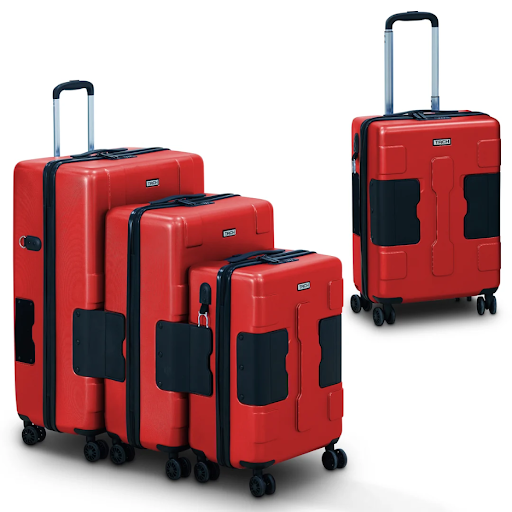
For larger families or longer trips, a four-piece set, typically two large cases plus two smaller ones, adds meaningful capacity. This configuration is built for situations where two adults are each responsible for packing, or where you're traveling with more than two children.
The extra 20-inch case is useful for splitting items by person rather than cramming everything into fewer bags. It also gives you flexibility on the return trip, when packed items may not fit the way they did originally. Souvenirs, extra clothing, and gifts tend to add up quickly on the way home.
The main consideration here is weight and volume. Four pieces mean more to carry, connect, and store, even if you're managing them as a single unit. This set works best when your family genuinely needs the extra capacity, not simply because more pieces are available. Buying more than you need only adds bulk without adding real value.
If your trips regularly involve extended stays, multiple destinations, or several travelers, this size range is worth prioritizing over smaller sets. It's an investment that pays off most on trips where every bag gets used.
Conclusion
Choosing the right luggage set comes down to two questions: how many people are traveling, and how long is the trip. Short trips call for a single carry-on. Longer trips with more people need the added capacity of a three- or four-piece set.
Matching size and quantity to your actual travel pattern, rather than buying based on price alone, makes the biggest difference. A well-matched set reduces how much you're juggling at each stage of the trip, from check-in to the hotel room.
Before your next family vacation, take a moment to map out what you're really carrying. It will save you time, effort, and stress at the airport.
HOW DO YOU FEEL ABOUT FASHION?
COMMENT OR TAKE OUR PAGE READER SURVEY
Featured



Jackets have always been an important part of fashion.