
Why Can an Air Conditioner Use More Electricity Without Cooling Any Less?
PAGE
By PAGE Editor
An air conditioner does not have to stop cooling properly before something changes in the way it operates. One of the earliest signs of declining efficiency can be surprisingly easy to miss: the house still reaches the thermostat setting, but electricity consumption begins to rise.
That can leave homeowners wondering how an AC system can apparently do the same job while using more power.
The explanation is that cooling performance and energy efficiency are not exactly the same thing. An air conditioner may compensate for less-efficient operating conditions by running longer or working harder. The indoor temperature remains comfortable, so the change may go unnoticed until a higher electric bill appears.
Several factors can produce this situation, ranging from changing weather conditions to airflow restrictions and aging equipment.
Reaching the Same Temperature Does Not Mean Using the Same Amount of Energy
A thermostat primarily tells you whether the home has reached the selected temperature. It does not tell you how much effort the cooling system needed to get there.
Imagine that an AC previously needed 20 minutes of operation to remove enough heat from the house. If changing conditions cause the same system to need 27 minutes, the thermostat may still reach exactly the same temperature.
From the homeowner's perspective, nothing appears different.
From the electric meter's perspective, however, the compressor and fans have been operating considerably longer.
Small increases in runtime repeated across dozens of cooling cycles can eventually become noticeable on a monthly bill.
This is why energy consumption can sometimes reveal a developing efficiency problem before comfort noticeably changes.
Hotter Weather Can Increase Electricity Use Even With the Same Thermostat Setting
Before assuming the air conditioner has a problem, compare the conditions under which it has been operating.
Setting the thermostat to 74°F does not create the same cooling load every day.
If outdoor temperatures rise from 85°F to 98°F, the home gains heat more rapidly through the roof, walls, windows, doors, and air leakage. The air conditioner must remove that additional heat even though the thermostat setting has not changed.
Solar exposure also matters. Several extremely sunny days can create a different cooling demand from cloudy days at similar outdoor temperatures.
Humidity can further influence operation because an air conditioner may remove both heat and moisture from indoor air.
For that reason, comparing one electricity bill with another without considering weather can sometimes give a misleading impression of AC performance.
Restricted Airflow Can Make the System Work Harder
Residential AC systems depend on moving the correct amount of air through the indoor equipment and throughout the house.
When airflow becomes restricted, the system may still produce cold air, but delivering enough cooling to the living space can take longer.
Common factors that can affect airflow include:
A heavily loaded air filter
Blocked supply or return registers
Furniture obstructing return-air grilles
Problems with the indoor blower
Duct restrictions
Dirt accumulating on heat-transfer surfaces
Some restrictions develop gradually, which is why homeowners may not notice a sudden difference in comfort.
Instead, average cooling cycles become slightly longer over time.
A simple first step is to make sure accessible registers are open and unobstructed and that the air filter is being replaced or serviced according to the equipment manufacturer's recommendations.
Heat-Transfer Surfaces Matter Even When the Air Still Feels Cold
An air conditioner moves heat rather than simply producing cold air.
Inside the house, the evaporator coil absorbs heat from the indoor airstream. Outside, the condenser releases that heat into the surrounding air.
Both processes depend on effective heat transfer.
If dust, debris, or other buildup interferes with those surfaces, the system may need additional runtime to accomplish the same amount of cooling.
This does not always create an immediate “AC isn't cooling” complaint. There can be a period when cooling remains acceptable while efficiency gradually declines.
Routine maintenance therefore matters before obvious performance problems develop. Homeowners who want to understand the appropriate upkeep involved in cleaning an air conditioner can use a dedicated maintenance guide rather than waiting until reduced efficiency develops into a larger cooling problem.
The important distinction is that cleaning is only one possible factor. Higher electricity consumption should not automatically be blamed on dirty equipment.
Outdoor Condenser Conditions Can Affect Efficiency
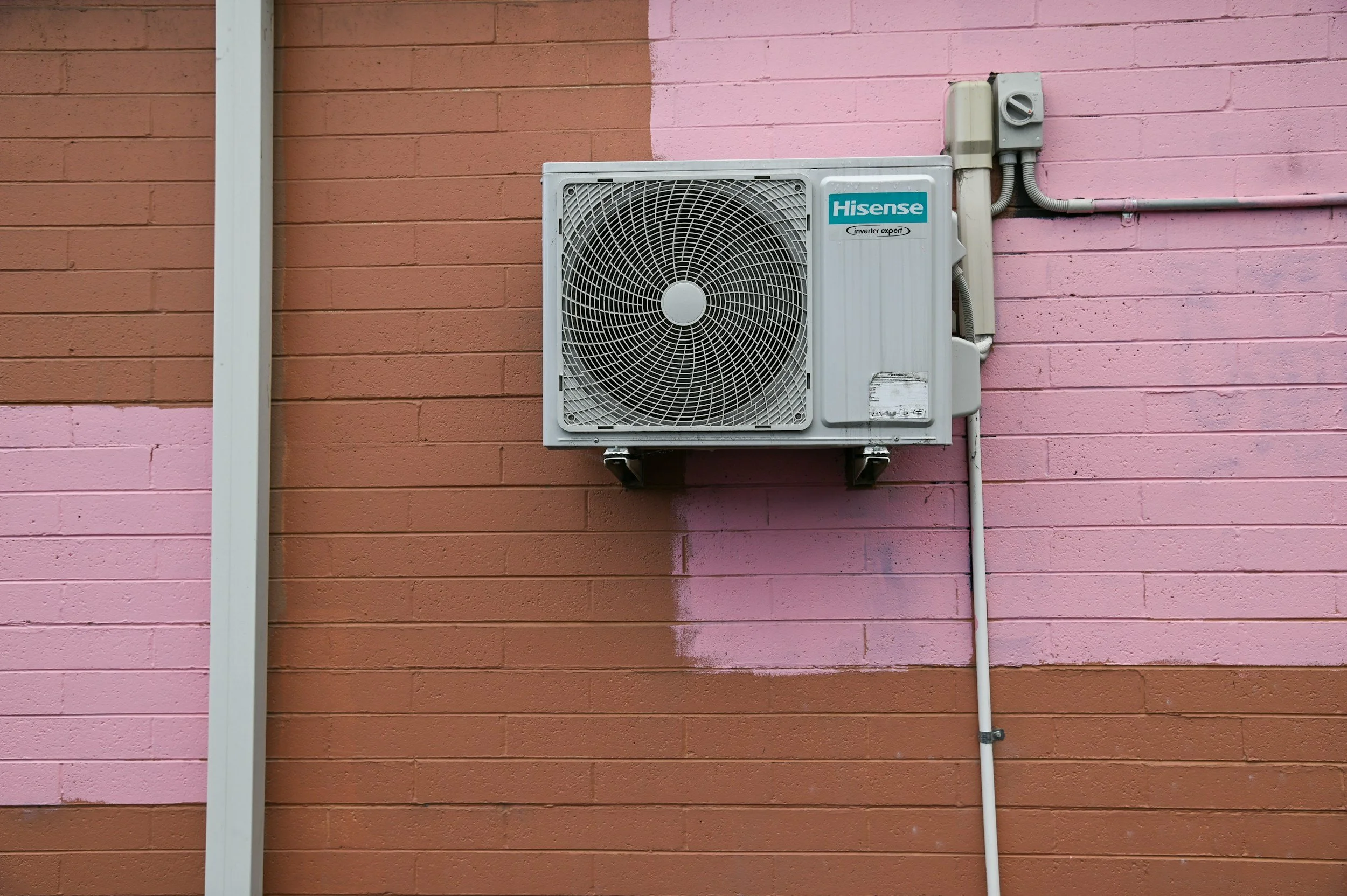
The outdoor portion of an AC system needs to release heat collected from inside the house.
To do that effectively, the condenser must be able to draw outdoor air across the coil and discharge heated air away from the unit.
Its surroundings can change over time.
Shrubs may grow closer to the equipment. Leaves and debris can accumulate nearby. Homeowners may install fencing, storage containers, or other structures without realizing that the condenser needs adequate clearance.
If hot discharge air cannot move away effectively, some of it may circulate back toward the condenser.
The unit can still cool the house under these conditions, but rejecting heat becomes more difficult. That can increase operating time and energy consumption.
Manufacturer-specified clearances should therefore be maintained around outdoor equipment rather than assuming that any open space is sufficient.
Air Leaks Can Add Cooling Work Without Changing Indoor Comfort
Sometimes the air conditioner has not become less efficient at all. Instead, the house is asking it to do more work.
Air leakage is one example.
Small gaps around doors, windows, attic penetrations, recessed fixtures, utility openings, or other parts of the building envelope can allow hot outdoor air to enter.
The air conditioner compensates by removing the additional heat.
As long as it has sufficient capacity, the thermostat continues reaching its normal setting. The homeowner experiences the same indoor temperature but pays for the additional runtime necessary to maintain it.
This is particularly relevant when comparing electricity consumption from one year to another because the condition of weatherstripping, seals, doors, and other building components can change gradually.
Changes Inside the Home Can Increase Cooling Demand
Cooling load is not created only by outdoor heat.
Everyday activities and appliances also release heat indoors.
A home may require additional cooling after changes such as:
More people occupying the house
Increased use of ovens or other cooking equipment
Adding computers or electronics
Running heat-producing appliances for longer periods
Leaving blinds open on strongly sunlit windows
Frequent opening of exterior doors
Even seemingly minor changes can add up when they occur for many hours each day.
This is another reason an electricity increase should be considered in the context of the entire home rather than immediately attributed to an AC malfunction.
Aging Components Can Gradually Change Efficiency
Mechanical and electrical equipment changes with age.
Motors, bearings, electrical components, compressors, and other parts experience years of operating cycles and exposure to heat.
That does not mean an older air conditioner automatically needs replacement. Many systems continue providing reliable cooling for years with appropriate maintenance.
However, gradual changes in equipment condition can influence how efficiently the system performs.
A homeowner may first notice:
Longer cooling cycles
More frequent operation
Higher electricity consumption
New or unusual sounds
Difficulty maintaining temperature during extreme heat
When increased energy use appears alongside other changes in operation, professional inspection becomes more worthwhile.
Replacing random components based solely on a higher utility bill is not a useful diagnostic strategy. A technician can evaluate how the system is actually operating before recommending repairs.
Thermostat Habits Can Change Without Being Obvious
Sometimes the explanation is simpler than expected.
A difference of only a few degrees in thermostat settings can substantially change total cooling runtime over an entire month.
Schedule changes can have the same effect.
Perhaps the thermostat previously increased the temperature while everyone was away during the day, but people are now working from home. Maybe vacation settings were used more frequently last summer. Perhaps a programmable schedule was accidentally changed.
The displayed temperature may look familiar whenever someone checks it, while the daily operating schedule has changed considerably.
Before investigating equipment problems, review the full thermostat schedule rather than looking only at the current setting.
How Can You Tell Whether the Increase Is Really Coming From the AC?
A higher electricity bill alone does not prove that the cooling system is responsible.
Water heaters, pool pumps, electric vehicle charging, refrigerators, clothes dryers, additional occupants, and other electrical loads can also change household consumption.
Instead of focusing only on the amount due, compare kilowatt-hour consumption when utility statements provide it.
Also compare:
Similar months from previous years
Outdoor temperature patterns
Household occupancy
Thermostat schedules
New appliances or equipment
Changes in AC runtime
Smart thermostats may provide runtime history, which can be particularly useful.
If the AC is maintaining the same temperature but operating substantially longer under comparable weather conditions, that is more meaningful than an electricity-cost increase by itself.
When Is Professional Inspection Worthwhile?
An occasional high bill during an unusually hot month is not necessarily evidence of a problem.
A persistent pattern deserves more attention.
Consider professional evaluation when higher energy consumption is accompanied by symptoms such as:
Cooling cycles becoming noticeably longer
Reduced airflow
Unusual noises
Frequent cycling
Difficulty maintaining temperature during weather the system previously handled
Ice forming on AC components
Unexpected water around indoor equipment
Refrigerant, electrical, compressor, and internal mechanical issues should be left to qualified HVAC professionals rather than investigated through DIY disassembly.
Efficiency Problems Often Appear Before Cooling Problems
One of the most useful things to remember about air conditioning is that a system does not have to completely fail before its operating conditions change.
The AC may continue delivering the temperature homeowners expect while compensating with longer runtime and greater electricity consumption.
Weather, airflow, heat-transfer conditions, condenser surroundings, air leakage, household changes, thermostat schedules, and equipment condition can all contribute.
That is why an unexplained increase in energy use should be approached as a pattern rather than a single symptom.
Start by comparing weather, household activity, thermostat settings, filters, accessible airflow, and runtime. If electricity consumption continues rising under similar conditions, professional inspection can determine whether the system itself is losing efficiency.
A comfortable house is important, but how much energy the air conditioner requires to maintain that comfort matters too. Paying attention to both can reveal developing problems long before the home stops feeling cool.
HOW DO YOU FEEL ABOUT FASHION?
COMMENT OR TAKE OUR PAGE READER SURVEY
Featured



Your AC rarely dies without warning. Learn the seven early failure signs and the exact first steps to take before you lose cool air entirely.