
Why Jewelry Packaging Is Becoming Part of the Luxury Experience
PAGE
By Finixio Digital
Luxury jewelry is no longer judged only by the piece itself. From the moment a package arrives to the moment a necklace, ring, or bracelet is revealed, every detail can shape the customer's perception. This is why jewelry packaging has become an increasingly important part of the luxury experience, combining protection, presentation, usability, and brand identity in one physical touchpoint.
The Luxury Experience Starts Before the Jewelry
For many jewelry brands, packaging is the first physical interaction between the customer and the product.
This is particularly relevant for online purchases. A customer may spend considerable time evaluating a piece through photographs and product descriptions, but the actual package becomes the first tangible representation of the brand.
A well-considered jewelry box can create a sense of anticipation without relying on excessive decoration. Material texture, opening mechanisms, proportions, and interior presentation can all influence how the product is perceived.
Luxury packaging therefore needs to do more than look expensive. It should make the transition from receiving the package to discovering the jewelry feel deliberate and well designed.
Why Jewelry Box Sizes Matter
One of the less visible aspects of premium packaging is proportion.
Different jewelry products require different dimensions and internal arrangements. A ring, pair of earrings, bracelet, and long necklace cannot always be presented effectively in the same box format.
Choosing appropriate jewelry box sizes helps address both practical and aesthetic requirements.
A box that is too large can make a small piece appear insignificant while creating unnecessary movement inside the package. A box that is too small may compromise presentation or make the jewelry difficult to remove.
The right dimensions should consider:
Jewelry type and physical dimensions
Interior insert requirements
Product positioning
Shipping and storage conditions
Opening and handling experience
Overall brand proportions
In luxury packaging, these details matter because visual balance often affects perceived quality.
Customization Creates a More Consistent Brand Identity
A standard packaging format can be suitable for basic retail applications, but luxury brands often require greater control over presentation.
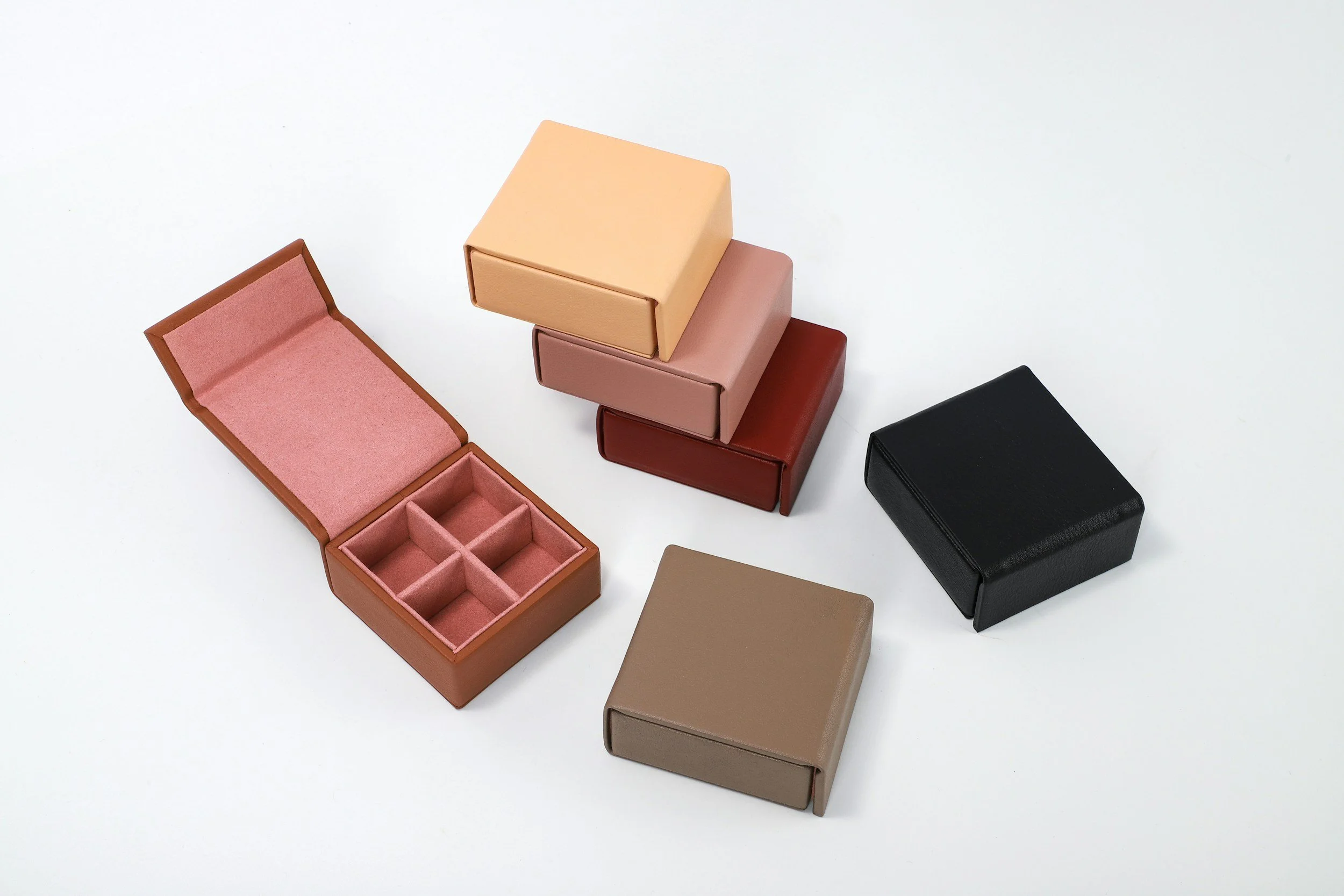
A customized jewelry box can be developed around the characteristics of a specific collection. Dimensions, inserts, materials, finishes, colors, and structural details can all contribute to a more consistent visual identity.
For example, a jewelry brand selling delicate necklaces may need a longer interior configuration, while a ring collection may benefit from a compact box with a precision-cut insert.
Customization also makes it possible to create a packaging system rather than a single box.
A brand could maintain consistent exterior elements across several product categories while adapting the internal structure to each jewelry type. This approach creates recognition without sacrificing functionality.
Jewelry Box Packaging Has a Functional Role
Luxury presentation should not come at the expense of product protection.
During transportation, jewelry can be exposed to vibration, pressure, and repeated handling. The packaging needs to keep the product properly positioned and reduce unnecessary movement.
This is where jewelry box packaging serves a practical purpose.
An appropriately designed insert can help prevent a ring from shifting, keep earrings in position, or maintain the arrangement of a necklace. The box structure should also provide enough rigidity for the intended distribution environment.
For brands selling internationally, packaging performance becomes even more relevant because products may pass through several logistics stages before reaching the customer.
Materials Influence Perceived Value
Material selection has a direct relationship with how packaging feels.
Rigid board, textured paper, soft-touch finishes, fabric inserts, and specialty printing techniques can create different tactile and visual effects. However, luxury does not necessarily require using the most expensive material available.
The material should support the brand's positioning and the product itself.
A minimalist fine-jewelry brand may benefit from restrained textures and subtle finishing. A fashion jewelry label targeting younger consumers may use stronger colors or distinctive graphic elements.
The important point is consistency.
When the materials, colors, typography, and structure work together, the packaging feels intentional rather than assembled from unrelated components.
The Interior Is as Important as the Exterior
A common mistake in packaging design is concentrating too heavily on the outside of the box.
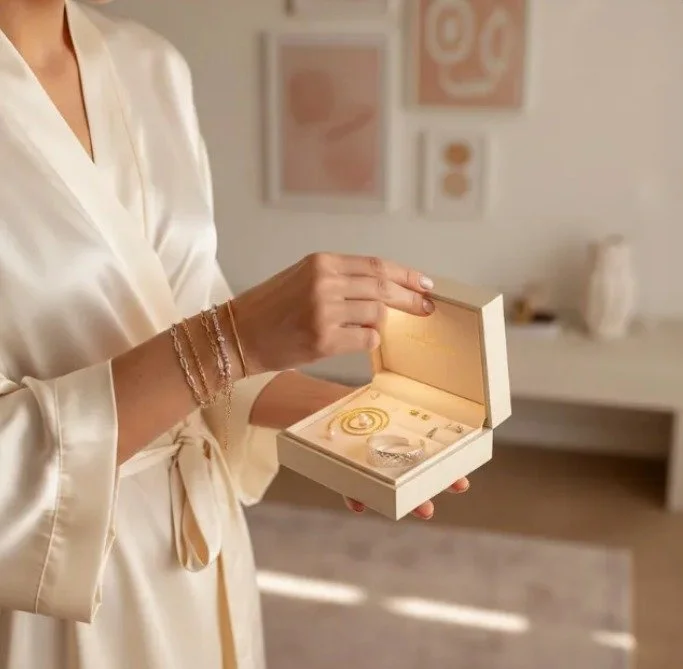
The customer spends much of the unboxing experience interacting with the interior. The way the jewelry is positioned, how the insert feels, and how easily the product can be removed all influence the overall impression.
An effective interior should answer several practical questions:
Is the jewelry securely positioned?
Is the product immediately visible when the box opens?
Can the customer remove it without difficulty?
Does the interior complement the jewelry?
Does the insert remain stable during transportation?
These considerations can be especially important when choose jewelry box sizes, because internal proportions influence both product security and visual presentation.
Packaging and the Rise of Social Commerce
The luxury experience increasingly extends beyond the individual customer.
Jewelry packaging frequently appears in product photography, influencer content, unboxing videos, and social media posts. A distinctive package can therefore become part of the brand's visual presence outside the retail environment.
This does not mean every box needs to be designed specifically for social media.
Instead, packaging should be visually coherent enough to work naturally alongside the jewelry. A recognizable box shape, consistent logo placement, or distinctive material finish can help reinforce brand identity whenever the package appears in customer-generated content.
Sustainability Is Changing Luxury Packaging
Luxury packaging is also being influenced by growing expectations around material efficiency and environmental responsibility.
Excessive layers, oversized boxes, and unnecessary decorative components can increase material consumption without improving the customer experience.
A more considered approach is to optimize the package around the product.
Appropriate jewelry box sizes can reduce unused space. Efficient inserts can minimize unnecessary materials, while recyclable paper-based components may provide alternatives to more difficult-to-process materials where product requirements allow.
The goal is not simply to use less material. It is to use the right amount of material for protection, presentation, and durability.
How Brands Can Approach Customized Jewelry Boxes
Developing a customized jewelry box should begin with the product rather than the artwork.
Before selecting colors or finishes, brands should define the physical and commercial requirements of the package.
A practical development process can include:
1. Define the Jewelry
Measure the product and identify its shape, dimensions, weight, and presentation requirements.
2. Determine the Interior Structure
Decide how the jewelry should be positioned and secured. Different products may require different inserts.
3. Establish the Appropriate Box Dimensions
Select jewelry box sizes that provide adequate protection without creating unnecessary empty space.
4. Match the Brand Identity
Choose materials, colors, printing, and finishing options that correspond with the brand's positioning.
5. Test Before Mass Production
Samples should be evaluated for appearance, usability, product fit, and transportation performance before large-scale production begins.
For brands looking for more guidance, the article on how to choose a custom jewelry box provides a useful starting point for evaluating structure, materials, and customization requirements.
Building a Luxury Packaging System
The strongest jewelry brands rarely treat packaging as an isolated product.
Instead, packaging becomes part of a broader system that can include jewelry boxes, pouches, certificates, care cards, shipping cartons, and other presentation elements.
A consistent system makes different products feel connected even when their individual packaging formats vary.
For brands developing a new packaging collection, MJCPACK offers custom jewelry boxes and packaging designed around different jewelry products, dimensions, structural requirements, and brand presentation needs.
The focus should remain on creating packaging that works for the product while maintaining a consistent customer experience.
What Defines Luxury Packaging Today?
Luxury packaging is becoming less about adding more elements and more about making better decisions.
The most effective package is often one where every component has a reason to exist. The dimensions fit the jewelry. The insert protects it. The materials support the brand. The opening experience feels natural. The package is also practical enough to survive transportation and storage.
This balance is increasingly important as customers become more familiar with premium packaging across fashion, beauty, technology, and lifestyle products.
Conclusion
Jewelry packaging has evolved from a protective container into an important part of the luxury experience. Appropriate jewelry box sizes, thoughtful jewelry box packaging, and a well-designed customized jewelry box can influence everything from product protection to brand perception.
The best approach is not to make packaging unnecessarily elaborate. It is to design every detail around the jewelry, the brand, and the customer's experience. When structure, materials, presentation, and practicality work together, the packaging becomes a natural extension of the luxury product inside.
HOW DO YOU FEEL ABOUT FASHION?
COMMENT OR TAKE OUR PAGE READER SURVEY
Featured

Preparing a home for overnight guests creates different priorities from ordinary weekly upkeep.