
Air Suspension Pressure and Ride Height Adjustment
PAGE
By PAGE Editor
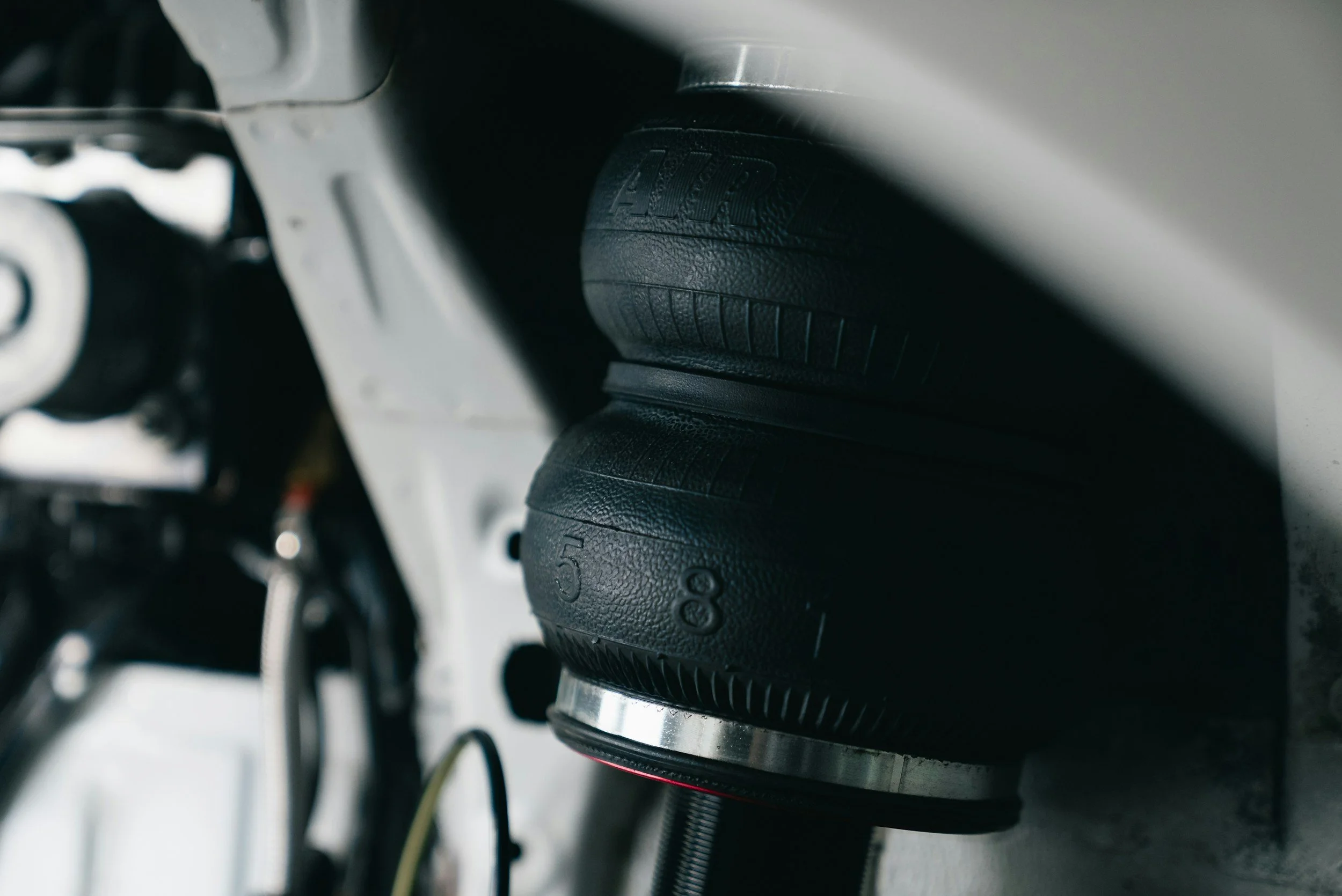
Air suspension pressure is not a universal number. The right setting depends on the vehicle, the specific air spring system, the load, and the ride height the system is designed to maintain. A pressure that supports a lightly loaded pickup may be unsuitable once a trailer is connected or cargo is added; a setting that feels firm may also alter ride height.
For air helper systems, start with the exact vehicle manual and kit instructions. The goal is usually to support the vehicle at its intended loaded stance without exceeding the air spring’s stated limits. Do not treat air helper springs as a way to raise a vehicle beyond its intended suspension height or to increase its GVWR, GAWR, payload, tire capacity, hitch rating, or towing rating.
Retrue owners researching a compatible air suspension pressure setup should confirm year, make, model, kit part number, included instructions, and current compatibility information before ordering or adjusting anything.
Start With the Manufacturer’s Pressure Limits
Every system has its own minimum and maximum operating pressure. Those limits are not suggestions, and they are more important than a pressure recommendation copied from another truck, forum post, or video. Use the limits in the manual supplied with your exact kit, including any instructions for storage, unloaded driving, inflation fittings, compressors, and separate left/right circuits.
A manufacturer’s minimum pressure can help the air spring retain its intended shape when the vehicle is unloaded. The maximum pressure is a component limit, not a permission slip to carry more weight. Firestone states that air helper springs do not change the manufacturer-set GVWR because the brakes, axles, bearings, frame, and other vehicle systems still determine load capability. Firestone Airide FAQ
Pressure is not a shortcut to more capacity
Air spring air bags can assist rear-suspension support and help correct sag from a load that is already within the vehicle’s ratings. They cannot correct an overloaded axle, inadequate tires, improper tongue weight, loose cargo, or a poorly matched trailer.
Before adding air, check the truck or van’s door-jamb information, owner’s manual, hitch documentation, tire ratings, and trailer instructions. Keep cargo secured. NHTSA advises drivers to avoid excessive cargo and to secure loads so they cannot shift, fall, leak, or escape the vehicle. NHTSA load-security guidance
If the loaded vehicle remains visibly uneven, unstable, or outside the manufacturer’s guidance after a careful adjustment, stop and consult a qualified suspension or towing professional.
Set Ride Height With the Actual Load in Place
A useful adjustment is made with the vehicle configured for the work it will do. If you tow a travel trailer, connect the trailer as you normally would. If you haul tools, a slide-in camper, or equipment, load the vehicle in the normal configuration before establishing a reference setting.
Park on firm, level ground. Set the parking brake, follow the vehicle’s safety procedures, and avoid working beneath an unsupported vehicle. Record a few repeatable observations before changing pressure:
The vehicle’s loaded stance, viewed from both sides.
A consistent ride-height measurement point selected in the kit or vehicle documentation.
Left and right air spring pressures.
Load type, trailer connection, and relevant cargo placement.
Handling observations after a careful test drive.
The aim is not necessarily to make every body panel appear perfectly level. It is to bring the vehicle toward the intended loaded ride height and keep the suspension operating within its documented range. In trailer air-suspension guidance, Hendrickson notes that operation outside specified ride height can reduce ride quality, increase wear, and damage cargo; it also directs users to measure on level ground and compare actual height with the designed height. Hendrickson ride-height procedure
That document concerns trailer suspension, but the underlying discipline is useful: measure rather than guess, and use the design documentation for the exact system being adjusted.
Increase pressure gradually
Inflate in small increments, then allow the suspension to settle before measuring again. A short, cautious test drive can reveal whether the vehicle settles differently under braking, turns, bumps, or normal acceleration. Recheck the pressure and ride-height reference after the drive.
Do not pursue extra lift beyond what the vehicle and kit instructions specify. Firestone cautions that its aftermarket helper-spring kits are designed around the original suspension height and configuration, and that height changes can stretch or compress components beyond their intended capability. Firestone Airide FAQ
Balance Left and Right Pressure Deliberately
Many load leveling air bags use separate inflation valves or independent air paths. That arrangement can allow side-to-side tuning when a load is consistently offset, but it also requires more attention. Equal pressure is a sensible starting point for a centered load; it is not an automatic answer for every setup.
First, verify the basics: load placement, tire condition and inflation, trailer loading, hitch setup, suspension condition, and whether the air lines or fittings are leaking. Do not use a large pressure difference to hide a mechanical issue, a leaning vehicle, or cargo that should be repositioned.
For a genuinely uneven but rated load, follow the kit documentation for independent adjustment. Change one variable at a time, use small increments, and log the outcome. If a trailer is involved, a weight-distribution hitch and air helper springs have different jobs: the hitch manages weight transfer, while helper springs support the vehicle’s rear suspension. Firestone Airide FAQ
What an imbalance can tell you
A repeated need for noticeably different pressure on one side is a reason to inspect rather than simply keep adding air. Check whether cargo is offset, a tank is full on one side, the trailer is loading the vehicle unevenly, or a suspension component needs professional attention. Also inspect air lines for rubbing, kinks, loose fittings, and damage according to the kit instructions.
Tune Ride Quality Without Chasing a Single PSI Number
Pressure affects more than ride height. In an air-suspension system, increasing spring pressure generally increases spring rate and can raise the vehicle; the pressure required varies with the vehicle and suspension design. Bag Riders adjustment guide
That relationship explains why a pressure that restores height may feel firmer than expected. It also explains why an unloaded setting often cannot be reused unchanged for towing or hauling. Road surface, load placement, trailer behavior, shock condition, and tire pressure all influence what the driver feels.
A practical approach is to find a documented, compliant baseline for each recurring use case rather than to search for one “best” pressure:
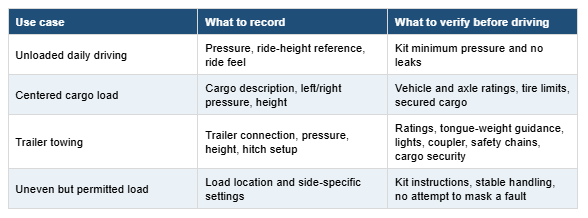
Keep the notes in a phone, glovebox folder, or maintenance log. Include the date, load type, left/right pressure, ride-height measurement, and any handling notes. This turns adjustment from repeated trial-and-error into a repeatable setup process.
For a new Retrue air ride suspension kit, use the installation materials for the exact product and vehicle application. Retrue’s installation resource center provides fitment-oriented manuals and guides; verify that the document matches the kit part number before beginning work. Retrue installation support
Safety Checks Before Every Loaded Trip
Pressure adjustment should be part of a broader pre-trip inspection, not the whole inspection. Check air spring pressure when checking tires, and inspect visible air-system components for leaks or contact with moving, hot, or sharp parts. Firestone similarly advises checking helper-spring pressure when performing monthly tire-pressure checks. Firestone Airide FAQ
Use this short routine before heading out with a trailer or significant cargo:
Confirm that vehicle, axle, tire, hitch, and trailer limits are not exceeded.
Confirm the exact kit’s minimum and maximum pressure limits.
Measure loaded ride height at the same reference points used in your log.
Check both sides for leaks, rubbing, damaged lines, or loose hardware.
Secure cargo and confirm trailer coupling, chains, breakaway equipment, lighting, and tire condition as applicable.
Drive conservatively and stop to inspect if handling, steering, braking, or ride height seems abnormal.
Frequently Asked Questions
What air suspension pressure should I run?
Use the minimum and maximum range in the manual for your exact vehicle-specific kit, then adjust gradually for the actual load and intended ride height. There is no responsible universal PSI recommendation.
Can air helper springs increase payload or towing capacity?
No. They may help support a rated load and reduce suspension sag, but they do not change manufacturer-set vehicle or axle ratings. Firestone Airide FAQ
Should both air bags have the same pressure?
Start with equal pressure for a centered load unless your kit documentation says otherwise. For a permitted offset load, make only documented, measured adjustments and investigate any persistent side-to-side difference.
Why did the vehicle get taller when I added pressure?
Air pressure changes the effective spring rate and can raise ride height. The result depends on the vehicle, suspension design, and load. Bag Riders adjustment guide
When should I seek professional help?
Seek qualified guidance if you find leaks, component contact, recurring uneven ride height, unusual handling, uncertainty about ratings, or any conflict between the kit instructions and the vehicle’s condition.
HOW DO YOU FEEL ABOUT FASHION?
COMMENT OR TAKE OUR PAGE READER SURVEY
Featured




The tea is made. Getting it from the counter to the table is the hard part.