
Best-Selling Eyeglasses: The ZEELOOL Glasses Styles Everyone Is Talking About
PAGE
By PAGE Editor
A best-seller page can be a useful way into an overcrowded eyewear search. It is not, however, proof that a given frame is the top-selling option, the best-made choice, or a dependable match for every prescription.
That distinction matters when shopping online. The material available for this review does not disclose frame-level sales, a ranking period, order volume, or a methodology for identifying individual ZEELOOL frames as best sellers. Nor does it confirm the current collection placement or specifications of named styles. In this article, “best-selling” refers to the retailer’s collection designation, not an independently audited sales ranking.
This article provides general shopping information, not medical or optician advice. Prescription questions, progressive-lens needs, and persistent fit issues warrant advice from an optical professional.
Use the collection as a starting point
The best selling eyeglasses page is most useful as a short list to investigate, not a recommendation to buy. A translucent cat-eye and a familiar black rectangle may look equally persuasive in a product image, but bridge fit, lens depth, and long-day comfort can lead to very different outcomes.
A broader look at ZEELOOL glasses can also help shoppers compare popular frame shapes across different colors, widths, materials, and prescription lens options before choosing a pair for daily wear.
Start with the job the glasses need to do. An everyday pair for meetings, driving, errands, and screen time asks more of a frame than a colorful backup pair or an occasional statement accessory. That question usually narrows a search more effectively than a collection label.
Five shape directions to compare
Recent spring/summer 2026 sunglasses coverage has highlighted soft cat-eyes, 1990s-style ovals, round metal frames, thin metal construction, and compact proportions. Those are fashion observations about sunglasses, not evidence of prescription-frame sales or lens suitability. Still, they offer useful language for comparing optical frames.
Soft cat-eye: definition without a hard edge
A soft cat-eye rises gently at the outer corners rather than ending in a pronounced wing. It can bring definition to a simple outfit while feeling less overtly retro than a sharper version of the shape.
It may suit someone who wants personality in an all-day frame without a dramatic profile. Face-shape advice can be a useful visual prompt, but it is not a fitting system. Compare the frame width, bridge, and lens position with glasses that already sit comfortably on your face.
Compact oval: a restrained retro note
Compact oval frames sit relatively close to the face and reference a lower-profile 1990s look. Depending on color, material, and scale, they can work as a quiet everyday choice or a more casual second pair.
The practical question is not only whether the outline appeals. Check the lens opening and listed lens options. A smaller lens area may suit the intended look but be less practical for a particular prescription or lens design. Progressive-lens wearers should confirm frame-specific requirements before treating a compact style as a viable option.
Round metal: light lines, specific fit questions
Round metal frames have a finer, more graphic appearance than thicker frames. The effect can feel deliberate and vintage-influenced without adding much visual bulk. Recent trend coverage has also noted thin metal frames and compact oval or square designs.
For daily wear, look past the outline. Bridge design, overall width, and temple length can matter substantially. If adjustable nose pads or narrower bridges have been uncomfortable before, that experience is more useful than a product photo when deciding whether to shortlist a metal frame.
Rectangular: the practical reference point
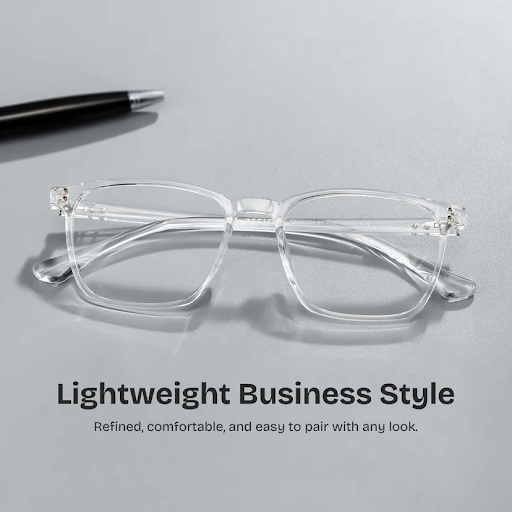
Rectangular frames remain a useful baseline because their horizontal line can move easily between casual and professional settings. For a first online order, a neutral rectangle may also be simpler to compare with a pair already in regular rotation.
That does not make every rectangle a low-risk choice. A narrow, shallow lens can look more severe than expected, while a wider rectangle may feel more current and visually present. The category gets you started; the listed dimensions should determine whether it stays on the list.
Geometric and oversized: let proportion do the work
Geometric frames use altered corners, angles, or architectural lens outlines to make glasses a more visible part of an outfit. A consumer-frames research release associated fashion-conscious preferences with cat-eye, aviator, browline, rimless, and geometric styles. The available excerpt does not provide percentages, a date, or evidence of ZEELOOL-specific demand, so it is best treated as a broad style signal rather than a buying directive.
Oversized frames make scale the main feature. They can create a confident look, but wider is not automatically more wearable. Lens opening, total frame width, and how the frame rests at the bridge all deserve attention.
For either direction, think about where the glasses will be worn most. A distinctive shape in black, tortoiseshell, clear material, or another neutral finish may be easier to repeat than the same shape in a high-contrast pattern. Material merits a close look on the product page, too. Metal, thicker plastic, and mixed-material frames can differ in visual weight, hardware, and finish; the listing should clarify what you are comparing rather than leaving those details to the photos.
Stronger prescriptions add another consideration. A thin, wide frame may be visually appealing, but lens availability, lens design, and edge-thickness trade-offs can affect whether it is a sensible choice. An optician can help assess those trade-offs when a prescription or frame is more demanding.
Before ordering online
Build a small, realistic shortlist from the product pages. Measurements are comparison tools, not guarantees of fit, but they are more useful than product images alone.
Use a pair you already wear comfortably as a reference, then compare:
Lens width and height: These indicate the scale of the lens opening.
Bridge width: This helps with comparison, though bridge shape and how the frame sits on the nose matter, too.
Temple length: If the length on your current pair works, it is a useful reference point.
Overall frame width: When listed, this can help avoid a frame that is substantially narrower or wider than your usual pair.
Pupillary distance and lens requirements: Follow the retailer’s ordering instructions and verify that the available lens options suit your prescription.
A shopper who wants a bolder frame for meetings and errands might narrow the field to a soft cat-eye and one geometric option, then compare dimensions with their current pair. Someone placing a first online order may prefer a neutral rectangle in a familiar size. Neither route is inherently better. The useful choice is the one that fits the frame’s likely role after checkout.
If you have a stronger prescription, wear progressive lenses, or have had repeated fit problems, confirm suitability before ordering and consider guidance from an optical professional.
A collection label can identify frames worth a closer look. Begin with the silhouette that suits your daily setting, then let measurements, lens requirements, and comfort narrow the choice. A popular frame may be worth considering, but a well-fitted frame is the more durable decision.
HOW DO YOU FEEL ABOUT FASHION?
COMMENT OR TAKE OUR PAGE READER SURVEY
Featured




Video is no longer optional for marketing teams, e-commerce brands, and solo creators.