
Business Benefits of Linking Trade Spend to Sell-Through Performance

PAGE
By PAGE Editor
Trade investments can influence product movement, retailer relationships, and margins across consumer packaged goods operations. Yet the financial value of a promotion becomes clearer when actual product sales are connected to the dollars supporting that activity. Linking trade spend with sell-through performance gives teams practical evidence for evaluating promotional outcomes and planning future investments.
Modern trade spend management software can connect deduction data with depletion data to show what happened after a promotion ran. This connection helps sales and finance teams evaluate performance using actual secondary sales instead of relying solely on planned figures. Clear visibility into retailer, promotion, and item-level results also supports timely decisions about future spending.
Connect Promotional Spending With Actual Sales
Sell-through data shows how products moved after reaching distributors or retailers, which makes it useful for assessing promotional activity. Connecting this information with trade spend and deduction data helps teams evaluate how individual promotions relate to actual sales movement. The comparison also gives sales and finance teams a structured way to review promotional outcomes before future spending decisions.
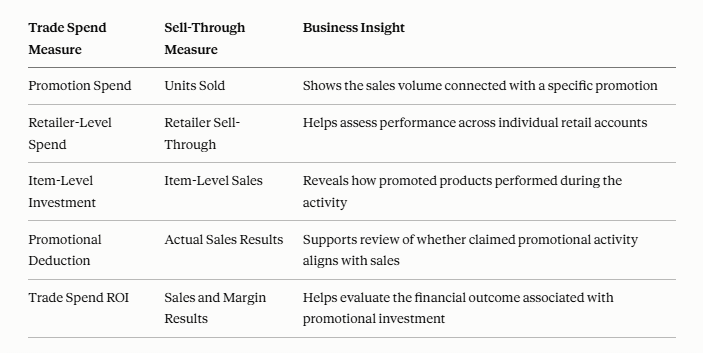
Identify Promotions That Drive Incremental Volume
Promotions should be assessed according to the sales activity associated with each investment. Linking promotional records to actual secondary sales helps teams identify deals connected with incremental volume and flag promotions that need closer review. This information supports informed decisions about where future promotional dollars should be allocated.
Gain Clearer Visibility Into Trade Spend ROI
Research published by Springer notes that more than 20% of sales in a product category can occur under sales promotions. That level of promotional activity makes sell-through data valuable for separating actual sales results across promotional periods. Teams can connect spend, item-level margins, and product movement to assess how individual trade investments contributed to performance.
Using trade spend management software for this analysis can help teams examine:
Trade spend ROI across promotions
Sell-through rates by individual item
Margin performance connected with trade activity
Deduction trends that may affect promotional results
Improve Sales and Finance Alignment
Sales and finance teams frequently approach trade activity from different operational responsibilities. A shared view of deductions, depletion data, and promotion performance gives each team access to consistent actuals when discussing results. This alignment can reduce uncertainty around promotion outcomes, retailer profitability, and margin impact.
Support Earlier Budget Decisions
Current sell-through and deduction information can reveal budget risks before the end of a reporting period. Teams can see where trade spend is running against budget and assess whether the related promotions are producing the intended sales activity. Earlier visibility supports precise adjustments while there is still time to address spending concerns.
Select Trade Spend Software With Sell-Through Analytics
Choose software that connects trade spend, deductions, and sell-through data within a consistent analytical view. Reliable reporting should support retailer, promotion, and item-level analysis using current performance data. These capabilities help sales and finance teams assess promotional outcomes and support future trade planning.
Linking trade spend to sell-through performance gives teams clearer evidence of how promotional investments relate to actual product sales. Detailed performance data supports accurate ROI analysis, budget oversight, and informed promotion decisions. A consistent connection between spending and sales results also strengthens long-term trade planning.
HOW DO YOU FEEL ABOUT FASHION?
COMMENT OR TAKE OUR PAGE READER SURVEY
Featured





If you have ever wanted longer, fuller hair but felt put off by salon appointments, glue, or the idea of damaging your natural hair, you are not alone.