
How Work Boots Became Fashion: The Rise of Safety Footwear on the Street
PAGE
By PAGE Editor
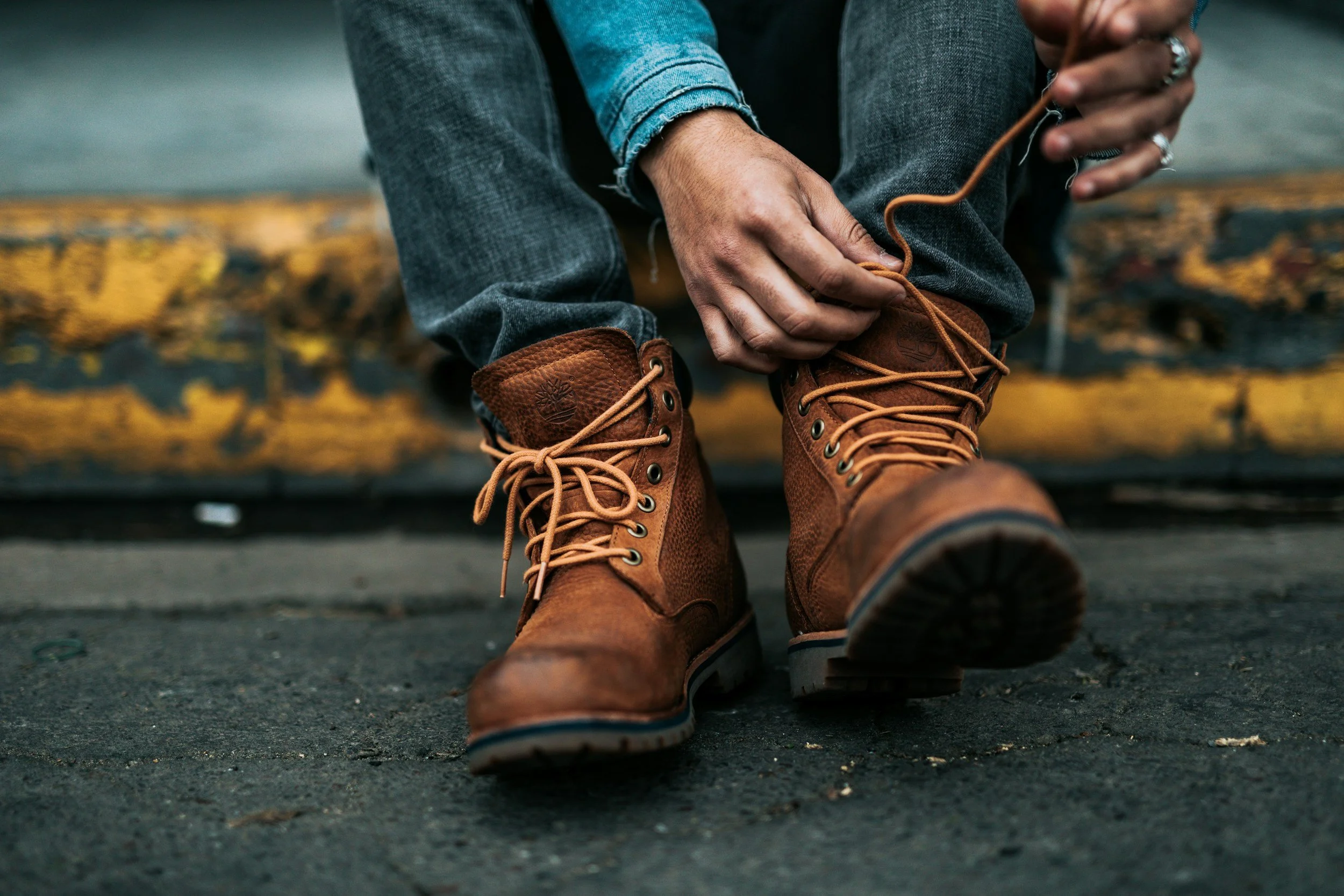
Twenty years ago, wearing steel toe boots to a dinner date was a fashion crime. Today, a tan lace-up with a scuffed toe reads as taste. That flip didn't happen because construction workers suddenly got cool. It happened because designers, factory floors, and a generation of city walkers all landed on the same conclusion at roughly the same time: a boot built for eight hours of hard labor is also a boot that survives twelve hours of everything else.
So if you've been staring at a pair of chunked-out leather boots online and wondering whether you're buying a tool or a trend, you're asking the right question. Here's the honest answer, the history behind it, and a way to choose without wasting your money on either extreme.
Why Did the World Suddenly Start Wearing Safety Footwear?
It wasn't one moment. It was a slow convergence of three things that had nothing to do with each other. The first is that trade work has always had its own visual language, and fashion has been borrowing from it for a century. Denim came off the rail car. The trench coat came off a battlefield. Flannel never really left the lumber camp. Work boots just took longer to make the jump because they were genuinely uncomfortable for a long time. Thick soles, stiff leather, no cushioning, no break-in period that anyone would describe as pleasant.
The second is durability, which quietly became a luxury signal. When almost everything you can buy is designed to fall apart in eighteen months, something that lasts a decade starts to look like a moral position. A resoled boot is the rare purchase you can defend to yourself and your budget.
The third is that cities got harder to walk. Rougher pavement, more miles on foot, more standing on transit platforms in weather that gets under a sneaker within a block. People started buying boots that were built to handle mud and steel and found out that mud and steel are decent stand-ins for slush and stairs. None of that is a marketing story. It's just what happens when function and taste happen to agree.
The Job Site Left the Job Site
Skilled trades have been a steady slice of the American workforce for as long as anyone's been counting, and according to baseline data from the Bureau of Labor Statistics, construction and extraction occupations still employ millions of people whose entire day depends on what's on their feet. That's a big, visible population of workers walking around in footwear that's been engineered for abuse.
Which means the design research was already done. Toe caps, slip-resistant tread, heat-resistant soles, waterproof uppers: all of it was refined decades before a stylist saw a pair and thought, that would look good with a wide-leg trouser.
Here's my read on why the crossover stuck this time. Earlier revivals in the nineties and 2000s were ironic. You wore a work boot to signal that you didn't care. This wave isn't ironic at all. People are buying them because they actually walk, and because the boot quietly solves a problem they had with everything else in their closet. That's a much more durable reason to buy something.
What Changed Inside the Boot
The part that gets left out of the trend coverage is that boots themselves got better. That's the whole reason a normal person can wear one all day without limping home. Modern safety footwear moved from rigid to anatomical. Soles went from single-density rubber to polyurethane and nitrile blends that hold up to heat most people will never encounter. Composite toe caps started replacing steel in a lot of models, which drops the weight without dropping the protection. Waterproof membranes became standard rather than a premium upsell.
The structural requirements behind that gear are set by regulators, not by marketing teams, and the Occupational Safety and Health Administration has long required protective footwear in workplaces where falling objects or electrical hazards are present. That regulation is why the engineering money got spent in the first place. You're benefiting from a mandate that had nothing to do with style. I'd argue this is the single most underrated fashion story of the last decade. Runway trends come from a mood board. This one came from a spec sheet.
The Three-Circle Fit Check
Buying a work-style boot for daily wear is easy to get wrong, because the categories don't map cleanly. A boot rated for a warehouse floor isn't automatically the right boot for a two-mile walk to the office. Here's the filter I use when I'm trying to talk someone out of a bad purchase.
Before you add anything to a cart, name your circles:
Terrain. Concrete all day, gravel, wet tile, or actual mud? Smooth pavement rewards a softer compound. Wet tile and oil demand aggressive tread. Actual mud means you want deep lugs and you should accept the weight.
Standing hours. Under four hours, mid-shaft height is plenty. Six to ten hours on your feet changes the calculus toward a lighter composite cap and a cushioned midsole. Twelve-hour shifts are an orthopedic decision, not a style one; comfort beats looks every single time.
Water exposure. Puddles you step in, rain you walk through, or water you stand in? Those are three different boots. Standing water means a tall shaft and a sealed seam. Walking rain means a membrane. Occasional puddles mean you don't need to pay for waterproofing at all.
Once you've named all three, most of the catalog eliminates itself. If any pair is a mismatch on two or more circles, skip it. This is the framework I keep coming back to because it forces you to admit what you're actually doing with your feet instead of what you'd like to imagine you're doing.
One more practical note: check the toe cap material before you commit. If your workplace enforces a safety standard, you need the certification. If you're buying purely for the street, a soft toe is lighter, cheaper, and breaks in faster.
Where to Actually Look
Buying boots online is a size gamble, and every brand runs its own last, which is the foot-shaped mold the boot is built around. A 10 in one brand is a 10.5 in another. So find a retailer that publishes a real size chart, lists the toe cap type, and describes the sole compound in plain language instead of a mood.
If you want a sense of how broad this category has become, browsing a footwear collection is genuinely useful, because you can see how many distinct jobs a work boot is now asked to do. Zip-sided pairs for people who hate lacing up. Lace-ups for ankle support. Slip-ons for quick shifts. Lighter women's cuts that aren't just a men's boot painted a different color. You can find a range of Safety Boots built around those variations, and looking at the spread is the fastest way to figure out which one you actually need. Here's the thing about the size chart, though. Measure your foot at the end of the day, not the morning. Your feet swell. A boot that fits at 8 a.m. is a boot that hurts at 6 p.m.
The Test of a Decade
I keep thinking about a trip I took in 2019, staying in a hostel in a city where it rained four days straight. Half the people in the common room were wearing boots that had no business being in weather. The other half were in trail runners that were soaked through by the second day. One guy had a pair of leather work boots that had clearly been through several jobs already, and he was the only person in that building whose feet were dry.
Nobody complimented him. Nobody asked what brand they were. But by day three, three people were asking where they could get a pair. That's the whole story of this trend in one scene. It isn't a look that got adopted. It's a problem that got solved, and then people copied the solution. So if you're going to buy a pair, buy them for the circles you actually live in. The style part will take care of itself, because a boot that's carrying you through real days looks better than one that's only posing. Which pair in your closet has actually earned its place?
HOW DO YOU FEEL ABOUT FASHION?
COMMENT OR TAKE OUR PAGE READER SURVEY
Featured




Online research supply markets have expanded, giving laboratories and independent researchers more ways to explore specialized materials.