
5 Warning Signs Your Home Electrical System Needs an Upgrade
PAGE
By PAGE Editor
Picture this: it's Saturday morning, you flip on the coffee maker, your spouse starts the microwave, and the whole kitchen goes dark. The breaker tripped again. You reset it, life moves on, and you forget about it. That pattern, repeated quietly over months, is exactly how homeowners end up with a serious electrical problem they never saw coming.
Your home's electrical system does not announce its age. It does not send alerts. But it does leave clues. Knowing what to look for can mean the difference between a planned upgrade and a midnight emergency call. Here are five signs that your electrical system is telling you it needs attention, plus a practical framework for deciding what to do next.
1. Your Breakers Trip More Than Twice a Month
A circuit breaker tripping once in a while is normal. It did its job: it detected an overload and cut the power before anything got damaged. But if you are resetting the same breaker multiple times a month under ordinary household use, that is not normal protection. That is your panel working too hard for too long.
Older panels were often sized for the electrical demands of a much simpler era. Modern homes run simultaneously: smart TVs, gaming consoles, air fryers, EV chargers, home office setups, and whole-house HVAC. A panel that was perfectly adequate when the house was built in 1985 may be genuinely undersized for 2026 life. Frequent tripping is the clearest signal that you have outgrown your current capacity.
Do not just reset and move on. Write down when it happens and which circuit. Two or more incidents on the same circuit in a single month is a threshold worth acting on.
Flickering or Dimming Lights (Even When Nothing Feels Wrong)
Lights that dim when the washing machine kicks on, or flicker faintly when the air conditioner cycles, point to voltage fluctuations. The panel is struggling to distribute stable power across circuits. It is often the first visible symptom of a panel that is close to its load limit.
Here is where it gets worth paying attention to: faulty wiring causes 52% of electrical fires in the United States, according to NFPA data reported in 2023. Flickering lights are not always a wiring problem, but they can indicate loose connections or deteriorating components that put you in the same risk category. The U.S. Fire Administration tracks residential electrical fires as a leading cause of home fire incidents, which is why treating early symptoms seriously matters more than it might seem on a Tuesday afternoon.
Consistent dimming across multiple rooms, especially during appliance use, is a two-breaker problem waiting to become a one-fire problem. That is not a scare tactic. It is just what the data shows.
Your Panel Is 25 Years Old or Older
Age is not just a number when it comes to electrical panels. The average electrical panel only lasts between 25 and 40 years. If yours is at or past the lower end of that range, it may be operating fine today and failing tomorrow. The internal components, bus bars, breaker contacts, and insulation all degrade with time and heat cycling.
Homes built before the mid-1990s often still carry panels with brand names that have been flagged for reliability issues, or fuse-based systems that were never designed for today's amperage loads. If you do not know how old your panel is, check the label inside the door. If there is no label or you cannot read it, that alone is a reason to have it inspected.
A licensed professional can test the panel under load, check for signs of arcing or heat damage, and tell you whether you are looking at a repair or a full replacement. That conversation costs far less than the alternative.
You're Adding an EV Charger, a Hot Tub, or a Home Addition
Any significant new load on your home's electrical system should trigger a panel review before the installation begins, not after. This is the most common mistake homeowners make when upgrading their property: they plan the fun part and skip the infrastructure check.
Approximately 80 percent of EV charging happens at home, and consumer demand for homes equipped with EV charging is growing, according to a 2024 Energy Star factsheet published by the U.S. Department of Energy. A Level 2 home EV charger typically requires a dedicated 240-volt, 50-amp circuit. If your panel is already running close to capacity, adding that circuit without an upgrade is asking for problems.
The same logic applies to a home addition, a basement finish, or a workshop. More square footage means more circuits. More circuits mean more load. A panel assessment before you break ground is not a bureaucratic step. It is the step that keeps the whole project on schedule.
You Smell Something Burning Near Outlets or the Panel
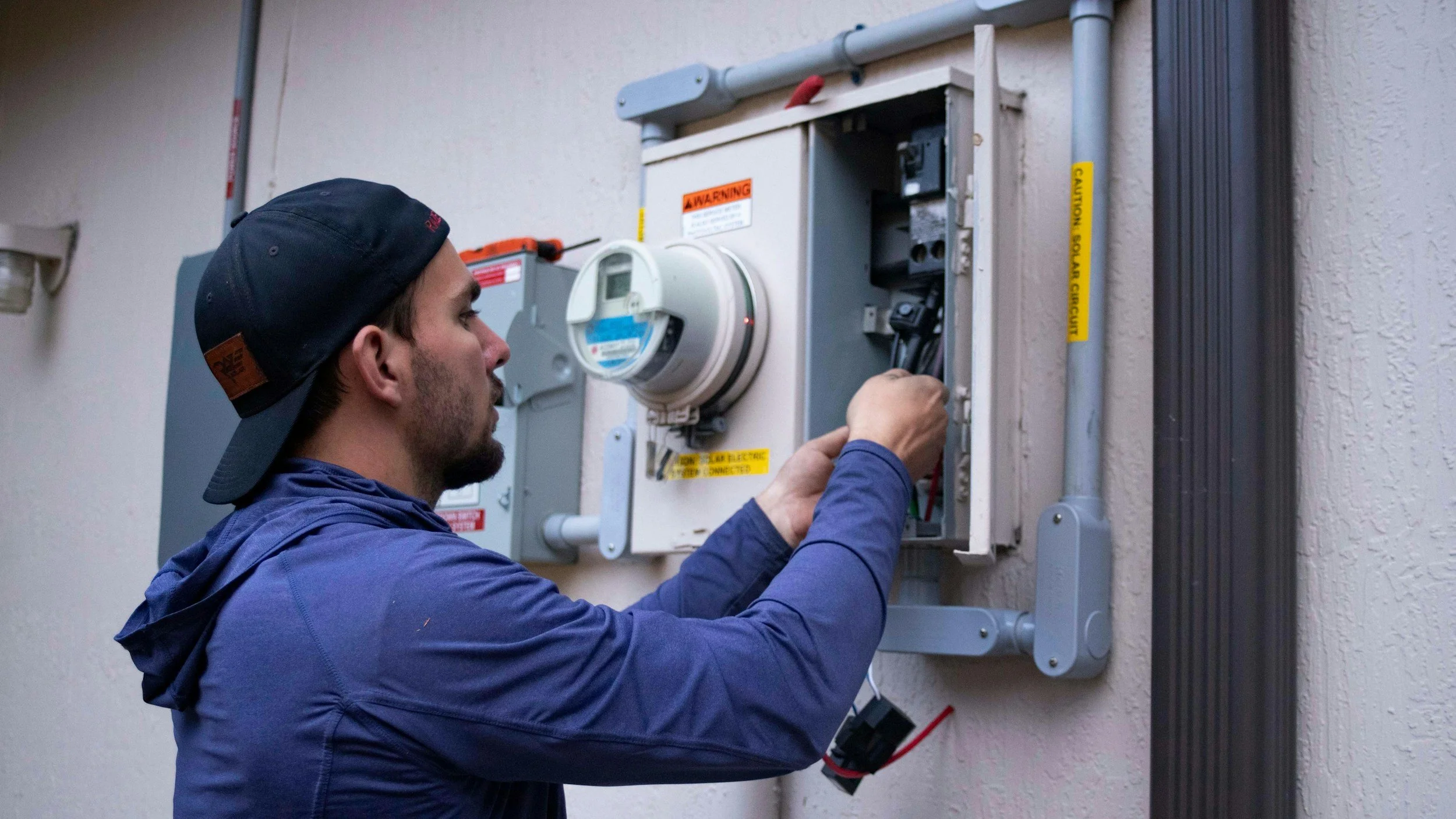
This one is not a "monitor it and see" situation. A burning smell near an outlet, a switch, or the electrical panel itself is an immediate call-a-professional moment. It usually means something is already arcing or overheating inside the wall or the panel enclosure.
According to NFPA research, faulty wiring in concealed spaces such as attics or areas behind walls is particularly dangerous because it can start fires that burn for a prolonged period before detection. A burning smell is the moment that concealed problem briefly becomes detectable. Do not wait for it to go away on its own, because it will not.
Turn off the affected circuit if you can safely identify it, and contact a licensed electrician the same day. This is the one sign on this list that skips the "schedule a convenient time" stage entirely.
The SAFE Check: A Simple Framework for Deciding What Comes Next
Rather than mentally running through a checklist under stress, use this four-point framework called the SAFE Check whenever you suspect an electrical issue in your home.
S - Sounds and smells: Any buzzing, crackling, or burning odor near outlets, switches, or the panel requires same-day professional attention.
A - Age of the panel: Panels 25 years or older need an inspection regardless of visible symptoms. Schedule one proactively.
F - Flickering and frequent trips: Two or more unexplained breaker trips per month, or lights that dim during appliance use, signal a load problem. Get a load assessment.
E - Expanding electrical needs: Any new major load, including EV chargers, hot tubs, additions, or home offices, requires a panel review before installation begins.
If your home checks two or more of these boxes, you're looking at an upgrade conversation, not a maybe-later conversation. Homeowners in the DFW area who want a professional load assessment and panel evaluation can reach out to a licensed electrician in kennedale serving the greater Fort Worth suburbs for a same-day or next-day consult.
Run through the SAFE Check once a year, treat the results seriously, and your home's electrical system will not have to shout to get your attention.
What Does an Electrical Upgrade Actually Involve?
For most homes, a panel upgrade means replacing the existing service panel with a higher-amperage model, typically moving from a 100-amp panel to a 200-amp or 400-amp panel. The work takes a licensed electrician a single day in most cases. It includes a permit, an inspection by the local authority, and new breakers sized correctly for your circuits.
Some upgrades also include adding dedicated circuits for high-load appliances, replacing aluminum wiring connections, and installing arc-fault circuit interrupters, which provide protection against the kind of hidden arcing that causes fires in walls and attics.
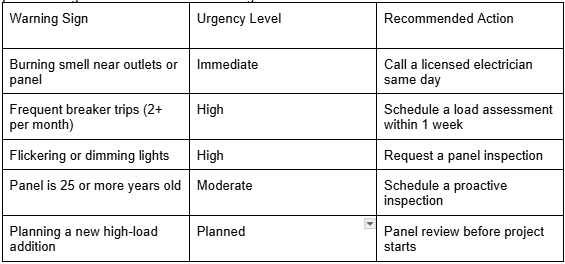
The signs above are not exhaustive, but they cover the situations that send most homeowners into emergency territory. Catch them early, and upgrading your electrical system becomes a planned line item. Ignore them, and it becomes a crisis. Your Saturday mornings are worth more than that.
HOW DO YOU FEEL ABOUT FASHION?
COMMENT OR TAKE OUR PAGE READER SURVEY
Featured




Better With Age’s FW26 “STOLEN ART” collection expands its circular design philosophy into refined tailoring and limited-edition eyewear, transforming vintage textiles and antique silver flatware into contemporary pieces with a distinct sense of history.