
Can a Yellow Light Dispute Affect Your Car Accident Claim?
PAGE
By PAGE Editor
Yes. A yellow light dispute can affect your car accident claim because it helps determine who was responsible for the collision. If evidence shows you accelerated to beat the light or turned in front of oncoming traffic, the other party may argue that you share fault.
Depending on state law, this could reduce your compensation or prevent you from recovering damages. When determining fault after an intersection crash, evidence such as traffic camera footage, witness statements, and the timing of the signal can help establish what happened and support your claim.
Effects of a Yellow Light Dispute on a Car Accident Claim
It Can Change Your Percentage of Fault
In states that use comparative fault, a judge or jury assigns each person a percentage of responsibility, so a driver who entered late on yellow may carry a share of the blame even when the other driver made a mistake too.
It Can Reduce or Block What You Recover
Under Texas Civil Practice and Remedies Code 33.001, a claimant whose responsibility is greater than 50 percent may not recover damages, and the same chapter reduces the damages of anyone under that line by their own percentage. Other states set the line differently, so the rule where your crash happened matters.
It Can Flip the Blame
Many yellow light crashes involve one driver turning left and another coming straight. California Vehicle Code 21801 requires a left-turning driver to yield to oncoming vehicles close enough to be a hazard.
That duty continues until the turn can be made with reasonable safety, so the turning driver can carry the fault even if the oncoming car entered late on yellow.
Evidence That Establishes Who Had the Yellow Light
Memory alone is a shaky basis for these cases, so adjusters and attorneys look for records instead.
Signal timing. Engineers set yellow length using approach speed, driver reaction time, and road grade, and national research confirmed a reaction time of 1.0 second, so a yellow that was set too short is worth asking about.
Vehicle data. Many cars carry an event data recorder that logs speed, throttle, and braking for about five seconds before a crash, and NHTSA finalized a rule to stretch that window to 20 seconds.
Camera images. Red light cameras photograph vehicles that enter on red, and many programs allow a grace period of up to half a second.
Video and witnesses, such as dash cameras, nearby businesses, and other drivers.
Businesses and traffic authorities may hold relevant video, and recordings can be overwritten on a regular cycle. Ask for preservation as soon as you can.
What Should You Do If the Other Driver Says You Ran the Yellow?
Stay calm and protect your position. These steps are a practical starting point:
Do not admit fault or guess about timing.
Get medical attention.
Report the crash.
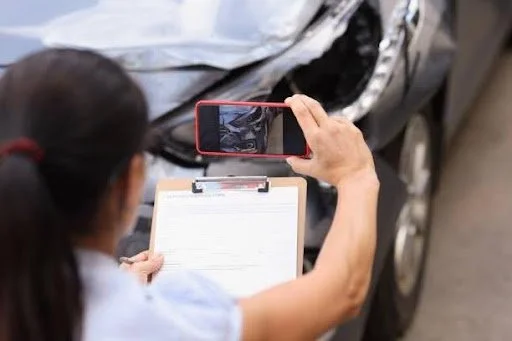
Document the scene.
Write down what you remember. Do it soon, while the details are fresh, including your speed and where the light was when you first saw it.
Collect witness contact details. Names and phone numbers matter more than a vague promise to help later.
Quick Takeaways
A yellow light dispute can change your fault percentage and your payout.
Entering on yellow is not automatically a violation, but a left turn carries a duty to yield.
In Texas, a claimant above 50 percent responsibility recovers nothing.
Signal timing, vehicle data, and video are stronger proof than memory.
Event data recorders capture about five seconds before a crash.
Other states use different fault rules, so check the one that applies to you.
HOW DO YOU FEEL ABOUT FASHION?
COMMENT OR TAKE OUR PAGE READER SURVEY
Featured




Yes. A yellow light dispute can affect your car accident claim because it helps determine who was responsible for the collision.