
Fabric and Climate: Why What You Wear in Chennai Shouldn't Be What You Wear in Shimla
PAGE
By PAGE Editor
India doesn't really have "summer wear" and "winter wear" in any meaningful national sense — it has at least half a dozen distinct climate realities happening at the same time, in the same season. While a shopkeeper in Chennai is selling breathable cottons in December, a shop in Shimla is stocking heavier weaves for the same month. Yet most fabric advice online treats India as one climate zone, recommending the same fabric list regardless of geography. That's a mistake worth unpacking.
India Isn't One Climate — It's Several
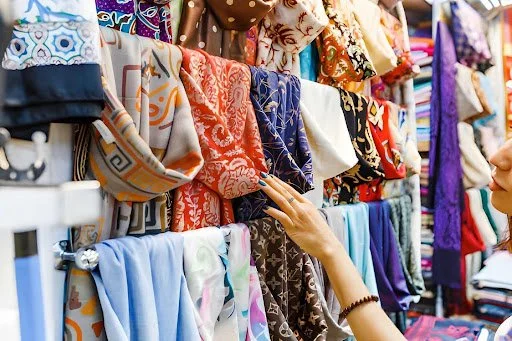
Broadly, Indian weather can be grouped into a few very different zones:
Coastal and tropical belts (Chennai, Kochi, Mumbai, Goa) — high humidity year-round, with heat that rarely dips below uncomfortable even in "winter"
The Indo-Gangetic plains (Delhi, Lucknow, Patna) — extreme seasonal swing, punishing dry heat in summer, genuinely cold winters
The Deccan plateau (Hyderabad, Pune, Bengaluru) — moderate, drier heat with more manageable temperature ranges
Hill and mountain regions (Shimla, Manali, Darjeeling, parts of the Northeast) — cold for a large part of the year, with humidity levels that vary sharply by altitude and rainfall
The arid west (Rajasthan, parts of Gujarat) — dry heat with big day-night temperature drops
A fabric that performs well in one of these will actively work against you in another. This is why regional dressing traditions developed so differently across the country long before "fabric technology" was a marketing phrase — they were solving for local weather, not following trends.
Humidity Changes the Equation More Than Temperature Does
Most people think about fabric in terms of hot versus cold, but humidity is often the bigger factor. A 32°C day in Jaipur (dry heat) feels completely different from a 32°C day in Chennai (humid heat), and fabric behaves differently in each.
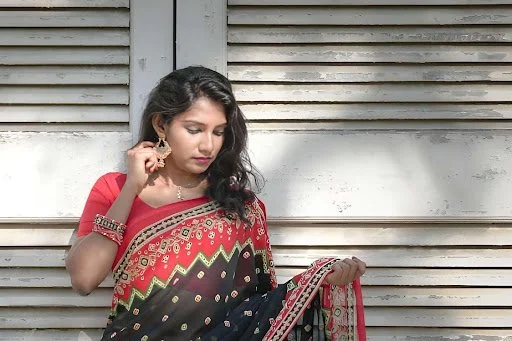
In high-humidity coastal zones, breathability and moisture-wicking matter more than weight. A lightweight, open-weave cotton fabric performs well here because it lets sweat evaporate quickly rather than trapping it against the skin. Heavier weaves worn for long hours in this kind of climate tend to feel damp and uncomfortable regardless of how light they look.
In dry heat zones like Rajasthan or inland Deccan cities, linen has a genuine advantage. Its looser weave and slightly coarser texture allow airflow even in low-humidity heat, and because there's less ambient moisture to begin with, linen's tendency to wrinkle is less of a practical issue — you're not fighting humidity-induced limpness on top of creasing.
In hill and mountain regions, the equation flips. Layering becomes more important than any single fabric's breathability, and heavier silk weaves or silk blends (often layered under woollens) are chosen more for insulation and structure than for coolness. Pure lightweight cotton, by contrast, offers very little functional benefit here outside of inner layers.
Regional Dressing Traditions Reflect This — If You Know Where to Look
A few examples make the climate-fabric link concrete rather than theoretical:
South Indian cotton sarees (like those historically woven in Tamil Nadu and Kerala) were developed for exactly the humid coastal conditions described above — fine, breathable weaves suited to constant heat and moisture.
Rajasthani and Gujarati textile traditions lean on lighter cotton and increasingly linen-blend fabrics for daily wear, precisely because of the dry, high-temperature-swing climate.
Kashmiri and Himachali garments historically favoured heavier silk and wool combinations, reflecting the insulation needs of a colder, higher-altitude climate.
Banarasi and other North Indian silk weaving traditions, while primarily festive rather than daily wear, are heavier by design, which suits the plains' cold winters when such garments are typically worn for weddings and functions.
None of this is coincidence. Textile traditions across India essentially encode centuries of climate adaptation, long before anyone described it in those terms.
A More Useful Way to Shop for Fabric
Instead of asking "is cotton better than linen," a more useful question is: what is the humidity and temperature profile of the place I'll actually be wearing this? For daily wear in humid, hot regions, prioritise lightweight, breathable weaves. For dry-heat regions or transitional seasons, a texture-forward, breathable weave tends to perform better than people expect, especially in blended forms. And for festive wear across colder regions or winter functions, heavier weaves matter more than breathability — it's worth matching the occasion to the climate rather than defaulting to whatever's trending.
The Takeaway
"Best fabric" is really a regional question disguised as a universal one. What works effortlessly in Chennai can feel wrong in Shimla, and vice versa — not because one fabric is superior, but because Indian climates themselves are not interchangeable. Shopping with your actual local weather in mind, rather than a generic seasonal fabric list, tends to produce far more comfortable results.
This article discusses general climate and textile patterns across India and is not sponsored content.
HOW DO YOU FEEL ABOUT FASHION?
COMMENT OR TAKE OUR PAGE READER SURVEY
Featured




A comfortable home should offer more than a place to sleep and eat.