
Firm Mattress Guide: Is a Firm Bed Right for You?

PAGE
By PAGE Editor
The right mattress could determine the quality of sleep that you get at night. However, the trick lies in the fact that firm is not always synonymous with great support. Most people believe that the firmer a mattress is, the better it provides support but things are slightly complicated than that. It depends on your sleeping position, body weight, and the construction of the mattress whether it will improve or deteriorate the quality of your sleep.
In this article, you will learn everything about firm mattresses including what they are, who needs a firm mattress, and how you can know when to choose a firm mattress.
What Does "Firm Mattress" Actually Mean?
The firmness of mattresses is quantified in a range of 1 to 10, where the number 1 refers to a soft bed and number 10 is the firmest of all. Firm beds generally rate between numbers 7 and 10, although most products fall in the range of 7–8.
Here comes the important difference: firmness and support are two different aspects. While the former refers to the softness of the mattress surface (or lack thereof), the latter refers to the ability of the mattress to keep your spine in a straight position. A hard mattress does not necessarily imply good support for your lower back.
Therefore, a good firm mattress should feature both qualities: hardness and a support core.
Who Should Sleep on a Firm Mattress?
A firm mattress isn't for everyone, but it's genuinely beneficial for specific sleepers.
Stomach Sleepers
A firm sleeping surface is important for a stomach sleeper. With a soft mattress, your hips will sink into the bed, creating a curved shape of the lower part of your back.
Back Sleepers (with Exceptions)
Back sleepers tend to be comfortable on medium-firm and firm mattresses, as this type will preserve the natural curve of your lumbar spine and prevent your hips from sinking.
However, being too firm can result in gaps under your lower back that will be not supported. That is why medium-firm (6-7) can be preferable over firm (8+) mattresses for back sleepers.
Sleepers of Greater Body Weight
Your body weight impacts the feeling of mattress firmness. If a 110-pound person finds the mattress medium in terms of firmness, it will feel much softer for 230-pound person who will sink much deeper into the comfort layer.
For sleepers with weight over 230 pounds, a firm mattress, especially a hybrid with pocketed coils, will provide proper weight distribution and prevent sagging.
Hot Sleepers
Firm mattresses usually have thin comfort layers, which provides better airflow and makes you cooler at night.
Firm vs. Medium-Firm: What's the Real Difference?
This is where most buyers get confused. Both feel supportive, but they serve different sleepers.
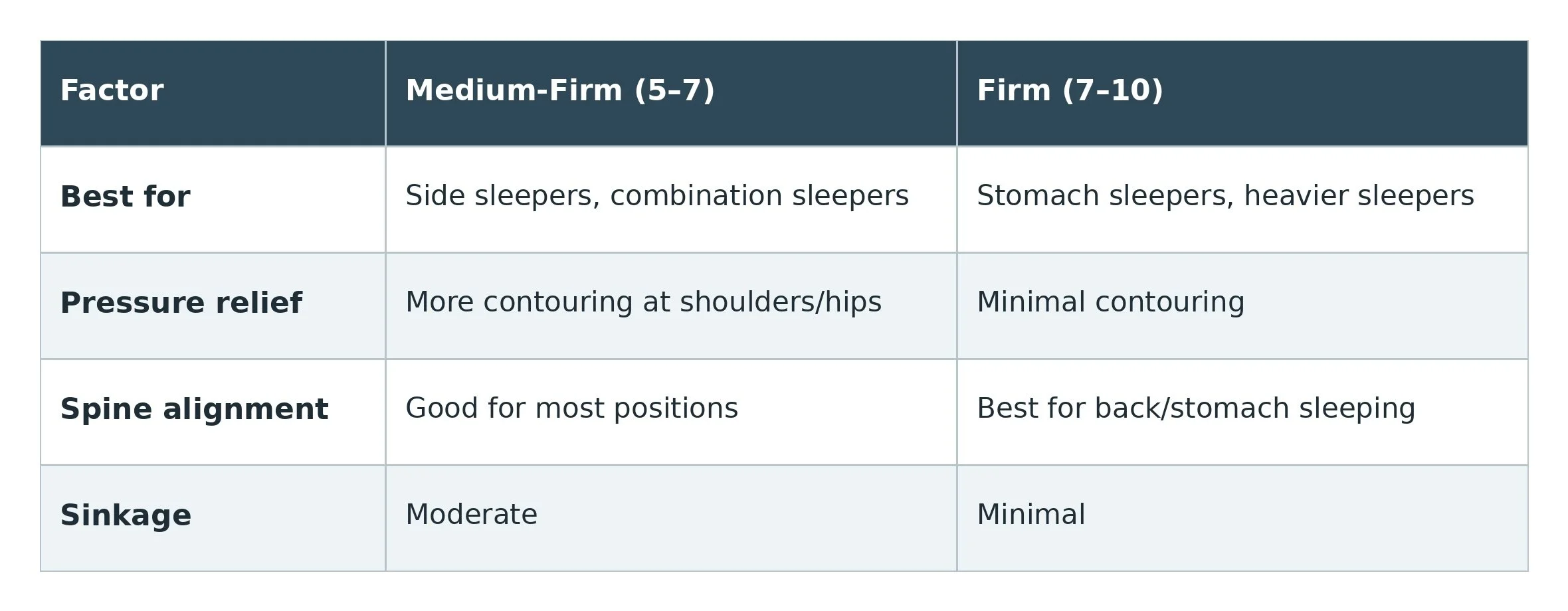
Mattresses that have a firmness level ranging from medium to firm have proven to be the safest choice for most people due to their ability to provide both comfort and support. According to a study conducted in 2003 and published by The Lancet, it was discovered that medium-firm mattresses were better than firm mattresses for patients suffering from chronic low back pain.
This does not mean that firm mattresses are all bad; they simply require a special type of sleeper to be used effectively.
Body Weight Makes All The Difference
This is the uncomfortable truth about mattresses that is often ignored when talking about them: the experience that you get from a mattress depends on your weight.
A mattress labeled as medium-firm will behave differently based on your body weight.
Use this matrix as a starting point:
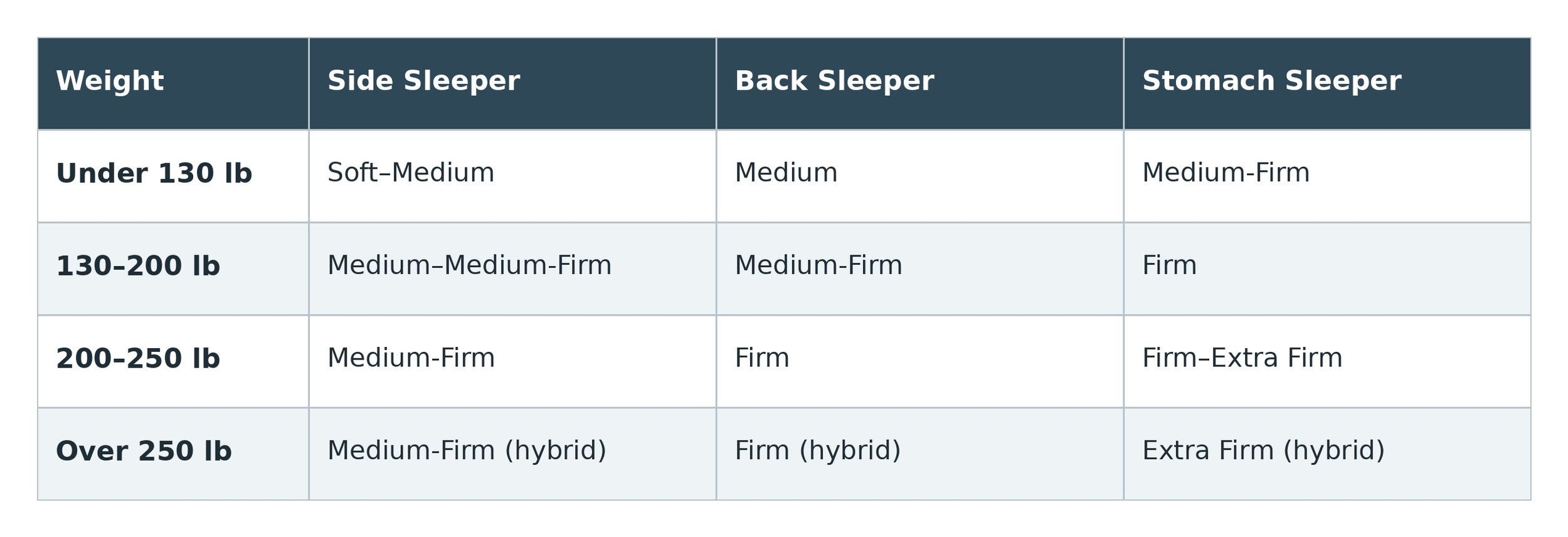
The takeaway: don't trust a firmness label blindly. Test in person or use a generous trial period.
Advantages and Disadvantages of Firm Mattresses
Advantages
• Spinal alignment for stomach and back sleepers
• Reduced sinking that stops "hammocking" and causes less strain to the lower back
• Moderate coolness because of less cushioning and improved airflow
• Durable for larger sleepers since dense support core takes longer to sink
• Easy to turn over, which is useful for combination sleepers
Disadvantages
• Potential for pressure points to form in shoulders and hips for side sleepers
• Excessive firmness creates gaps beneath lower back, leading to more pain than relief
• Fewer conformations mean lack of cushioning of sensitive areas
• Firm mattresses are not recommended for lighter sleepers, who would experience discomfort
• Firmness is subjective, therefore one company's firm is another's extra firm
Ways to Test a Firm Mattress before Buying
Never evaluate the quality of a mattress by pressing it with your hand. The procedure should be the following:
1. Sleep in your usual sleeping position. First sit on the edge of the mattress and then try lying in the way you usually sleep.
2. Do it for 10–15 minutes. The feeling will change as your body heat affects the material of the mattress.
3. See whether your body is properly aligned. Side sleepers must not have any gap at their waist and back sleepers must have proper support for their lower back.
4. Evaluate the pressure points. You must focus on your outer shoulder and hip for side sleepers and on the tailbone and lower back for back sleepers.
5. Check the edge. Sit on the side. The collapsing of the edge makes you lose the sleep surface.
At home you can do the same, but wait for 2–4 weeks before coming to any conclusion about the mattress. Some stiffness is common during this period.
Frequently Asked Questions
Is a firm mattress ideal for back pain?
No. Studies indicate medium-firm mattresses are likely to offer more benefits than firm ones to individuals with persistent low back pain. A mattress that is very firm may develop pressure points, not to mention it provides inadequate support for the lower back. Different mattresses suit different people.
What is the firmest mattress?
The firmest type of mattress is innerspring because it lacks any foam comfort layer. Hybrid beds that have a dense coil system also fall among the firmest types of mattresses.
Are firm mattresses suitable for side sleepers?
In most cases, the answer is no. Side sleepers require some contouring at the hips and shoulders for comfort. Sleeping on a firm mattress may lead to hip and shoulder pains for side sleepers.
What is the lifespan of a firm mattress?
It usually takes 7-10 years or even more for a firm mattress, especially hybrid and innerspring, to wear out. The dense support cores of such beds resist sagging more than the soft all-foam types do, mainly for heavy sleepers.
Can I make a firm mattress softer?
Yes. You could also put a mattress topper (2–3 inches of memory foam or latex) on the bed to provide extra pressure relief. It is a viable solution for those who need firmness yet require some extra cushion on the surface because of their weight.
Conclusion
Firm mattresses are highly effective for the right type of sleeper – but not everyone. For those who sleep on their stomachs, weigh over 200 pounds or feel too hot during the night, a firm mattress will change their sleep experience positively. However, those who sleep on their sides or have light weight will benefit more from a medium-firm mattress.
The thing is that firmness should match your needs and preferences rather than being considered the best choice. Take advantage of testing opportunities and prioritize comfort over firmness.
Your best mattress is not the firmest one. Your best mattress allows you to wake up without pain.
HOW DO YOU FEEL ABOUT FASHION?
COMMENT OR TAKE OUR PAGE READER SURVEY
Featured





Deep clean, seal, and protect your tile & grout in Oceanside, CA. Bring the original shine back to your floors. Request a quote today!