
Hair Loss in Women: Causes, Myths and Treatment Options
PAGE
By PAGE Editor
Hair loss in women is far more common than many people realise, and it often has identifiable, treatable causes. Female pattern hair loss, temporary shedding after stress or childbirth, hormonal changes around menopause, nutritional deficiencies and certain hairstyles are among the most frequent reasons. Unlike in men, women’s hair loss usually appears as overall thinning rather than a receding hairline or bald patch. Getting the right diagnosis early is key, because treatments such as topical minoxidil, addressing underlying deficiencies or, for suitable candidates, hair restoration procedures work best when matched to the cause.
Thinning hair is common. Feeling alone with it shouldn’t be.
How Common Is Hair Loss in Women?
Many women experience noticeable thinning at some point in their lives. Female pattern hair loss becomes more common with age, particularly after menopause, while temporary shedding can affect women of any age after major life events.
Because women’s hair loss is often gradual and spread across the scalp, it can go unnoticed for some time. A wider parting, a thinner ponytail or more hair in the brush are often the first signs.
Common Types of Hair Loss
Different types of hair loss have different patterns and causes:
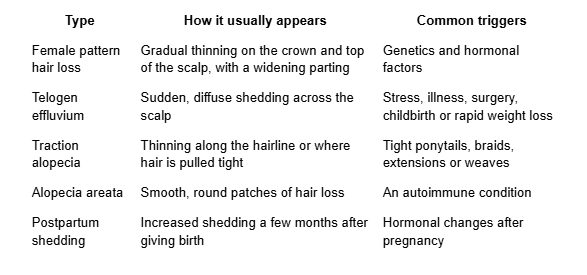
Some types of hair loss are temporary, while others need ongoing management. That’s why identifying the cause matters.
What Causes Hair Loss in Women?
Several factors can contribute to thinning hair:
Hormonal changes: Menopause, pregnancy, stopping hormonal contraception and conditions such as polycystic ovary syndrome can affect hair growth.
Genetics: A family history of hair thinning increases the likelihood of female pattern hair loss.
Stress: Significant physical or emotional stress can push more hairs into the shedding phase.
Nutrition: Low iron, vitamin D or protein levels may affect hair health.
Thyroid problems: Both underactive and overactive thyroid conditions can cause thinning.
Styling habits: Repeated tight hairstyles, harsh chemical treatments and excessive heat can damage hair over time.
Medications: Some medicines list hair loss as a possible side effect.
Often, more than one factor plays a role.
Myths About Women’s Hair Loss
Misconceptions can delay women from seeking help:
“Only men lose their hair.” Hair loss affects many women, though the pattern is usually different.
“Washing hair often makes it fall out.” Washing removes hairs that have already shed naturally.
“Hair loss always means a serious illness.” Many causes are common and manageable, though a check-up is still sensible.
“Nothing can be done.” Several treatments can slow loss, encourage regrowth or improve density.
“Supplements fix every type of hair loss.” They only help if a genuine deficiency is present.
Separating fact from fiction makes it easier to take the right next step.
Treatment Options
Treatment depends on the type and cause of hair loss. Common approaches include:
Topical minoxidil: A widely used treatment for female pattern hair loss that can help slow thinning and support regrowth with consistent use.
Treating underlying causes: Correcting iron deficiency, thyroid problems or other medical issues can help hair recover.
Platelet-rich plasma: Some clinics offer PRP, which uses components of a patient’s own blood to support hair growth.
Low-level laser therapy: Devices that use light may help some people with pattern hair loss.
Changing styling habits: Loosening tight hairstyles and reducing heat or chemical treatments can prevent further damage.
Hair restoration surgery: Women with stable, localised thinning and a healthy donor area may be suitable for hair transplant procedures.
The NHS guide to hair loss explains which types often improve on their own and when it’s worth seeing a GP, which can be a useful starting point before exploring specialist treatment.
When to Seek Professional Advice
It’s worth speaking to a GP if hair loss is sudden, patchy, accompanied by itching or pain, or linked to other symptoms such as tiredness or weight changes. Blood tests can help check for deficiencies or thyroid problems.
If thinning continues or affects your confidence, a specialist can assess the scalp, identify the pattern of loss and recommend suitable options. Clinics offering expert hair restoration can explain whether non-surgical treatments or procedures such as transplants are likely to help, based on your hair type, medical history and goals.
The Emotional Side of Hair Loss
Hair is closely tied to identity and confidence, so thinning can affect self-esteem, social life and mental wellbeing. Many women feel embarrassed or reluctant to talk about it, even though it’s common.
Talking to friends, joining support communities or speaking with a counsellor can help. Practical steps, such as experimenting with new hairstyles, using volumising products or trying hair toppers, can also make a big difference while treatments take effect.
Taking Back Control
Hair loss in women is common, varied and often treatable. Understanding the type of thinning, addressing underlying causes and exploring proven treatments can help many women slow loss, encourage regrowth and feel more confident.
If you’ve noticed changes in your hair, early advice is the best place to start. The sooner the cause is identified, the more options you’re likely to have.
HOW DO YOU FEEL ABOUT FASHION?
COMMENT OR TAKE OUR PAGE READER SURVEY
Featured




Baltimore sees commercial trucks carrying goods through the city, but one serious collision can change an injured person's health and finances for years.