
Lonely in a Busy City: How to Build Real Connections

PAGE
By PAGE Editor
It’s possible to feel lonely even in a city full of people, events and nightlife. Loneliness isn’t about how many people are around you, but whether you feel genuinely connected to them. In lively places like Miami, where many residents are newcomers, work unusual hours or move often, building close friendships can take time. Joining regular activities, prioritizing consistent contact, being open about wanting connection and seeking support if loneliness starts affecting your mood can help turn a busy city into a place that truly feels like home.
A packed calendar doesn’t always mean a full life.
The Loneliness Paradox
Big, vibrant cities offer endless ways to meet people: beaches, clubs, restaurants, festivals, sports events and cultural gatherings. Yet many residents describe feeling isolated. Social interactions can be frequent but shallow, with plenty of acquaintances and few people to call when life gets hard.
Miami’s population includes many transplants from other parts of the United States and abroad. People arrive for work, school or lifestyle, often without family nearby. Busy schedules, long commutes and frequent moves can make it hard to build the kind of steady relationships that create a sense of belonging.
A Widespread Issue
Loneliness has become a recognized public health concern. In 2023, the US Surgeon General released an advisory on loneliness and isolation, describing it as an epidemic and highlighting research showing that about half of US adults reported experiencing loneliness. The advisory also linked a lack of social connection to higher risks of depression, anxiety, heart disease and other health problems.
Understanding that loneliness is common, and not a personal failure, can make it easier to talk about and address.
Signs Loneliness Is Affecting You
Loneliness can look different for everyone. Common signs include:
Feeling disconnected even after social events
Spending most free time alone without wanting to
Lacking someone to share good news or difficult moments with
Relying heavily on social media for a sense of connection
Feeling anxious or awkward about reaching out to others
Losing motivation for activities you used to enjoy
These feelings are signals that your need for connection isn’t being fully met.
Why Adult Friendships Are Harder
Making friends often felt easier in school or college, when people saw each other regularly. Adulthood introduces new challenges:
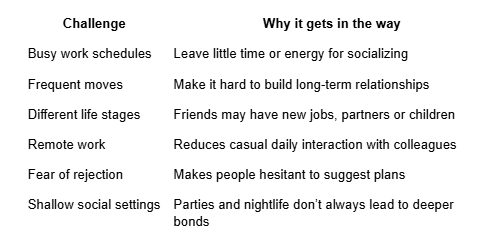
Recognizing these barriers can help you plan ways around them.
Practical Ways to Build Connection
Building meaningful relationships takes effort, but small, consistent steps work:
Choose recurring activities. Weekly classes, sports leagues or volunteer groups help you see the same people regularly.
Join community events. Beach clean-ups, run clubs, art workshops and cultural festivals offer natural conversation starters.
Try language exchanges. In a multilingual city, practicing Spanish, Portuguese or another language can connect you with new people.
Follow up after meeting someone. A quick message suggesting coffee or a walk can turn an acquaintance into a friend.
Host simple gatherings. A casual dinner or game night invites deeper conversation.
Reconnect with old friends. Video calls and visits can strengthen existing relationships, even across distance.
Be patient. Close friendships usually develop over months, not weeks.
The goal isn’t to meet as many people as possible, but to build a few connections that feel genuine and supportive.
Using Technology Wisely
Digital tools can help or hinder connection. Apps and online groups make it easier to find events and people with shared interests. At the same time, endless scrolling can deepen feelings of comparison and isolation.
Try using technology as a bridge to real-world interaction, such as joining a local group online and attending its meetups, rather than as a replacement for face-to-face contact.
When Loneliness Becomes Something More
Sometimes loneliness overlaps with depression, anxiety or low self-esteem. If you notice persistent sadness, trouble sleeping, withdrawal from activities or feelings of hopelessness, it may help to speak with a professional.
Therapy can provide tools to manage social anxiety, build confidence and understand patterns that make connection difficult. Working with skilled local counselors can also offer a consistent, supportive relationship while you build connections elsewhere in your life. Many therapists offer both in-person and telehealth appointments to fit different schedules.
If you or someone you know is in crisis, call or text 988 to reach the 988 Suicide and Crisis Lifeline, or call 911 in an emergency.
Finding Your Place in the Crowd
Loneliness in a busy city is more common than many people realize, and it’s nothing to be ashamed of. With small, consistent efforts to build connection and support when you need it, it’s possible to create relationships that make even the busiest city feel personal.
Sometimes the first step is as simple as saying yes to an invitation, or sending a message to someone you’d like to know better.
HOW DO YOU FEEL ABOUT FASHION?
COMMENT OR TAKE OUR PAGE READER SURVEY
Featured



You upload a new Instagram Reel, spend a few minutes checking the views, and hope it starts getting attention.