
How to Check Variable Weight Thermal Labels Before Products Leave the Line
PAGE
By PAGE Editor
Variable-weight labels combine information from a scale, product database, and thermal printer. A sharp barcode is not enough if the weight, unit price, or product identity came from the wrong record. Build the check around the complete data path: select the correct item, capture a stable weight, calculate the displayed values, print, and verify the label on the exact pack that was weighed.
Map the fields and their source
List every field on the label and where it originates. Product name and code may come from a catalog; net weight from the scale; price from a price file; date and lot from the production batch. Define which values the operator may change and which require a supervisor. This makes errors diagnosable. A wrong price caused by an old price file is different from a wrong weight caused by an unstable scale reading.
Check the unit of measure as carefully as the number. A label can show a plausible figure while the system has switched between grams, kilograms, ounces, or pounds. Confirm rounding and tare rules with the responsible quality or commercial team. Do not invent a tolerance in the printer setup; use the limits that apply to the product and market.
Prevent label swaps at the scale
Keep one open package in the weigh-and-label zone. The printer should issue the label after the scale reading stabilizes and the product code is confirmed. Apply it to that package immediately. If several labels are printed for later use, matching becomes a memory task and a wrong label can be placed on a visually identical pack.
Print the longest product name and largest expected values on the proposed thermal scale labels. Check that text does not wrap into the price or barcode. The actual scanner must decode the symbol and the decoded value must match the record. A barcode verifier or scanner check is especially valuable after template edits, because a layout change can shrink quiet zones without looking obviously wrong.
Make changeovers visible
At the start of a new product or price period, print a sample and compare it with the approved source record. Repeat after a roll change, restart, or scale maintenance. Retain the first accepted label with the batch or shift record if traceability matters. When a sample fails, stop and segregate packs since the last good check rather than simply correcting the next print.
Use direct thermal labels whose image life matches the product's shelf and storage conditions. Test adhesion on the actual package, including chilled and damp versions if those occur. A variable-weight system is successful only when correct data, readable print, and physical package identity stay together through sale or dispatch.
Test the edge cases in the data
Use a product with a long name, the smallest expected weight, the largest expected weight, and a price that exercises rounding. Print each on the production roll. Compare the displayed amount with an independent calculation approved by the commercial or quality team. Check that a tare change updates the net value and does not carry into the next item unexpectedly. If the system allows a manual weight entry, verify that the entry is visibly distinguished and restricted. A scale label can be wrong even when the scale itself is accurate.
Run a product change while a prior label remains in the queue. Confirm that the printer cannot release a label with the old product name and the new weight. If it can, change the workflow so every job carries a unique transaction ID and is printed only after both data sources agree.
Handle a label error on the line
When an incorrect value is found, hold product since the last good verification and preserve the failed label. Determine whether the fault affects one pack, one product, or all labels since a database update. Reprinting should create a traceable replacement; the incorrect label must be removed or fully invalidated. Do not simply place a new price over an old barcode if both remain scannable. After the correction, repeat the edge-case tests before releasing the line. A documented response protects customers and gives the team enough evidence to prevent the same error at the next changeover.
Validate the numbers from end to end
Choose test cases that include an exact boundary for rounding, a nonzero tare, a product with a long name, and a price update. For each case, record the source weight, tare, net weight, unit price, calculated amount, visible label, and encoded barcode value. An independent reviewer can calculate the expected total from the approved rule. This test catches mistakes that a visual glance at one normal pack will miss. Repeat it after software updates or a change to the product file.
If a printer uses multiple templates, verify that each product selects the right one. A small pack may need a different layout but should not silently lose a required field. Check that the barcode's data is consistent with the human-readable weight and price, where the symbology encodes them.
Manage scale and printer as one station
Keep the scale level, cleaned, and serviced under the site's metrology program. Confirm that the printer receives a stable reading and that the label cannot be printed before the correct item is chosen. Place a finished-pack verification step immediately after application. If the label is printed while the pack is still being handled, the weight may change or the label may be applied to the next pack in the queue.
The station should have a clear response to connectivity loss. Do not let operators copy the displayed number into a free-text print field unless a controlled exception procedure permits it. A locally printed manual label can look identical to a system-verified one while lacking the same audit trail.
Review after customer facing changes
A new package, tare, price, or regulatory wording can affect the label even when the scale hardware remains unchanged. Include the label in product-change approval. Save one accepted sample with the change record and note when it became active. If a complaint arises, the team can identify which template and price file produced the pack rather than guessing from a photograph of the printed sticker.
HOW DO YOU FEEL ABOUT FASHION?
COMMENT OR TAKE OUR PAGE READER SURVEY
Featured
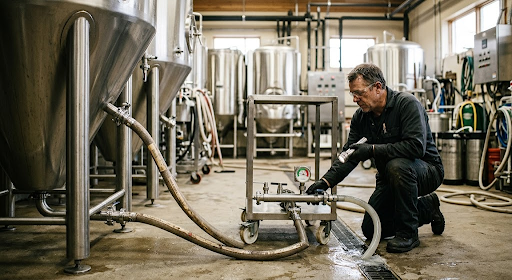

A sample valve should provide a representative sample without creating a hard-to-clean pocket or forcing an operator into an awkward position.