
How to Choose a Commercial EV Charger: Powering Your Business for the Electric Future
PAGE
By PAGE Editor
The rumble of an internal combustion engine is slowly giving way to the near-silent hum of electric motors. For businesses, this transition is no longer a distant future scenario; it’s a present-day strategic imperative. Installing commercial EV charging stations is a powerful move, attracting employees, satisfying customers, and future-proofing your property. However, the decision isn't as simple as picking a charger off a shelf. Choosing the right commercial EV charger requires a careful evaluation of your business model, your users’ needs, and the long-term operational landscape. This guide breaks down the critical factors to ensure your investment delivers maximum value.
Step 1: Define Your Use Case and User Profile
Before analyzing voltage and amperage, you must answer a fundamental question: who are you installing these chargers for, and why? The ideal charger for a hotel is vastly different from what a fleet depot needs. Commercial use cases typically fall into three categories:
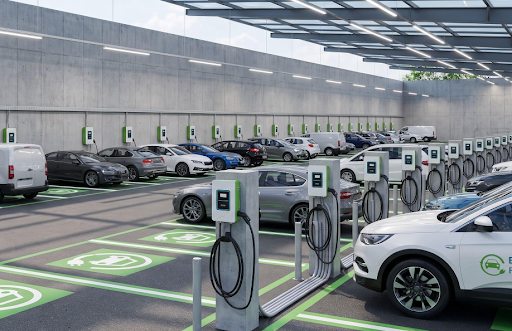
Destination Charging: These locations include hotels, restaurants, retail centers, and entertainment venues. Users will be parked for an extended period, typically 1 to 4 hours. The goal is to provide a valuable amenity that attracts and retains customers.
Workplace Charging: Installed at office buildings, these chargers are for employees who will be parked for an entire workday (8+ hours). The priority is equitable access and steady, day-long power delivery, often as an employee perk to support the transition to electric vehicles (EVs).
Fleet Charging: This is a mission-critical application for delivery vans, municipal buses, or corporate car shares. Vehicles need to be charged and ready to go on a predictable schedule, often overnight. Uptime and power speed are paramount.
On-the-Go Charging: Think gas stations, highway rest stops, and dedicated charging hubs. Drivers need the fastest possible charge to continue their journey. Speed and reliability are the only metrics that matter.
Once you define your case, you’ll understand your dwell time—the period a vehicle is naturally parked. Your goal is to match the charger’s power output to this dwell time. There’s no point in a costly 350 kW ultra-rapid charger at a cinema where people watch a 3-hour movie, just as a slow Level 2 charger is useless at a highway rest stop.
Step 2: Understand the Three Levels of Charging
Commercial chargers are categorized into levels based on their power and speed.
Level 2 (AC Charging): Operating on a 208/240-volt circuit, Level 2 chargers are the workhorses of destination and workplace charging. They typically deliver 7 to 19 kW of power, adding about 20-60 miles of range per hour. Their strengths are a lower installation cost, minimal electrical infrastructure demands, and perfect alignment with dwell times of several hours. For most businesses, a networked Level 2 station is the ideal starting point.
DCFC (DC Fast Charging) – Level 3: This is where speed takes a quantum leap. DCFC units bypass the vehicle’s onboard charger and deliver direct current straight to the battery. Power outputs range from 50 kW to a staggering 400 kW, adding 60-200+ miles of range in just 20 minutes. They are essential for on-the-go charging and premium fleet applications but come with significantly higher hardware, installation, and grid-upgrade costs. A modern sub-category is the 25-30 kW DC fast charger, which bridges the gap, offering faster speeds than Level 2 without the massive infrastructure of a 150 kW unit, making it viable for some retail locations with 1-2 hour dwell times.
Step 3: Peel Back the Layers of Total Cost of Ownership
The sticker price is just the beginning. A smart buyer evaluates the Total Cost of Ownership (TCO).
Hardware: Level 2 units range from $500 to $2,500. DCFC units can range from $15,000 to over $100,000. A critical feature to consider here is cable management. Retractable reels or overhead gantries prevent cables from being driven over, reducing long-term maintenance and presenting a clean, professional image.
Installation: This is often the most significant and variable cost. It includes trenching, concrete pads, wiring, switchgear, and potential transformer upgrades. A site that appears “charger-ready” might still require $50,000 in utility work for a DCFC install. Always get a detailed site assessment from a qualified electrical contractor before purchasing any hardware.
Software & Networking: A "dumb" charger is a liability for a business. You need networked, "smart" chargers with a robust software back-end. Monthly networking fees enable crucial functions: setting pricing ($/kWh, by time, or free), managing user access, tracking energy consumption for reports, and—vitally—controlling power intelligently.
Power Management: Smart software enables dynamic load balancing. If your building has a 300-amp service, you can install ten Level 2 chargers without a costly service upgrade because the system can intelligently split the available power among the vehicles, slowing them all slightly at peak times rather than tripping a main breaker.
Step 4: Prioritize Reliability and the User Experience
A broken, confusing charger is worse than no charger at all—it actively damages your brand. In the commercial space, reliability and ease of use are non-negotiable.
Look for a charger with a minimum 97% uptime and a ruggedized build, ideally NEMA 3R or 4X rated for outdoor use. The user experience must be frictionless. The ISO 15118 standard, popularly known as "Plug & Charge," represents the gold standard. It allows a car to authenticate and start a session simply by plugging in, with no apps, RFID cards, or touchscreens required. For now, multiple payment options—a bright, readable touchscreen with tap-to-pay credit card readers (especially vital in a post-“right to charge” regulatory environment), RFID, and QR code-based app payment—are essential to avoid alienating any driver.
Step 5: Plan for Scalability and Future-Proofing
Your EV charging needs today will be a fraction of what they are in five years. Don't build for the present; build for the future, but cost-effectively.
The most practical strategy is to "make-ready" the infrastructure. When trenching and laying conduit for your first two chargers, install the underground conduit for eight more. The marginal cost of extra conduit during initial construction is negligible compared to re-trenching a parking lot later. Choose an open-protocol hardware provider that uses the Open Charge Point Protocol (OCPP). This ensures you are never locked into a single software vendor. If a better network provider emerges or a vendor goes out of business, you can switch your software management layer without ripping out and replacing the physical hardware.
Step 6: Unlock Incentives and the Revenue Equation
The business case for EV charging is rarely just about the direct profit from electricity sales. It’s about the entire ecosystem of value. A restaurant with chargers attracts a customer who stays longer and spends more. A hotel with chargers wins bookings from a growing demographic.
To make the hardware installation viable, aggressively pursue incentives. In the U.S., federal tax credits under Section 30C can cover up to 30% of the cost of the equipment and installation, with significant caps per unit. Many states and utilities offer substantial rebates that stack on top, especially for projects in underserved areas. These incentives can transform a break-even project into a net-positive investment. As for revenue, decide on your pricing model. While many destination locations offer free charging as a marketing cost, a small fee of $0.20-$0.30/kWh often recovers electricity costs without deterring customers. For retail and fleet, a fully monetized model is standard.
Choosing a commercial EV charger is not an IT purchase or an electrical job; it's a long-term strategic asset decision. By starting with a clear definition of your user’s dwell time, understanding the total cost equation, and prioritizing an open, networked, and reliable platform, you won’t just be installing a box in the ground. You’ll be building the fuel station of the future and powering the next generation of your business.
HOW DO YOU FEEL ABOUT FASHION?
COMMENT OR TAKE OUR PAGE READER SURVEY
Featured




For many people, the end of the workday does not always mean the beginning of recovery.