
How to Mix Vintage-Inspired Decor With Modern Home Style
PAGE
By PAGE Editor
A room can have clean lines, modern furniture, and a neutral color scheme without feeling cold or impersonal. Sometimes, all it needs is one piece that looks as though it has a story behind it. An old-fashioned rug, a weathered wooden cabinet, or a floral cushion can bring a little warmth to an otherwise contemporary space.
The trick is to let different styles complement each other rather than compete for attention. Vintage-inspired decor often has intricate patterns, aged finishes, and a sense of familiarity, while modern interiors tend to favor simpler shapes and uncluttered surfaces. Put them together thoughtfully, and the contrast can make both styles more interesting.
Let a Vintage Rug Ground Modern Furniture
One of the easiest ways to introduce a traditional look into a contemporary room is through the floor. A vintage-inspired rug can add color, pattern, and visual depth without requiring a complete change to the furniture.
Picture a living room with a low-profile sofa, a simple coffee table, and plain walls. The furniture keeps the space feeling open, while a patterned rug introduces a different mood. Faded reds, muted blues, warm browns, and soft golds can give the room a lived-in quality, especially when the rest of the palette is relatively restrained.
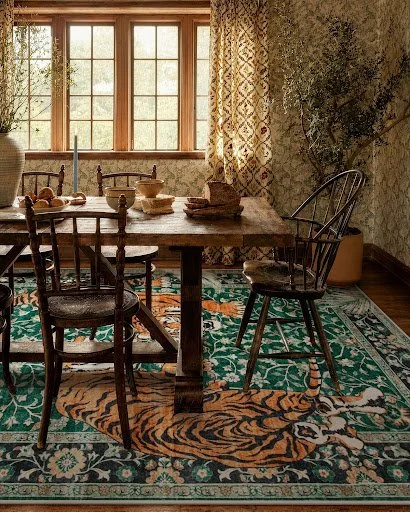
An intricately patterned rug can bring warmth to a living room filled with modern furniture. Faded reds, muted blues, and earthy browns work particularly well with neutral sofas and simple wooden tables. Vintage rugs with worn-looking patterns can also tie together colors from cushions, curtains, or nearby artwork, making the room feel thoughtfully put together without requiring everything to match.
Scale matters, too. In a seating area, the rug should relate to the size of the sofa and chairs rather than looking like a small decorative patch in the middle of the floor. Ideally, the front legs of the main seating pieces should rest on it, helping the furniture feel connected.
A detailed rug also gives you room to keep other choices simple. You can pair it with an understated sofa, a plain lampshade, and a coffee table with a clean silhouette. The traditional pattern becomes the main visual feature without making the room feel busy.
Use Traditional Patterns Against Simple Walls
Traditional patterns don't need an old-fashioned room to look right. In fact, they often stand out more clearly when the surrounding decor is modern and uncomplicated.
Consider floral upholstery, decorative cushions, patterned curtains, or a rug with an ornate border. Against white, cream, or soft gray walls, these details have enough breathing room to be appreciated. The simpler background also prevents several decorative elements from blending into one crowded arrangement.
You can use this contrast in almost any room. In a bedroom, a traditional patterned rug can sit beneath a modern bed frame with plain bedding. In a dining room, a vintage-style rug can soften the straight lines of a rectangular table and contemporary chairs. Even a hallway can benefit from a patterned runner paired with a simple console table and a modern mirror.
Try to vary the scale of the patterns you use. A rug with intricate detailing might work well alongside a cushion with a larger, quieter motif. If both pieces have equally dense patterns, the room may feel restless. Solid fabrics and unpatterned surfaces help balance the visual weight.
The goal isn't to make every piece look as though it belongs to the same period. A little contrast is what gives the room its character.
Bring in Cottagecore Without Turning the Room Into a Theme
Soft florals, botanical prints, woven baskets, and gently worn finishes can make a home feel relaxed and personal. These details are often associated with cottagecore interiors, but you don't have to cover every surface in flowers or fill the room with rustic furniture to capture that feeling.
A more restrained approach usually works better in a modern home. Start with one or two elements that appeal to you. A floral cushion on a plain sofa, a ceramic vase on a contemporary shelf, or a wooden side table with a slightly aged finish can introduce a softer, collected look.
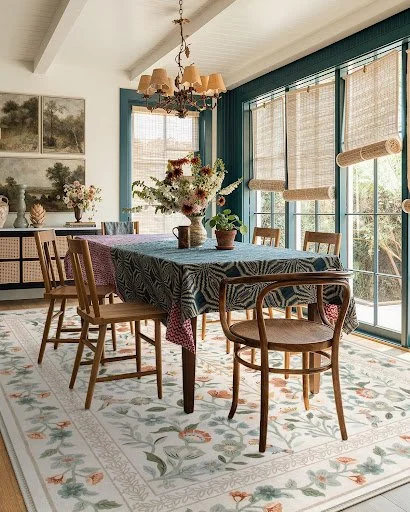
Cottagecore rugs are another way to bring this style into a room without making a major commitment. Look for botanical motifs, delicate florals, faded colors, or patterns inspired by the natural world. These designs can work particularly well in reading corners, bedrooms, and smaller sitting areas where a gentle, comfortable atmosphere feels appropriate.
For example, a cream sofa paired with a muted floral rug and a simple oak coffee table can feel both current and nostalgic. Add a linen throw and a small ceramic lamp, and the arrangement has enough warmth without losing its clean, modern foundation.
It's worth paying attention to materials as well as patterns. Linen, cotton, wood, rattan, and handmade-looking ceramics can bring a natural quality to the room. You don't need all of them at once. A few thoughtfully chosen textures are often more effective than a collection of decorative accessories that all follow the same theme.
Pair Old-Looking Pieces With Modern Lighting
Lighting can help connect furniture and accessories from different periods. A vintage-style cabinet might feel too traditional beside other classic pieces, but a contemporary floor lamp or a sculptural pendant can give it a fresh context.
The same idea works in reverse. A modern dining table can look more welcoming when paired with an antique-inspired mirror, traditional artwork, or chairs with a softer, more classic shape.
Think about the outline of each object. If you have a heavy wooden sideboard with carved details, a slim metal lamp can provide a useful contrast. If the room already contains several angular pieces, a rounded ceramic lamp or a curved accent chair can soften the overall look.
Finish also makes a difference. Brass, aged wood, glass, and matte black metal can sit comfortably together when their proportions and placement feel balanced. They don't need to match exactly, but repeating one finish in two or three places can help the room feel connected.
Lighting is particularly useful because it changes how vintage-inspired pieces are perceived. Warm light can bring out the character of aged wood and muted rug colors, while a clean-lined fixture keeps the setting from feeling overly traditional.
Mix Different Periods Through Color and Texture
When combining styles, color is often the thread that holds everything together. You might have a contemporary sofa, a vintage-style rug, and a rustic wooden table, yet the room can still feel cohesive if the pieces share a few tones.
Start with a base color for the larger surfaces. Cream, warm white, beige, or a soft earthy shade can provide a flexible background. Then let the older-looking pieces introduce deeper colors or more intricate designs. If your rug has touches of blue, for example, you could repeat that shade in a cushion or a piece of artwork without matching every accessory.
Texture offers another way to connect different periods. A smooth modern coffee table can sit beside a woven basket or a distressed wooden stool. A sleek upholstered chair may look more inviting with a textured throw. These combinations create variety without relying on a large number of colors or patterns.
Be mindful of visual weight. A dark, ornate piece of furniture can dominate a small room, especially when surrounded by other heavy objects. Give it some space, and balance it with lighter fabrics, open shelving, or furniture with slimmer legs.
Not every item needs to be a statement piece. In fact, the quieter pieces often make the more distinctive ones work.
Give Your Favorite Pieces Room to Stand Out
Mixing vintage-inspired decor with modern home style is less about following a strict set of rules and more about deciding what deserves attention. You might love the character of a traditional rug, the softness of botanical prints, or the shape of an old wooden cabinet. Choose the pieces that genuinely appeal to you, then build the rest of the room around them.
If several items have elaborate patterns or decorative details, keep the surrounding furniture and walls relatively simple. If the room feels too polished, introduce a little texture or something with a worn finish. Small adjustments can make a bigger difference than buying more accessories.
A contemporary home doesn't have to look entirely new, just as a vintage-inspired room doesn't need to feel old-fashioned. When you allow different styles to share the same space, the result can feel comfortable, personal, and collected over time. The best combinations leave enough room for each piece to be appreciated.
HOW DO YOU FEEL ABOUT FASHION?
COMMENT OR TAKE OUR PAGE READER SURVEY
Featured



For online poster design and printing in both the US and UK, Adobe Express is a practical choice.