
How to Select a Wedding Venue: 10 Important Points to Consider

PAGE
By PAGE Editor
Finding the perfect wedding venue can be more challenging than expected. A location may look beautiful in photos but have limited parking, strict vendor policies, hidden fees, or not enough space for your guests. Booking without checking these details can create expensive problems later.
The right wedding venue should match your preferred style, accommodate your guest list, fit your budget, and provide the services needed for a comfortable celebration.
If you're wondering how to choose a wedding venue, these ten practical considerations will help you compare options, ask the right questions, and confidently decide before signing a contract.
1. Choose a Venue That Matches Your Wedding Vision
Your venue establishes the atmosphere for the entire celebration. It influences your decorations, photography, ceremony arrangements, and reception layout. According to The Knot's Real Weddings Study, wedding venues remain an important early booking decision for couples planning their celebrations.
For couples interested in traditional architecture and distinctive event spaces, Historic German House Weddings provides an example of how a historic setting can influence the overall character of a wedding.
Identify Your Preferred Wedding Style
Before scheduling venue tours, decide whether you want a formal, romantic, modern, rustic, or intimate celebration.
A historic property may complement traditional wedding details, while a contemporary event space might suit a minimalist design. Choose a venue whose existing appearance supports your vision rather than requiring extensive decorations to create the desired atmosphere.
Consider the Ceremony and Reception Together
If both events will take place at the same venue, confirm that the property has suitable spaces for each. Ask how guests will move between the ceremony, cocktail hour, and reception. A practical layout can reduce transportation requirements and make the celebration easier to manage.
2. Confirm the Venue's Guest Capacity
Guest capacity is one of the most important factors in wedding venue selection. A venue that feels spacious during a tour may become crowded once tables, chairs, entertainment equipment, and decorations are installed.
Match Capacity to Your Guest List
Create a realistic guest estimate before comparing venues. Ask about the maximum seated capacity for your preferred reception layout rather than relying only on the property's advertised occupancy. A venue may accommodate more people for a standing reception than for a formal seated dinner.
Evaluate the Available Space
Consider whether guests will have enough room to move comfortably between tables, dining areas, bars, and the dance floor.
If you're planning entertainment, confirm that the venue can accommodate musicians, speakers, or other equipment without restricting movement. The goal is to create a comfortable environment rather than simply fitting everyone inside.
3. Understand the Total Wedding Venue Cost
A venue's advertised rental price may represent only part of the final expense. Additional charges for catering, staffing, rentals, security, cleaning, and equipment can significantly affect your wedding budget.
Request an Itemized Quotation
Ask each venue to provide a written breakdown of costs. Confirm whether the price includes tables, chairs, linens, setup, cleanup, lighting, and event staff. Also ask about taxes, service charges, minimum spending requirements, and overtime fees. A venue with a higher initial price may offer better value if essential services are included.
Review Payment and Cancellation Terms
Before making a deposit, understand the payment schedule and refund conditions. Ask what happens if you need to change the date, reduce the guest count, or cancel the event. These details should appear clearly in the contract.
4. Consider the Location and Guest Convenience
An attractive venue may not be practical if guests struggle to reach it. Travel arrangements can influence attendance, scheduling, and the overall experience.
Check Transportation and Parking
Review the distance from major roads, airports, and accommodation options. Ask about on-site parking, nearby parking facilities, and rideshare access. If guests will travel between separate ceremony and reception locations, consider arranging transportation.
Evaluate Nearby Accommodations
For weddings with out-of-town guests, identify hotels or other suitable lodging options. Ask whether nearby properties offer group rates or room blocks. Providing guests with clear accommodation information can simplify their travel planning.
5. Review Accessibility and Essential Amenities
A beautiful venue should also be comfortable and accessible for everyone attending. Accessibility requirements deserve attention during the initial venue tour, not after booking.
Check Physical Accessibility
Review entrances, pathways, elevators, restrooms, and seating arrangements. Ask whether guests using wheelchairs or mobility aids can access the ceremony and reception spaces comfortably. The U.S. Access Board's accessibility guidance provides information about accessibility standards that can help inform questions about entrances, routes, and facilities.
Confirm Available Facilities
Ask whether the venue provides getting-ready rooms, restrooms, climate control, catering facilities, and secure storage areas. Also determine whether staff will be available to assist with guest questions or unexpected issues. Convenient amenities can reduce the need for additional rentals and outside services.
6. Understand Vendor and Decoration Policies
Wedding venues often have rules governing outside vendors, decorations, music, and event operations. These restrictions can influence both your budget and your ability to personalize the celebration.
Ask About Preferred or Required Vendors
Some venues require couples to use approved caterers, bartenders, or other service providers. Others allow outside vendors but charge additional fees. Confirm these requirements before booking, especially if you already have specific professionals in mind.
Review Decoration Restrictions
Ask whether candles, hanging installations, confetti, and other decorative features are permitted. Historic properties may have additional restrictions designed to protect architectural features. Also confirm setup and removal deadlines so vendors have enough time to complete their work.
7. Evaluate Weather Backup Plans
Outdoor weddings require dependable alternatives when weather conditions change. A garden or courtyard may provide an attractive ceremony setting, but rain, wind, or extreme temperatures can affect guest comfort and safety.
Confirm Indoor Alternatives
Ask whether the venue provides a suitable indoor space for the ceremony or reception. Check whether that space can accommodate your full guest count and planned layout. A backup room should be practical and comfortable rather than simply available.
Understand Weather Decision Procedures
Find out who decides whether an outdoor event must move indoors. Ask how far in advance that decision needs to be made and whether additional fees apply. Clear procedures help prevent confusion on the wedding day.
8. Research Venue Reviews and Service Quality
Venue photographs show the setting, but reviews and direct communication can provide additional insight into how the property operates. Look beyond visual appeal when evaluating the overall experience.
Read Recent Reviews Carefully
Focus on comments about staff communication, cleanliness, coordination, billing, and problem resolution. Pay attention to recurring concerns rather than isolated complaints. Recent reviews may provide more useful information than older feedback if venue management or services have changed.
Assess Communication During the Tour
Notice how promptly staff respond to questions and whether pricing explanations are clear. Ask who will serve as your main contact during planning and who will manage venue operations on the wedding day. Reliable communication is particularly important when coordinating multiple vendors.
9. Compare Wedding Venues Using a Practical Checklist
After visiting several venues, it can become difficult to remember which property offered specific services or restrictions. A consistent comparison method makes the decision more objective.
Use a Venue Comparison Table
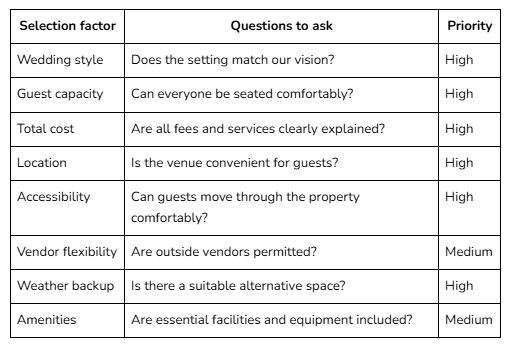
Compare Value Rather Than Appearance Alone
A venue with impressive architecture may require additional spending on furniture, lighting, or transportation. Another property may appear simpler but include services that reduce coordination and costs. Evaluate the complete experience before making your decision.
10. Consider Sustainability and Long-Term Practicality
Couples increasingly consider how venue choices affect resource use, waste, and the overall event experience. Practical sustainability measures can also support efficient planning.
Ask About Waste Reduction
Find out whether the venue offers recycling facilities, reusable decorations, or arrangements for handling surplus food. Ask caterers about portion planning and food waste management. Choose measures that are practical for your event rather than relying on broad sustainability claims.
Review the Venue's Operational Support
Ask how the venue manages deliveries, cleanup, equipment requirements, and event transitions. A property with established procedures may reduce unnecessary transportation, duplicated rentals, and last-minute logistical problems. Operational reliability is an important part of choosing a venue that supports your celebration.
Important Questions to Ask Before Booking a Wedding Venue
Before signing a contract, confirm the details that could affect your wedding plans.
Questions About Pricing
Ask for the complete rental cost, required deposits, payment deadlines, cancellation policies, and additional fees. Request written confirmation of everything included in the package.
Questions About Event Operations
Confirm setup times, event closing hours, vendor access, sound restrictions, and cleanup responsibilities. Ask whether another event will take place at the property on the same day.
Questions About Guest Experience
Review parking, accessibility, restroom availability, accommodation options, and weather alternatives. These practical considerations can have a significant influence on how comfortably guests enjoy the celebration.
Final Thoughts
Choosing the right wedding venue requires balancing appearance, practicality, budget, and guest comfort. Start by identifying your preferred wedding style and estimating your guest count. Compare total costs, review accessibility, understand vendor restrictions, and confirm weather backup arrangements before committing.
Most importantly, visit your shortlisted venues, ask consistent questions, and read every contract carefully. The best wedding venue isn't necessarily the most expensive or visually impressive option. It's the one that supports your plans, accommodates your guests, and allows you to enjoy the celebration with confidence.
Frequently Asked Questions About Wedding Venue Selection
How far in advance should you book a wedding venue?
Many couples begin searching 12 to 18 months before their preferred wedding date, particularly for popular venues or peak-season weekends. However, shorter booking timelines may be possible for smaller weddings, weekday events, or flexible dates. Begin your search once you have a realistic budget and guest estimate.
What is the most important factor when choosing a wedding venue?
The most important consideration is whether the venue meets your essential requirements, including guest capacity, total cost, location, and accessibility. A beautiful setting is valuable, but it should also provide practical facilities, clear policies, and reliable operational support for your celebration.
Is $10,000 too much to spend on a wedding venue?
A $10,000 venue cost may be reasonable or expensive depending on the location, guest count, season, and included services. Compare the total price rather than the rental fee alone. A package that includes catering, staffing, furniture, and equipment may offer different value from a venue-only rental.
HOW DO YOU FEEL ABOUT FASHION?
COMMENT OR TAKE OUR PAGE READER SURVEY
Featured




Who Decides War concludes its Fall/Winter 2026 menswear collection with Delivery 3, an outerwear-focused release that reinterprets the New York label's signature craftsmanship, graphic identity, and streetwear influences through elevated everyday silhouettes.