
A Guide To Help You Pick Your Perfect Wedding Venue
PAGE
By PAGE Editor
Choosing a wedding venue is exciting until the practical questions arrive all at once: guest count, budget, weather, food, parking, accessibility, room layout, and everyone else’s opinions.
The venue influences almost every decision that follows, so the goal is not simply to find the prettiest space. You need a place that fits your guest list, supports the way you want the day to flow, and stays realistic once all costs are included.
This wedding venue guide breaks the decision into the factors that matter most so you can compare venues with more confidence.
Start With the Feeling You Want the Wedding to Have
Before touring venues, decide how you want the day to feel. Formal and elegant? Relaxed and outdoorsy? Intimate? Modern? A full weekend getaway?
Your venue should naturally support that mood before you spend heavily on décor. Existing architecture, natural scenery, ceiling height, windows, flooring, and outdoor surroundings all affect the final look. Even small design decisions matter because lighting shapes the atmosphere of a celebration.
Choose three words that describe your ideal wedding and take them on every tour. If a venue constantly requires you to explain how you would disguise, cover, or completely transform the space, it may not be the right fit.
Match Your Guest Count to the Actual Event Spaces
Capacity is more complicated than a venue’s maximum number. A room that holds 250 people may feel very different once you add a dance floor, band, bar, cake table, photo booth, and buffet stations.
Ask for capacity based on your intended layout rather than the largest permitted occupancy. Couples considering Minerals Hotel Weddings can, for example, compare different ceremony and reception settings rather than trying to fit every celebration into one room style.
Also think about transitions. Where will guests go after the ceremony? Is cocktail hour in a separate space? Will staff need to flip the ceremony room for dinner? Can older guests move comfortably between areas?
A venue should fit the guest list without making the celebration feel crowded or strangely empty.
Tour the Venue From Your Guests’ Point of View
It is easy to walk into a venue looking at flowers, chandeliers, views, and photo spots. Walk it a second time as a guest.
Start where guests will arrive. Check parking, signage, stairs, elevators, restrooms, walking distances, temperature control, seating, and how easily people can move between spaces.
A useful set of venue walk-through questions should also cover contracted hours, setup and breakdown, on-site assistance, vendor access, and load-in logistics. Those details rarely make the highlight reel, but they can determine whether the day runs smoothly.
If many guests are traveling, look at nearby or on-site lodging and transportation. Resort venues can simplify a wedding weekend because guests may be able to stay, dine, relax, and attend wedding events without repeatedly arranging rides.
Compare the Total Cost, Not Just the Venue Fee
A low rental price is not automatically the less expensive choice.
Ask every venue for an itemized estimate based on the same guest count and event format. Include catering minimums, bar packages, service charges, taxes, staffing, ceremony fees, rentals, security, parking, overtime, setup, cleanup, and any mandatory vendor costs.
Packages can offer value when they include items you would otherwise rent separately. À la carte venues may offer more freedom, but tables, chairs, linens, catering equipment, lighting, and labor can quickly change the final total.
Before signing, ask these questions:
What is included in the quoted price?
Which charges are mandatory?
How much is the deposit?
When are payments due?
What happens if the date changes?
Are there overtime or minimum-spend requirements?
Which vendors must come from an approved list?
Compare the final estimated bill, not the number at the top of the brochure.
Check the Weather Plan Before Falling in Love With the Outdoor Plan
Outdoor ceremonies can be beautiful, but the backup option matters just as much.
Ask where the ceremony moves if it rains, becomes unusually hot, turns windy, or temperatures drop. Then view that backup space in person. Make sure it can comfortably fit the same guest count and does not create a difficult room change immediately before the ceremony.
Season also affects photographs, daylight, guest comfort, landscaping, travel, and pricing. A winter wedding needs warm indoor spaces and simple transportation. A summer wedding needs shade, cooling, hydration, and a realistic weather alternative.
Do not book an outdoor venue unless you would still be happy with the wedding if the entire event had to move indoors.
Understand Catering, Vendor, and Timing Rules
Venue policies can affect both your budget and your creative options.
Find out whether catering is in-house, whether outside caterers are allowed, and whether there are food-and-beverage minimums. Ask how dietary requirements are handled and whether tastings are included.
Then check vendor restrictions. Some venues have preferred or required photographers, DJs, florists, rental companies, or planners. Others allow outside vendors but require insurance or additional fees.
Timing matters too. Ask when vendors can enter, when décor must be removed, how long the reception can run, and whether another event is scheduled on the property that day.
These details help you understand how much freedom you really have after booking.
Use a Simple Wedding Venue Comparison Scorecard
After several tours, venues can blur together. Score each one while the visit is still fresh.
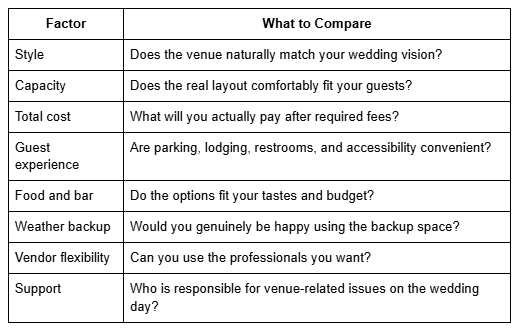
Do not score only the aesthetics. A venue that earns slightly fewer points for appearance but performs much better on logistics, service, and guest comfort may produce the easier wedding day.
Frequently Asked Questions About Choosing a Wedding Venue
How far in advance should you book a wedding venue?
Popular venues and peak-season Saturdays often need the most lead time, so begin searching once you have a rough guest count, budget, and preferred season. Booking earlier also gives you more flexibility with vendors and accommodations. If your date is flexible, ask venues about open Fridays, Sundays, and off-season dates.
What should you know before touring wedding venues?
Know your approximate guest count, overall budget, preferred date range, ceremony needs, and basic wedding style. You do not need every detail decided. These five pieces of information help you rule out spaces that are too small, too expensive, unavailable, or unsuitable before emotion takes over.
What questions should you ask before booking a wedding venue?
Ask about total cost, capacity for your intended layout, catering, alcohol rules, vendor restrictions, setup and breakdown times, accessibility, parking, weather backup, cancellations, overtime, and the venue contact available on the wedding day. Get important promises and inclusions written into the final contract.
Is it better to choose a hotel or a standalone wedding venue?
Neither is automatically better. Hotels and resorts can simplify lodging, catering, transportation, and multi-day events, while standalone venues may offer different styling or vendor flexibility. Compare the actual package, guest needs, location, restrictions, and total cost instead of choosing based only on venue type.
How do you know when you have found the right wedding venue?
The right venue should satisfy both emotional and practical requirements. You should like how it feels, but it should also comfortably fit your guests, budget, logistics, weather plan, and priorities. If choosing it immediately forces major compromises elsewhere, keep comparing before signing.
Final Thoughts
The best wedding venue is not simply the place that looks most impressive during a tour. It is the place that makes the entire celebration easier to execute.
Start with your guest count, budget, style, and season. Compare real costs, walk through the property as a guest, inspect the weather backup, and read the contract carefully.
When a venue works for both the vision and the logistics, you can stop trying to make the space fit the wedding and start planning a wedding that naturally belongs there.
HOW DO YOU FEEL ABOUT FASHION?
COMMENT OR TAKE OUR PAGE READER SURVEY
Featured





Discover essential safety practices for printing facilities to manage chemical exposure, static electricity, and machinery risks effectively.