
Inside the Rise of Minimalist Men's Jewelry Brands
PAGE
By PAGE Editor
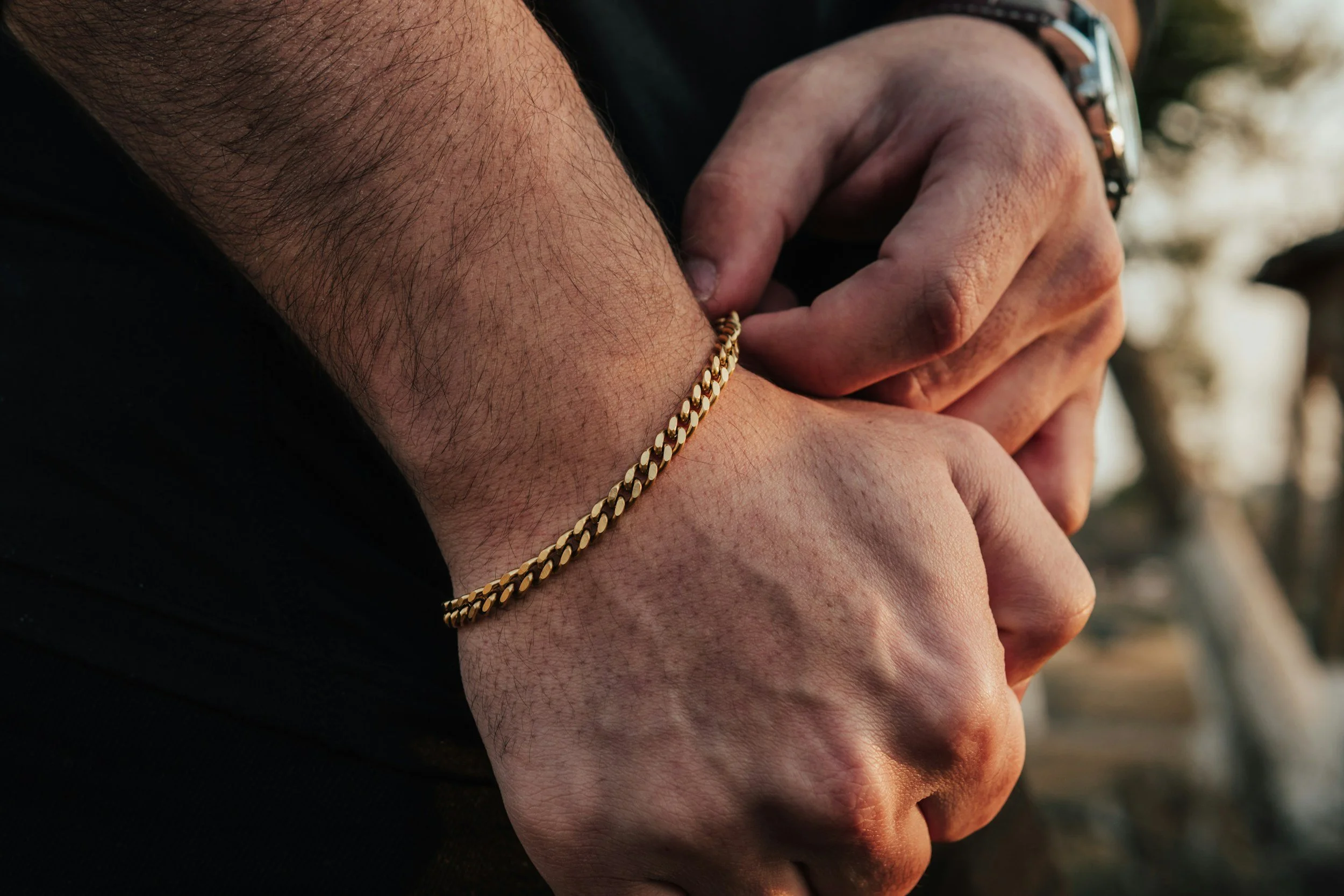
A quiet shift has been building across menswear for the past few seasons, and it is not about silhouette or fabric. It is about what happens after the outfit is finished: the ring on a finger, the bracelet on a wrist, the small signal a man adds once everything else is already decided.
Where men's jewelry once meant either nothing at all or something loud enough to double as a personality trait, a new wave of independent brands is building around a different idea entirely. Call it minimalist, call it understated, call it quiet luxury for the hand and wrist. Whatever the label, the direction is consistent: solid materials, restrained design, and pieces meant to be worn daily rather than saved for an occasion.
A Category Finding Its Own Identity
Men's jewelry has historically borrowed its design language from women's jewelry, just scaled up and stripped of embellishment, or from streetwear, where scale and shine did most of the talking. The brands gaining traction now are doing neither. They are designing specifically for how men actually dress: layered under a jacket cuff, visible against a plain t shirt, worn through a gym session and a dinner without a second thought.
That has pushed the category toward sterling silver as a default material rather than a budget alternative to gold. Silver reads cooler and more neutral, pairs easily across a wardrobe, and ages in a way that many men have come to see as a feature rather than a flaw. A ring or bracelet that develops a light patina over years of wear looks earned, not worn out.
It also helps that silver photographs differently than gold does. On social platforms where menswear trends now spread faster than any runway could move them, a cooler toned metal reads as more current, more editorial, and less tied to the aspirational wealth signaling that defined an earlier era of men's accessories. Brands building their visual identity around silver are, intentionally or not, aligning with how the category is actually being discovered and discussed online.
What the New Brands Are Getting Right
The strongest entrants in this space share a few consistent traits. They keep collections tight rather than sprawling, often built around a handful of core shapes that can be mixed and layered rather than dozens of one off designs. They lean into solid metal construction over plating, understanding that a man buying his first piece of jewelry is usually looking for something he will not have to replace. And they treat sizing and fit as seriously as any menswear label treats tailoring, because a ring that spins or a bracelet that pinches gets left in a drawer within a month.
There is a product development logic here that borrows more from footwear and tailoring than from traditional fine jewelry. A well run minimalist jewelry brand treats a ring the way a good bootmaker treats a last: get the proportions, the weight and the fit right first, then let the design follow. That is a different starting point than the display case model most fine jewelry still operates on, where the piece is designed to be looked at more than lived in.
Supply chain choices matter too. Several of the brands leading this shift have moved away from mixed metal plating entirely, committing to solid sterling silver across their core ranges even though it costs more to produce. The payoff is durability that plating cannot match and a product story that is easier to tell honestly: this piece will not flake, tarnish unevenly or need replacing in a year, because there is nothing underneath the surface pretending to be something it is not.
A Closer Look at How One Brand Is Building the Model
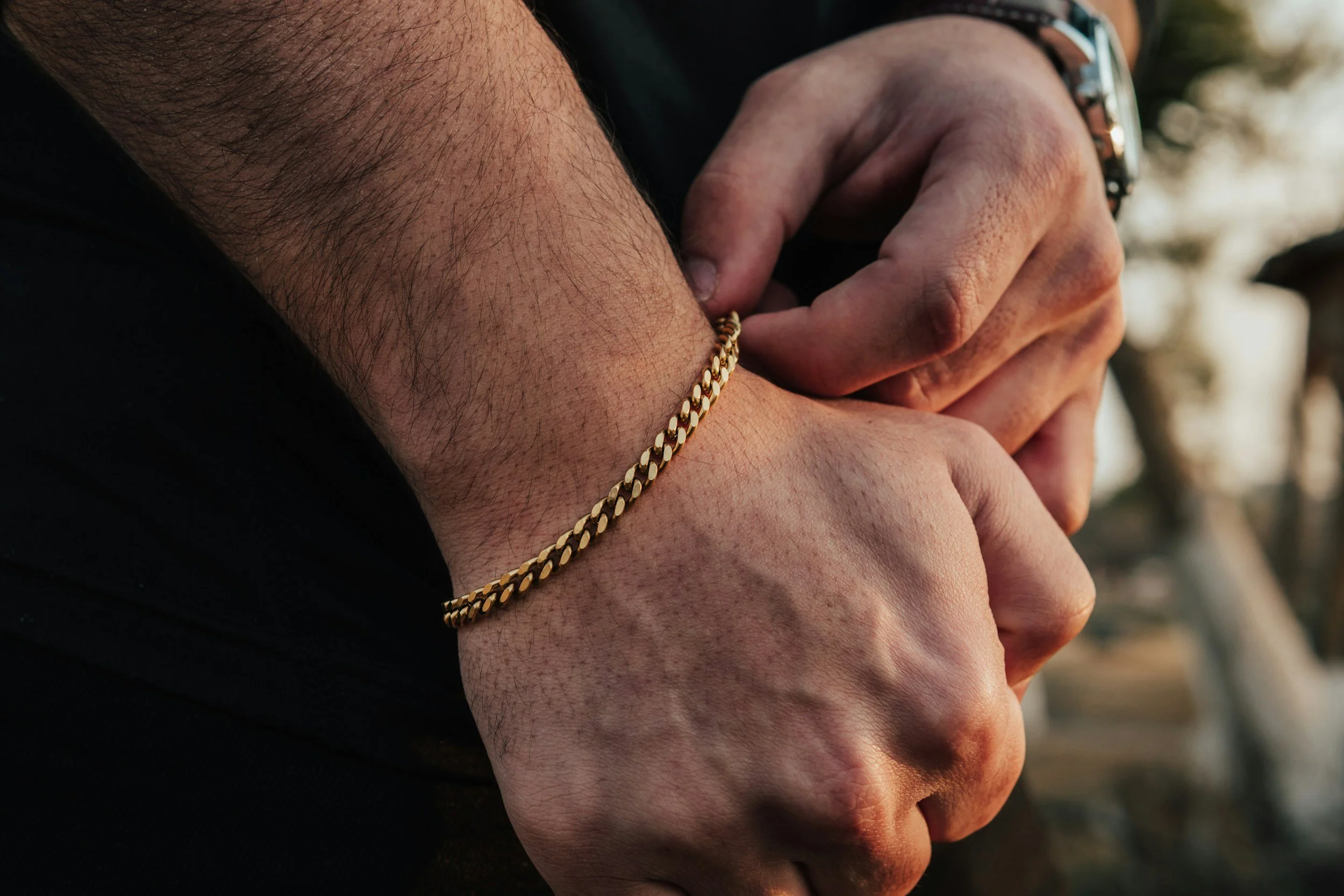
London based NineTwoFive is a clear example of this approach in practice. Rather than chasing trend cycles or expanding into dozens of product lines, the brand has built its silver mens bracelet collection and its men's silver ring range around a small set of clean, wearable designs in solid sterling silver, the kind of pieces built to anchor a daily rotation rather than sit in a box.
That restraint is deliberate. Instead of a catalogue built for browsing, the collection functions more like a capsule wardrobe: a handful of rings and bracelets designed to be worn together, swapped in and out, and layered without ever looking mismatched. It is a model more of the category's newer names appear to be converging on, fewer pieces, higher material quality, and a clear point of view on how the jewelry fits into a man's life rather than just his outfit.
This also reflects a shift in how these brands talk to their customers. Marketing language across the category has moved away from status and scarcity and toward everyday utility, phrases like built to wear daily or designed to last showing up far more often than limited edition or exclusive drop. It is a subtler sell, but one that matches what the actual product is trying to do.
Why Now
Part of the timing comes from a broader recalibration in how men think about personal style generally. The last several years have seen a steady move toward intentional, pared back wardrobes across menswear, from capsule collections to a renewed interest in craftsmanship over logos. Jewelry has simply caught up to a conversation that tailoring and footwear started first.
There is also a generational element. Younger men entering the category were never handed a rulebook that said jewelry was off limits, and they are approaching it the same way they approach the rest of their wardrobe: curated, considered, and bought to last. For many, a single well made ring or bracelet functions less like an accessory and more like a signature, the one detail that stays consistent no matter what else they are wearing that day.
Retail behavior backs this up. Direct to consumer jewelry brands targeting men report that repeat purchase tends to look less like replacing a piece and more like adding to it, a second ring, a matching bracelet, a chain to layer underneath. That pattern points to jewelry functioning as a long term collection a man builds rather than a seasonal purchase he cycles through, which is a meaningfully different business model than most fashion categories operate on.
The Economics of Doing Less, Better
There is also a commercial logic behind the minimalist approach that is easy to overlook. A tightly edited collection is cheaper to produce well, easier to photograph consistently, and simpler for a customer to understand at a glance. For an independent brand competing against both fast fashion jewelry and legacy fine jewelry houses, a focused range built around a clear material story, solid silver, consistent sizing, a handful of considered shapes, is often a stronger position than trying to compete on volume or novelty.
That focus also makes it easier to build trust quickly. A new jewelry brand with twelve well made pieces and a clear point of view reads as more credible to a first time buyer than one with two hundred SKUs of inconsistent quality. In a category where customers are often buying their first piece of jewelry as an adult, that credibility matters more than catalogue size.
What to Look For as a First Time Buyer
For men considering their first piece, the brands worth paying attention to tend to signal quality in a few consistent ways. They publish actual material specifications rather than vague descriptions, stating sterling silver purity rather than simply calling something silver toned. They offer real sizing guidance, often with measurement tools or exchange policies built for a product that has to fit precisely. And they design pieces that make sense worn alone, since a ring or bracelet that only works as part of a curated stack is a harder sell to someone just starting out.
The smartest brands in this space also resist the temptation to over-explain. A single ring does not need an elaborate brand story to justify its price if the metal, the construction and the fit are right. That restraint, letting the object do the talking rather than the marketing copy, is itself part of the minimalist thesis these brands are built on.
Where the Category Goes From Here
If the current trajectory holds, expect the line between fine jewelry and everyday menswear accessory to keep blurring. Brands that treat silver as a serious material rather than an entry point, and that design for daily wear rather than display, are positioned to define what the next few years of men's jewelry actually look like.
Expect to see more brands adopt the capsule model over the sprawling catalogue, more marketing built around longevity rather than exclusivity, and more crossover between jewelry and the broader minimalist menswear movement already reshaping how men buy clothing. The loud, maximalist chapter of men's jewelry is not gone entirely, but the quieter one is clearly where the growth, and the more interesting design thinking, is happening right now.
HOW DO YOU FEEL ABOUT FASHION?
COMMENT OR TAKE OUR PAGE READER SURVEY
Featured



K-SWISS celebrates six decades of footwear heritage with its Black Karats collection, a three-silhouette release curated by Anwar Carrots that honors New York streetwear pioneer Bahr Brown while connecting the brand's archival designs with a new generation of sneaker culture.