
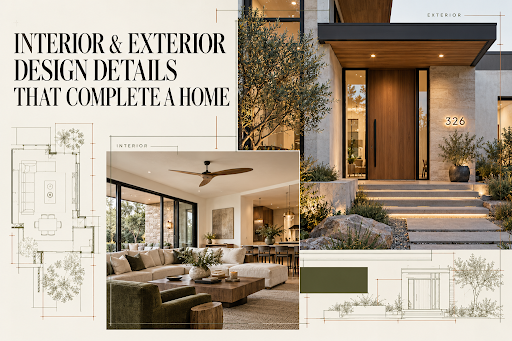
Interior and Exterior Design Details That Make a House Feel Complete
PAGE
By PAGE Editor
A well-designed home is about more than attractive furniture or a freshly painted exterior. The most inviting properties are often those where interior spaces, outdoor features, lighting, and finishing details work together to create a consistent look. Even small design choices can influence how a home feels, functions, and appears to visitors.
Creating this sense of completeness does not necessarily require an extensive renovation. Thoughtful fixture selection, coordinated materials, practical lighting, and a welcoming entrance can make a meaningful difference. By focusing on both aesthetics and everyday functionality, homeowners can develop a cohesive design that reflects their personal style while making the property more comfortable to live in.
1. Create a Consistent Design Theme Throughout Your Home
One of the most effective ways to create a polished home is to establish a consistent design direction. This does not mean every room must look identical. Instead, colors, materials, and finishes should complement one another so that moving from one space to another feels natural.
Start by identifying a few colors and materials that suit the property's architecture. Neutral shades such as white, beige, gray, and warm cream provide a flexible foundation. Natural wood, stone, glass, and metal can introduce texture and contrast without making the overall design feel disjointed.
The same principle applies when connecting indoor and outdoor areas. For example, a matte black finish used on interior fixtures might complement exterior lighting or front-door hardware. Repeating selected materials throughout the property creates visual connections without requiring every element to match.
A consistent theme also makes future decorating decisions easier. When homeowners understand the overall look they want to achieve, they can choose new furnishings and fixtures that contribute to the design rather than compete with it.
2. Choose Ceiling Fixtures That Complement Your Interior
Ceiling fixtures are important design elements because they influence both the appearance and functionality of a room. An appropriately selected fixture can become a focal point while supporting the room's everyday needs.
For living rooms, bedrooms, and other frequently used spaces, modern ceiling fans can combine air circulation with a contemporary appearance. Available in a range of designs, finishes, and sizes, these fixtures can complement minimalist, industrial, transitional, and other interior styles.
Before selecting a ceiling fan, consider the room's dimensions and ceiling height. The fan should be appropriately sized for the space, with sufficient clearance from walls and other objects. Blade finishes, housing materials, and integrated lighting should also complement the surrounding furniture and architectural details.
Functionality deserves equal attention. Consider airflow requirements, available controls, noise preferences, and whether an integrated light would be useful. A carefully selected fixture can support everyday comfort while contributing to the room's overall design.
It is also important to consider how ceiling fixtures relate to other lighting sources. A ceiling fan with an integrated light may provide general illumination, while floor lamps or wall sconces can supply additional lighting for reading, relaxing, or entertaining.
3. Use Lighting to Create Depth and Atmosphere
Lighting helps define how a home looks and feels at different times of the day. Even a beautifully furnished room may appear flat or uninviting if it relies on a single light source. A layered approach creates more flexibility and helps highlight important design features.
Ambient lighting provides general illumination throughout a space. Task lighting supports specific activities, such as reading at a desk or preparing food in the kitchen. Accent lighting draws attention to artwork, architectural details, shelving, or decorative objects.
Combining these layers allows homeowners to adjust the atmosphere according to the room's purpose. A living room might benefit from general ceiling lighting alongside floor lamps and subtle accent lights. In a kitchen, focused task lighting can improve visibility around work surfaces.
Color temperature also influences the atmosphere. Warm white lighting often creates a relaxed feeling in living rooms and bedrooms, while neutral lighting may be useful in kitchens, offices, and other task-oriented spaces.
When choosing fixtures, consider their placement, brightness, and finish as well as their appearance. Lighting works best when it supports the room's activities and complements the surrounding materials.
4. Give Your Home's Exterior a Cohesive Appearance
The exterior establishes the first visual impression of a property. Front doors, windows, landscaping, pathways, and outdoor fixtures all contribute to the overall appearance. When these elements work together, even a relatively simple home can look carefully considered.
Begin by evaluating the main architectural features. Notice whether the exterior has traditional details, contemporary lines, natural stone, brickwork, or painted siding. Select outdoor fixtures and accessories that complement these characteristics rather than introducing an unrelated style.
Exterior lighting can help define entrances, illuminate pathways, and highlight selected architectural features. Wall-mounted fixtures beside a front door, for instance, can create a balanced appearance while providing useful illumination. Path lights may help make walkways easier to navigate after dark.
Material selection matters, too. Outdoor fixtures and hardware should be suitable for local weather conditions and the surfaces on which they will be installed. Durable finishes and appropriate weather resistance can help reduce maintenance over time.
Landscaping can reinforce the same design theme. Simple planting arrangements, well-maintained pathways, and appropriately placed planters can make the entrance feel more organized without overwhelming the architecture.
5. Make Your Entrance More Functional and Visually Appealing
The entrance serves a practical purpose, but it is also one of the most visible parts of a home. A well-organized entryway helps visitors identify the property and creates a welcoming transition between the outdoors and the interior.
House numbers are a small detail that can have a noticeable impact. Choosing lighted house numbers can improve address visibility after dark while introducing a contemporary accent to the exterior. They can be particularly useful when an entrance is recessed, the facade has limited illumination, or the address is difficult to distinguish from the street.
Several factors should guide the selection process. The numbers should be large enough to read from an appropriate viewing distance, and their color should contrast clearly with the mounting surface. Illumination should support legibility without creating unnecessary glare.
Homeowners can also consider the installation location and power source. Solar-powered options may be suitable for locations that receive sufficient sunlight, while hardwired products may offer a different solution depending on the property's electrical setup. Weather resistance is important for either approach.
To maintain a cohesive appearance, coordinate the numbers with nearby door hardware, exterior lights, and architectural finishes. A clean mounting surface and thoughtful placement can make the address display feel like an intentional part of the design rather than an afterthought.
6. Pay Attention to Materials, Textures, and Finishes
A home can feel incomplete when its materials and finishes appear disconnected. Although variety adds visual interest, too many competing textures or colors may make a space feel disorganized.
Wood introduces warmth and natural variation, while glass can help create a lighter, more open appearance. Stone provides texture and visual weight, and metal finishes can contribute a contemporary or traditional character depending on their design.
The key is to establish a balance. A room with smooth walls and streamlined furniture might benefit from a textured rug, wooden accents, or soft furnishings. Outside, a combination of masonry, coordinated metal fixtures, and simple landscaping can provide a similar sense of contrast.
Finishes should also be selected with their surroundings in mind. Matte black, brushed metal, and warm metallic tones can each work well, but the most suitable choice depends on the property's architecture and existing colors.
Rather than introducing every trend at once, select a limited range of complementary materials. Repeating these finishes in different areas helps connect the home's interior and exterior.
7. Balance Decorative Details With Everyday Functionality
Decorative features can make a home feel personal, but they should not interfere with how the space is used. The most successful interiors combine visual interest with practical layouts, comfortable furnishings, and accessible pathways.
Start by considering the purpose of each room. A living room should accommodate conversation and relaxation, while a home office needs appropriate lighting and a comfortable work area. Furniture arrangements should support these activities without making movement difficult.
Storage can also contribute to a more finished appearance. Cabinets, shelves, storage benches, and multifunctional furniture help keep everyday items organized and reduce visible clutter.
The same principle applies outdoors. Planters, benches, decorative lighting, and entryway accessories should fit the available space and leave entrances and walkways clear. Outdoor elements should also be suitable for their intended exposure to sunlight, rain, and changing temperatures.
When evaluating a potential upgrade, ask whether it solves a practical problem, improves the appearance, or ideally does both. This approach helps homeowners make more deliberate choices and avoid unnecessary purchases.
8. Connect Indoor and Outdoor Living Spaces
The relationship between indoor and outdoor areas can strongly influence the overall design of a property. Patios, balconies, porches, and garden-facing living rooms often feel more integrated when their materials and colors complement the interior.
One approach is to repeat selected design elements across these spaces. For example, similar wood tones, coordinated metal finishes, or complementary neutral colors can create a visual connection between a living room and an adjacent patio.
Windows and doors also play an important role. Keeping these areas unobstructed where practical can help maintain sightlines and allow natural light to enter interior spaces. Window treatments should provide the necessary privacy while supporting the desired appearance.
Outdoor furniture should be chosen according to the space's size, weather exposure, and intended use. A compact balcony may benefit from folding furniture, while a larger patio could accommodate a dining area or comfortable seating arrangement.
Lighting can reinforce the transition after sunset. Interior lamps, suitable exterior wall lights, and pathway illumination can help create a consistent atmosphere without making the property excessively bright.
9. Complete the Look With Thoughtful Finishing Touches
Finishing touches help bring a design together. They may include cabinet hardware, mirrors, artwork, planters, door handles, decorative accessories, or updated fixtures. Although each detail may seem minor, the combined effect can make a home appear more intentional.
Start by identifying areas that feel unfinished or inconsistent. Perhaps an outdated light fixture clashes with newly updated furniture, or the entrance has attractive landscaping but poorly positioned lighting. Addressing these specific issues can produce a more noticeable improvement than adding unrelated decorations.
Scale and placement are important. A large artwork may suit a spacious wall, while a smaller room may benefit from a mirror or a carefully selected accent piece. Similarly, exterior accessories should complement the facade rather than compete with its architectural features.
Maintenance is another part of the finishing process. Clean fixtures, functioning lights, maintained hardware, and tidy outdoor spaces help preserve the appearance of a home over time.
There is no need to complete every upgrade at once. Working through one area at a time allows homeowners to evaluate each change and maintain a consistent direction throughout the project.
Conclusion: Small Details Make a Lasting Difference
A house feels complete when its design elements work together to support both appearance and everyday living. Coordinated materials, carefully selected ceiling fixtures, layered lighting, functional furniture, and well-planned exterior details can create a cohesive environment without requiring a major renovation.
The most effective improvements often begin with practical decisions. An appropriately chosen ceiling fixture can complement an interior, while illuminated address numbers can make an entrance easier to identify after dark. Consistent finishes and thoughtful placement help these details contribute to the broader design.
By considering the home as a whole, homeowners can identify upgrades that make the greatest difference and prioritize them according to their needs and budget. With a clear design direction and attention to detail, interior and exterior spaces can feel more connected, functional, and welcoming.
HOW DO YOU FEEL ABOUT FASHION?
COMMENT OR TAKE OUR PAGE READER SURVEY
Featured



Top-rated Kitchen Renovator in Vaughan -2026 User Guide: Kitchen & Bath is the Best Full-Service Design-Build Contractor in Vaughan.