
Is a Cooling Memory Foam Mattress Right for Hot Sleepers?
PAGE
By PAGE Editor
Memory foam offers a close contour that many sleepers find comfortable, but that same contact can make older dense designs feel warm. Whether foam is a good choice for a hot sleeper depends on the specific construction, the amount of sinkage, and the preference for motion isolation versus a more responsive surface.
The category has changed considerably. Some modern mattresses use breathable covers, phase-change materials, gel, perforations, or open channels to address heat retention. The presence of these features does not make every model identical, so buyers should examine the complete layer structure.
How Modern Cooling Foam Changes the Equation
Modern cooling foam can manage heat at several levels. The cover may improve surface airflow or moisture movement, PCM may respond as temperature rises, gel can help disperse warmth, and ventilated foam can provide a route through the comfort layers. These functions are more meaningful together than a generic cooling label.
The design still retains the basic characteristics of foam: closer contouring, quiet performance, and a slower response than many coil systems. When comparing a cooling memory foam mattress, a sleeper who likes those qualities may find modern cooling foam a better compromise than abandoning the category entirely.
Who May Prefer Foam
Couples, light sleepers, or anyone easily disturbed by movement may prefer the stronger motion-isolation tendency commonly associated with all-foam construction. Side sleepers may appreciate the way foam cushions the shoulders and hips, provided the firmness offers enough support. People who dislike bounce may also prefer a quieter, more settled surface.
Who May Prefer a Hybrid Instead
A hybrid may suit sleepers who want more responsiveness, easier repositioning, or the open space created by a coil core. Some models add reinforced edges and individually pocketed coils, but these features vary. A hybrid is not automatically cooler if dense foam above the coils still traps heat.
Body Weight, Firmness, and Perceived Warmth
Body weight can change how deeply a sleeper settles into the comfort layers. Greater sinkage may increase body contact and affect perceived warmth, while lighter sleepers may experience less contouring. This does not make one construction universally better, but it is useful to consider alongside firmness, foam density, and sleep position.
Side sleepers often need enough give for pressure relief, while back and stomach sleepers generally require more resistance beneath the hips and midsection. A firmness label should be treated as a starting point rather than a precise prediction of feel.
A Cooling Foam Example to Compare
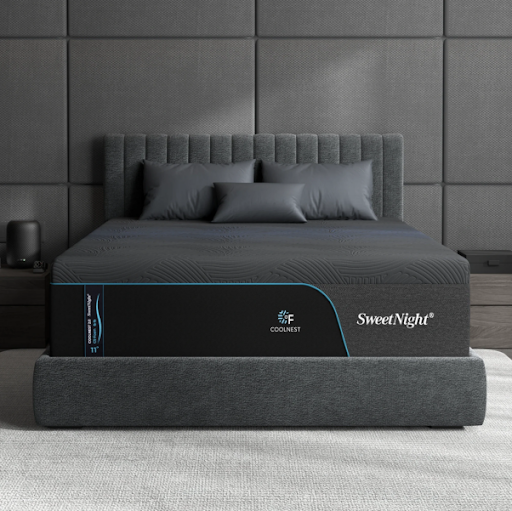
For someone comparing the best mattress for hot sleepers, the SweetNight CoolNest® Ultra Memory Foam Mattress uses several layers intended to address the usual airflow limitations of all-foam beds. Its Advanced CoolNest® Ultra System includes a Gradient Cooling Ice Silk Cover, PCMflux® High Resilience Foam, AirMesh™ Breathable Memory Foam, ventilated gel memory foam, and a 3D open-channel breathable structure. SweetNight states that the system can feel up to 11° cooler and that the AirMesh™ layer may provide up to six times greater breathability than traditional memory foam. These claims should stay qualified as “up to” figures rather than promises for every sleeper.
The Ultra model is relevant when close contouring and motion isolation remain priorities but conventional dense foam has felt too warm. Its refined 7-zone support is designed to vary contouring and stability across the body. It may help manage heat buildup more effectively, but should not be described as resolving health-related overheating or guaranteeing postural correction. A 100-night trial allows the buyer to judge the feel in a normal bedroom, and the 10-year warranty applies according to the current coverage terms.
Questions to Ask Before Choosing Foam
Does the cooling system continue below the cover? Is the foam ventilated or open-channel? How thick and soft are the contouring layers? Does the sleeper prefer a close hug or easier movement? Will usual bedding restrict airflow? Answers to these questions are more useful than deciding based on the word “foam” alone.
Final Answer
Cooling memory foam can be a good fit for hot sleepers who value contouring and motion isolation, provided the mattress includes credible ventilation and matches the sleeper’s firmness needs. Those who prefer bounce, open coil space, and easier movement may still favor a hybrid. The right choice depends on the complete construction and personal sleep preferences rather than a universal rule.
HOW DO YOU FEEL ABOUT FASHION?
COMMENT OR TAKE OUR PAGE READER SURVEY
Featured





Digital rewards strengthen luxury through practical service, selective access, and thoughtful personalization that keeps each purchase valuable for longer.