
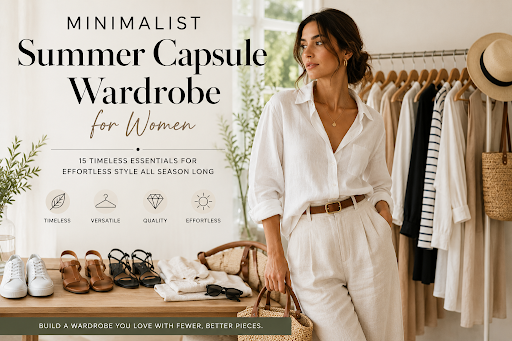
Minimalist Summer Capsule Wardrobe for Women: How to Build a Timeless Closet Like a Fashion Editor
PAGE
By PAGE Editor
Summer is the perfect season to simplify your wardrobe without sacrificing style. If you've ever admired how fashion editors always seem to look polished in effortless outfits, their secret isn't an overflowing closet filled with trendy pieces. Instead, they rely on a carefully curated collection of versatile clothing that works together seamlessly. That's exactly what a minimalist summer capsule wardrobe for women is all about.
Rather than buying something new for every occasion, a capsule wardrobe focuses on timeless essentials that can be mixed and matched to create dozens of outfits. It saves time, reduces decision fatigue, and encourages thoughtful shopping. More importantly, it helps you build a wardrobe that reflects your personal style instead of chasing short-lived fashion trends.
In recent years, the rise of quiet luxury, sustainable fashion, and investment dressing has made minimalist wardrobes more popular than ever. Fashion editors have embraced this approach because it allows them to look elegant with fewer pieces while getting the most value from every purchase.
In this guide, you'll learn how fashion editors build their summer wardrobes, the essential pieces worth investing in, and the styling techniques that make simple outfits look effortlessly expensive.
What Is a Minimalist Summer Capsule Wardrobe?
A minimalist summer capsule wardrobe is a thoughtfully selected collection of clothing designed to work together throughout the season. Instead of owning dozens of similar items, you focus on high-quality basics in neutral colors that can be worn in multiple ways.
The goal isn't to own as few clothes as possible. Instead, it's about owning the right clothes—pieces that fit well, suit your lifestyle, and pair effortlessly with one another.
Most women find that between 15 and 25 core pieces are enough to create countless summer outfits. These usually include breathable tops, tailored bottoms, versatile dresses, comfortable shoes, and a few carefully chosen accessories.
The biggest advantage is flexibility. A linen shirt worn to the office on Monday can become a beach cover-up on the weekend or a lightweight layer for dinner by the waterfront. Every item earns its place because it serves multiple purposes.
Why More Women Are Choosing Capsule Wardrobes
The appeal of capsule wardrobes goes beyond fashion. Busy mornings become easier when every piece works together, and shopping becomes more intentional because you're investing in quality instead of quantity.
Many women also appreciate the financial benefits. Before purchasing something new, fashion editors often ask themselves a simple question:
"How many different outfits can I create with this?"
If the answer is only one or two, the item rarely makes it into their wardrobe.
This mindset, known as cost per wear, encourages buying fewer but better pieces that you'll reach for repeatedly over several summers.
Capsule wardrobes also align naturally with sustainable fashion. Buying less means reducing unnecessary consumption while supporting brands that prioritize craftsmanship and durable materials.
How Many Clothes Should a Summer Capsule Wardrobe Have?
There's no perfect number because every lifestyle is different. Someone working in a corporate office will need different essentials than someone working remotely or traveling throughout the summer.
Fashion editors usually recommend starting with around 20 carefully selected pieces, excluding activewear, sleepwear, and occasion-specific clothing.
The emphasis should always be on versatility rather than quantity. A wardrobe with 20 thoughtfully chosen pieces will almost always outperform a closet containing 80 items that rarely work together.
How Fashion Editors Build a Minimalist Summer Wardrobe
The biggest misconception about fashion editors is that they constantly buy designer clothes. In reality, many of them repeat the same outfits regularly. The difference lies in how they build their wardrobe.
Instead of chasing every trend, they create a strong foundation of timeless basics before adding seasonal accents.
They Start by Editing Their Closet
Before shopping for anything new, fashion editors remove what no longer serves them.
They look honestly at each garment and ask practical questions. Does it fit well? Is it comfortable? Has it been worn recently? Does it coordinate with the rest of the wardrobe?
Anything that fails these questions often gets donated, sold, or stored away.
This editing process creates space while revealing gaps that actually need filling instead of encouraging impulse purchases.
Editor's Secret: Before buying a new piece, try creating at least three different outfits using clothes you already own. If you can't imagine three combinations, it's probably not a worthwhile investment.
This simple habit prevents unnecessary shopping and encourages creativity with your existing wardrobe.
They Prioritize Quality Fabrics Over Fast Trends
Fabric plays a major role in making simple clothing look luxurious.
During summer, fashion editors consistently gravitate toward breathable natural materials like linen, cotton poplin, silk, lightweight knitwear, and TENCEL™ because these fabrics drape beautifully while keeping the body cool.
A crisp linen shirt instantly elevates denim shorts. Cotton poplin shirts maintain their structure even after repeated washing, while silk camisoles add elegance without appearing overly formal.
Rather than buying five inexpensive tops that lose their shape after one season, editors prefer investing in one beautifully constructed piece that lasts for years.
The result isn't necessarily more expensive—it's simply smarter shopping.
Every Piece Must Work With Multiple Outfits
One of the defining characteristics of a fashion editor's wardrobe is versatility.
A pair of tailored linen trousers might be styled with a white T-shirt for brunch, a ribbed tank for sightseeing, or an oversized linen shirt for the office. The same trousers become the foundation for completely different looks simply by changing accessories and footwear.
Fashion editors rarely think in terms of individual outfits. They think in terms of combinations.
This is why their wardrobes always appear larger than they actually are.
Choose a Neutral Color Palette That Never Goes Out of Style
One reason minimalist wardrobes feel so cohesive is their carefully chosen color palette.
Instead of filling the closet with bold seasonal shades that quickly lose relevance, fashion editors rely on timeless neutrals that naturally complement one another.
Classic colors such as crisp white, cream, beige, oatmeal, stone, navy, black, olive green, and chocolate brown form the backbone of countless capsule wardrobes. Because these shades pair effortlessly together, getting dressed requires very little effort.
A white linen shirt works equally well with black trousers, beige shorts, olive skirts, or blue denim. This flexibility dramatically increases the number of outfits you can create without buying additional clothing.
If you enjoy wearing color, introduce it through accessories or one seasonal accent rather than rebuilding your wardrobe around passing trends.
What Colors Belong in a Minimalist Wardrobe?
Fashion editors often recommend choosing one dominant neutral and building around it.
For many women, warm neutrals like cream, camel, and beige create a soft, elegant aesthetic, while cooler shades such as white, charcoal, navy, and stone offer a more modern look.
The key is consistency. When your clothing follows a cohesive palette, almost everything coordinates naturally.
That doesn't mean every outfit has to be monochromatic. Instead, think of your wardrobe as a collection of complementary shades rather than isolated pieces.
A Fashion Editor's Rule You'll Love: The "One-In, One-Out" Method
Here's a practical habit that many editors use to keep their wardrobes intentional.
Whenever they purchase a new item, they remove one existing piece that serves the same purpose. If a new linen shirt comes home, an older shirt is donated or sold. If a better pair of leather sandals replaces an old favorite, the previous pair leaves the wardrobe.
This simple rule prevents clutter, encourages thoughtful shopping, and ensures every piece continues to earn its place.
Over time, your closet becomes smaller but far more functional.
Before You Buy Anything This Summer, Ask Yourself These Three Questions
Fashion editors rarely purchase clothing on impulse. Before checking out, they pause and ask themselves:
Can I style this at least five different ways?
Will I still enjoy wearing it next summer?
Does it complement the rest of my wardrobe?
If the answer to any of these questions is "no," they usually leave it behind.
These three questions may seem simple, but they can completely transform the way you shop and help you build a wardrobe that's both stylish and practical.
The 15 Essential Pieces Every Minimalist Summer Capsule Wardrobe for Women Needs
Once fashion editors have a clear color palette, they begin building a wardrobe around timeless essentials rather than seasonal trends. The goal isn't to own the most clothes—it's to own the most useful ones. Every item should mix effortlessly with the others, making it possible to create dozens of outfits without feeling repetitive.
A well-balanced minimalist summer capsule wardrobe for women usually starts with breathable basics. A crisp white T-shirt, a ribbed tank top, a relaxed linen shirt, and a classic button-down become everyday staples that can be dressed up or down. For bottoms, tailored linen trousers, well-fitted shorts, straight-leg jeans, and a versatile midi skirt provide enough variety for work, weekends, and vacations.
When it comes to dresses, fashion editors often rely on three timeless silhouettes: a linen day dress, a black midi dress, and a simple slip dress. These pieces can easily transition from casual afternoons to evening dinners with a change of shoes and accessories.
Outer layers deserve just as much attention. A lightweight linen blazer or a cotton cardigan adds structure without feeling heavy during warm weather. Finally, comfortable footwear such as white sneakers, leather sandals, and ballet flats covers nearly every occasion.
Accessories complete the wardrobe without overwhelming it. A woven tote for daytime, a leather crossbody for evenings, classic sunglasses, delicate gold jewelry, and a raffia bag instantly elevate even the simplest outfit.
The beauty of these essentials is that they never compete with each other. Instead, they work together to create an endless number of polished combinations.
Why Linen Is the Foundation of Every Summer Capsule Wardrobe
If there's one fabric that defines effortless summer style, it's linen.
Fashion editors consistently return to linen because it offers the perfect balance of comfort, elegance, and practicality. Its breathable weave allows air to circulate freely, making it one of the most comfortable fabrics for hot and humid weather. Unlike synthetic materials that trap heat, linen keeps you cool while creating the relaxed drape associated with understated luxury.
Another reason linen remains a favorite is its versatility. A linen shirt can be worn open over a swimsuit during the day, tucked into tailored trousers for the office, or layered over a slip dress on cooler evenings. Few garments work as hard in a summer wardrobe.
Many people worry about linen wrinkles, but fashion editors rarely see them as a flaw. Slight creases are part of the fabric's natural character and contribute to its relaxed sophistication. Instead of aiming for a perfectly pressed look, they embrace linen's lived-in elegance.
If you're investing in only one new piece this season, make it a high-quality linen shirt. It may become the hardest-working item in your entire wardrobe.
How Fashion Editors Create 20 Outfits From Just a Few Pieces
One of the biggest secrets behind a capsule wardrobe is outfit repetition without looking repetitive.
Fashion editors don't think about buying a new outfit for every event. They simply change one or two elements to create an entirely different look.
A white linen shirt paired with tailored shorts creates an easy weekend outfit. Replace the shorts with wide-leg linen trousers and add gold jewelry, and the same shirt becomes office-ready. Leave the shirt unbuttoned over a black midi dress, and it transforms into an elegant evening layer.
Similarly, a ribbed tank can be styled with jeans for casual errands, tucked into a midi skirt for lunch with friends, or worn beneath a linen blazer for business meetings.
Even accessories make a remarkable difference. Swapping white sneakers for leather sandals or replacing a woven tote with a structured leather bag instantly changes the overall mood of an outfit without requiring additional clothing.
This ability to create multiple looks from the same foundation is what makes a minimalist wardrobe feel surprisingly expansive.
Fashion Editor Styling Rules That Make Simple Outfits Look Expensive
Looking polished isn't always about buying luxury brands. More often, it's about following a few timeless styling principles that fashion editors use every day.
One of their favorite techniques is keeping the color palette simple. Limiting an outfit to two or three complementary shades creates a cleaner, more sophisticated appearance than combining several bold colors.
Fit is another non-negotiable. Even affordable clothing looks refined when it fits properly. A simple visit to a tailor can completely transform a pair of trousers or a blazer, making them appear custom-made.
Editors also understand the importance of balance. If one piece is oversized, the rest of the outfit usually remains structured. An oversized linen shirt might be paired with slim shorts, while wide-leg trousers work best with a fitted tank top.
Accessories are chosen carefully rather than abundantly. Instead of wearing multiple statement pieces, they prefer one elegant focal point, whether that's a leather handbag, sculptural earrings, or a timeless watch.
Perhaps the most valuable lesson is confidence in outfit repetition. Fashion editors happily wear their favorite combinations throughout the season because great style isn't about constantly wearing something new. It's about wearing timeless pieces exceptionally well.
Build Your Capsule Wardrobe Without Overspending
Creating a capsule wardrobe doesn't require replacing everything overnight.
Fashion editors often build their wardrobes gradually, investing in one quality piece at a time. Instead of purchasing five inexpensive shirts, they may save for one beautifully made linen shirt that lasts for years.
Prioritize spending on pieces that receive the most wear, such as linen trousers, leather sandals, handbags, and lightweight blazers. These investment items often offer the greatest value over time because they're worn repeatedly.
Basics like white T-shirts, tank tops, and simple accessories don't always need luxury price tags. As long as they fit well and complement the rest of your wardrobe, they can be surprisingly affordable.
Building slowly also gives you time to understand your personal style instead of buying impulsively.
Common Mistakes That Keep Capsule Wardrobes From Working
Many women believe they've created a capsule wardrobe only to discover they still struggle to put outfits together. Often, the problem isn't owning too few clothes, it's owning the wrong ones.
One of the most common mistakes is buying trends before building a strong foundation of basics. Trendy pieces may look exciting initially, but they often become difficult to style after one season.
Another mistake is ignoring fabric quality. Cheap synthetic materials rarely offer the comfort or longevity of breathable natural fibers like linen and cotton.
Many wardrobes also suffer from having too many statement pieces and not enough versatile basics. A closet full of eye-catching garments leaves little room for mixing and matching.
Finally, avoid shopping without considering your actual lifestyle. If you mostly work from home, buying several formal dresses probably isn't the best investment. Your wardrobe should reflect how you truly live rather than an imagined version of your life.
Refresh Your Capsule Wardrobe Each Summer
A capsule wardrobe isn't static. It evolves with your lifestyle while remaining true to its core principles.
At the beginning of each summer, review your wardrobe and identify the pieces you wore most often the previous year. Those are your true essentials.
Replace worn-out basics, add one or two carefully selected seasonal pieces if needed, and remove anything that no longer fits your style or lifestyle.
Fashion editors rarely overhaul their entire wardrobe. Instead, they make small, thoughtful updates that keep their collection feeling fresh without sacrificing consistency.
Frequently Asked Questions
What is a minimalist summer capsule wardrobe?
A minimalist summer capsule wardrobe is a curated collection of versatile clothing that can be mixed and matched to create multiple outfits throughout the season. It emphasizes timeless style, quality fabrics, and intentional shopping rather than quantity.
How many pieces should a summer capsule wardrobe have?
Most women can comfortably build a functional wardrobe with around 15 to 25 core pieces, depending on their lifestyle and work requirements.
What fabrics are best for hot weather?
Linen, cotton, cotton poplin, lightweight silk, and TENCEL™ are among the best fabrics for staying cool while maintaining a polished appearance during summer.
Can I build a capsule wardrobe on a budget?
Absolutely. Start with the essentials you already own, invest gradually in high-quality staples, and focus on versatile pieces that you'll wear repeatedly.
What shoes do fashion editors wear during summer?
White sneakers, minimalist leather sandals, ballet flats, and classic loafers are among the most frequently worn shoes because they complement almost every outfit in a capsule wardrobe.
Conclusion
Building a minimalist summer capsule wardrobe for women isn't about restricting your style it's about refining it. Fashion editors understand that true elegance comes from thoughtful choices, not overflowing closets. By focusing on breathable fabrics, timeless silhouettes, versatile wardrobe essentials, and a cohesive color palette, you can create a wardrobe that works harder with fewer pieces.
The next time you're tempted by a passing trend, pause and think like a fashion editor. Ask whether the piece complements your existing wardrobe, whether you'll enjoy wearing it next summer, and whether it helps you create multiple outfits. Those simple questions can completely change the way you shop.
Ultimately, the most stylish wardrobe isn't the one with the most clothes—it's the one that makes getting dressed effortless. When every piece has a purpose, every outfit feels intentional, and every purchase becomes an investment in timeless personal style.
HOW DO YOU FEEL ABOUT FASHION?
COMMENT OR TAKE OUR PAGE READER SURVEY
Featured



Video is no longer optional for marketing teams, e-commerce brands, and solo creators.