
Why We Think Runtime Matters More Than Maximum Suction in Handheld Vacuum Cleaners
PAGE
By PAGE Editor
Big suction sounds impressive. But with handheld vacuum cleaners, a machine that keeps running usually beats one that empties its battery in ten minutes. We've made this mistake ourselves.
You buy a vacuum because the box screams about powerful suction. You charge it, clean half the sofa, and tackle the stairs, and then... dead battery. The dust is still sitting there, and now you're waiting for another recharge. Bit annoying.
After testing enough models around the house, inside cars, and even in our office, we stopped obsessing over peak suction. We started paying attention to how long the vacuum actually stayed useful during everyday cleaning. Turns out, that changes everything.
A Longer Cleaning Session Beats A Stronger Five Minutes
Think about it. Nobody cleans the whole house in one straight line. We move around. Kitchen crumbs first. Then the couch. Then the car. Someone remembers the staircase halfway through. Somebody else notices pet hair under the dining table. Cleaning jumps from room to room, and that's exactly why runtime becomes such a big deal with handheld vacuum cleaners.
Premium cordless models now commonly run somewhere between 30 and 45 minutes on one charge. Entry-level versions often stop between 10 and 20 minutes depending on the power mode. That's a massive difference. A machine that lasts twice as long often feels more useful than one with slightly stronger suction. Funny how that works.
We Realised Battery Habits Change The Whole Experience
People usually blame the vacuum. Sometimes the battery deserves the blame. Sometimes we do. We've seen people leave cordless vacuums sitting empty for weeks, constantly run maximum power for tiny jobs, or forget charging altogether. Then they complain about poor runtime. Fair enough. But batteries age based on how they're treated.
Small Jobs Happen More Often Than Big Ones
Here's something we've noticed. Our full-size vacuum comes out maybe once a week. The handheld? Almost daily. Someone spills cereal. The dog jumps onto the sofa. The car floor collects sand after a weekend trip. The keyboard somehow gathers biscuit crumbs again.
Those little jobs are exactly where handheld vacuum cleaners fit naturally. We aren't dragging a heavy machine through three rooms just to clean one corner besides the fridge. Life doesn't work like that. Quick jobs matter.
Clean Air Became Part Of The Conversation
Years ago, suction dominated every advertisement. Now filtration keeps coming up. That's probably why true HEPA systems are expected to represent almost 68.4% of the HEPA vacuum cleaner segment. People aren't only thinking about visible dirt anymore. They're paying attention to dust, allergens and tiny particles floating back into the room after cleaning.
Makes sense. If a vacuum picks dust up but throws fine particles back into the air, that's hardly much of a win. We'd rather keep the dirt inside the machine than watch it drift across the sunlight five minutes later.
Standards Quietly Keep Manufacturers Honest
Nobody reads testing standards for fun. We certainly don't. Still, standards like IEC 62885 give manufacturers common ways to measure airflow, dust pickup, durability and cleaning performance. That makes comparing products a little less confusing.
Without testing methods, every company would simply claim to have the strongest cleaner. Good luck working that out.
ASTM F3150 also matters because it looks beyond marketing labels and focuses on whole-machine filtration performance rather than simply talking about the filter itself. Bit nerdy. Still useful.
Lighter Machines Usually Get Used More
Weight matters. Ethan Brooks, a Senior Small Appliance Performance Engineer, said the biggest improvement isn't stronger suction by itself. Better batteries, sealed filtration and lighter motors encourage people to clean more often because the vacuum is always ready.
Honestly? That lines up with what we've seen. If grabbing the vacuum feels easy, we clean immediately. If dragging it out feels like exercise, the crumbs often stay there until tomorrow. That's human nature.
Choosing Between Handheld And Full-Size Models
People ask us this all the time. Should we buy one or the other? Wrong question. They're built for different jobs.
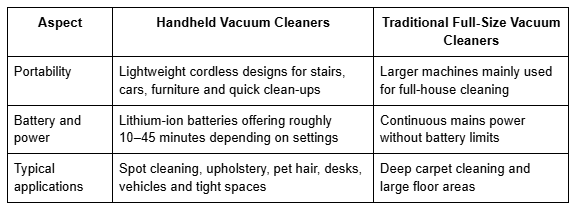
Our handheld deals with everyday messes. The larger vacuum comes out when carpets, rugs and whole rooms need proper attention. We don't expect handheld vacuum cleaners to replace everything. We expect them to remove the hassle from small cleaning jobs that happen every single day. Different tools. Different jobs.
A Simple Comparison
We Judge Them Differently Now
We stopped asking one question. "How strong is the suction?" Instead, we ask several. Will we actually grab it every day? Can it finish the cleaning before running flat? Does the filter keep fine dust trapped? Is it light enough for the stairs?
That's where handheld vacuum cleaners quietly earn their place. Not by replacing traditional machines. By removing the excuses that stop small cleaning jobs from getting done in the first place.
Because the funny thing about dirt is this. Tiny messes become bigger ones when we ignore them for a week. A cordless vacuum that's already charged and sitting nearby usually wins that battle before it even starts.
And honestly, that's probably the biggest reason handheld vacuum cleaners from About Clean have become part of everyday homes instead of simply being another gadget sitting forgotten inside a cupboard.
HOW DO YOU FEEL ABOUT FASHION?
COMMENT OR TAKE OUR PAGE READER SURVEY
Featured





Video is no longer optional for marketing teams, e-commerce brands, and solo creators.