
Navigating Flat Roof Systems: Essential Maintenance and Strategic Investment for Toronto Property Owners
PAGE
By PAGE Editor
Flat roofs are a defining architectural feature across the Greater Toronto Area. From classic urban townhomes and residential additions to sprawling industrial complexes and commercial centers, low-slope roofing delivers distinct design benefits. It maximizes interior volume, provides dedicated rooftop space for HVAC units or green outdoor setups, and offers streamlined structural silhouettes.
However, flat roofing systems present unique structural and environmental demands. Unlike pitched roofs, which rely on steep angles to shed rain and snow rapidly, a flat roof depends on specialized membrane technology and carefully engineered drainage. Navigating Toronto’s severe weather cycles requires proactive maintenance, appropriate material selection, and strategic planning.
The Seasonal Stressors on Toronto Flat Roofs
Roofing systems in Southern Ontario endure extreme environmental shifts throughout the calendar year:
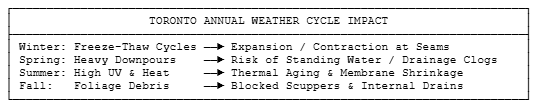
Freeze-Thaw Dynamics: Frequent transitions above and below freezing during winter force trapped moisture to expand within microscopic gaps, accelerating seam separation and flashing failures.
Snow Accumulation and Heavy Loads: Sustained snowpack places continuous dead-weight pressure on the structural deck.
UV Radiation and Thermal Shock: Summer heat bakes surface membranes, leading to loss of flexibility, surface blistering, or shrinkage over time.
1. Key Flat Roofing Membranes and Technologies
Selecting or maintaining a low-slope roof requires an understanding of the primary membrane technologies deployed across residential and commercial buildings:
Modified Bitumen (Mod-Bit)
A multi-ply asphalt-based system reinforced with fiberglass or polyester. Installed via torch-applied heat or cold-applied adhesives, modified bitumen provides exceptional puncture resistance and durability, making it a popular choice for urban residential properties.
Single-Ply Membranes (TPO and PVC)
Thermoplastic Polyolefin (TPO) and Polyvinyl Chloride (PVC) are single-ply white or light-colored sheets heat-welded at the seams. These membranes reflect solar radiation, significantly reducing summertime cooling loads and urban heat island effects.
EPDM (Ethylene Propylene Diene Monomer)
A synthetic rubber membrane known for high elasticity and cold-weather flexibility. EPDM handles thermal expansion exceptionally well, though seams must be meticulously bonded using specialized tapes and adhesives.
2. Core Operational Pillars of Flat Roof Maintenance
Proactive maintenance prevents minor surface defects from escalating into structural damage or interior leaks. Property owners and facility managers should structure upkeep around four core areas:
[Seasonal Inspection] ──► [Clear Drainage Paths] ──► [Inspect Seams & Flashings] ──► [Document & Repair]
1. Maintain Unobstructed Drainage: Clogged internal drains, scuppers, or perimeter gutters lead to "ponding water"—standing pools that remain 48 hours after rainfall. Persistent standing water adds unnecessary weight and accelerates membrane degradation.
2. Inspect Flashings and Penetrations: Flashings around chimneys, skylights, parapet walls, and HVAC units represent the most vulnerable points in any low-slope assembly. Thermal movement can cause sealant gaps or metal fatigue along these perimeter junctions.
3. Monitor Seams and Surface Continuity: Regularly examine lap joints for lifting, open seams, or blistering (air/moisture pockets trapped beneath the membrane layer).
4. Professional Partnering: Partnering with specialized local contractors, such as Flatroofs Toronto, ensures that routine inspections, emergency patch repairs, and structural evaluations match manufacturer installation standards and local building codes. Specialized experts in flat roof systems bring targeted technical diagnostic tools—such as infrared moisture scanning—to identify hidden leaks before interior drywall or insulation is compromised.
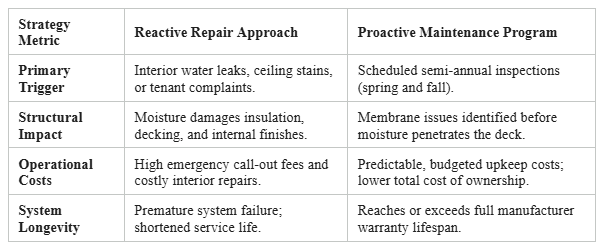
3. Structural Comparison: Maintenance Strategies
Evaluating reactive repair practices against structured preventative maintenance plans highlights clear financial and performance advantages.
4. Best Practices for Property Owners
To preserve the integrity of a low-slope roof throughout its operational life cycle:
Conduct Seasonal Checks: Schedule visual audits in early spring (to assess winter stress) and late autumn (to clear fallen leaves and prepare for freezing weather).
Avoid Incompatible Repair Materials: Never apply mismatched adhesives or generic asphalt mastic to synthetic single-ply systems (e.g., applying tar patches to TPO), as incompatible chemicals can dissolve or degrade the underlying membrane.
Control Rooftop Foot Traffic: Limit access to trained personnel and ensure servicing technicians (HVAC, satellite, solar) use designated walkway pads to prevent physical punctures.
Conclusion: Protecting Your Structural Investment
A well-maintained low-slope roof provides dependable, long-term shelter against the full spectrum of Canadian weather. By understanding the specific needs of your roofing membrane, ensuring clear drainage pathways, and partnering with experienced local professionals, you safeguard your structural investment and maintain optimal property value for decades to come.
HOW DO YOU FEEL ABOUT FASHION?
COMMENT OR TAKE OUR PAGE READER SURVEY
Featured




Something shifted on the recent runways.