
Should You Trust Your Contractor's Price?
PAGE
By PAGE Editor
Hiring a contractor is one of the biggest financial decisions a homeowner makes, whether it involves a small renovation or building a house from scratch. Yet one question keeps coming back to almost every client: is the price I was quoted actually fair? Trusting a contractor's price without understanding how it was calculated can lead to overpayment, hidden costs, or disputes later in the project. This article breaks down what goes into a legitimate quote, how to spot warning signs, and how you can protect yourself before signing anything.
Why Contractor Pricing Varies So Much
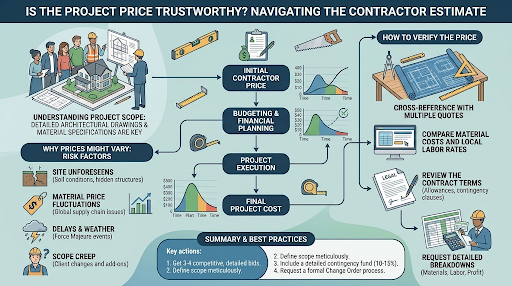
It is common to receive three completely different quotes for the same project. This happens because pricing depends on several factors: the quality of materials proposed, labor costs in the area, the contractor's overhead, their profit margin, and even how busy they currently are. A contractor with a full schedule may quote higher simply because they do not need the work as urgently. None of this automatically means a price is dishonest, but it does mean a single quote should never be taken at face value.
What a Trustworthy Quote Should Include
A reliable estimate is detailed, not vague. It should clearly separate labor costs from material costs, list the specific materials being used (brand, grade, or quality tier), include a timeline for completion, and outline payment terms. If a contractor gives you a single lump sum number with no breakdown, that is a signal to ask more questions. Transparency in pricing usually reflects transparency in workmanship as well.
Red Flags to Watch For
Some warning signs suggest a price may not be trustworthy:
Unusually low quotes compared to others. This often means corners will be cut on materials or labor, or hidden charges will appear later.
Vague verbal estimates with nothing in writing. Reputable contractors provide written quotes as standard practice.
Large upfront payments before any work begins. A reasonable deposit is normal, but demanding the majority of payment early is a common tactic in scams.
Pressure to decide immediately. Legitimate contractors understand that homeowners need time to compare options.
No references or portfolio. A contractor with real experience will happily show past work or connect you with previous clients.
How to Verify a Price Is Fair
The most effective way to judge a quote is to compare it against others. Getting at least one estimate prepared by the estimating services company for the same scope of work gives a realistic sense of the market rate in your area, ensuring every quote is being compared on equal terms. When comparing, make sure each contractor is quoting for identical work; a lower price is meaningless if it excludes finishing details or uses lower-grade materials.
It also helps to do a bit of independent research into material costs. Basic items like cement, tiles, wiring, or paint have fairly standard market prices. If you know roughly what materials cost, you can better judge whether the labor portion of a quote feels reasonable.
Asking for an itemized breakdown is one of the simplest ways to build trust. A contractor who is confident in their pricing will not hesitate to explain how they arrived at the total.
The Role of a Written Contract
For larger projects, some homeowners choose to hire an independent construction estimator to review the numbers one final time before anything is signed, which adds an extra layer of confidence. Even after agreeing on a price, nothing should proceed without a written contract. This document should specify the total cost, the payment schedule tied to project milestones, the materials to be used, the estimated timeline, and what happens if there are delays or changes to the scope of work. A written agreement protects both sides and turns a verbal promise into something enforceable.
Homeowners in regions where informal agreements are common should be especially cautious. Verbal deals can work when the contractor has a strong reputation, but written contracts remove ambiguity and reduce the risk of disputes once construction is underway.
Trust, But Verify
Trusting a contractor does not mean accepting a price blindly, and being cautious does not mean assuming every contractor is dishonest. Most contractors price their work fairly based on real costs and experience. The goal is not suspicion for its own sake but informed decision making. A homeowner who asks the right questions, compares multiple quotes, checks references, and insists on a written agreement is far less likely to be taken advantage of, regardless of how good or bad any individual contractor may be.
Final Thoughts
A contractor's price is not something to accept or reject on instinct alone. It should be evaluated the same way any major financial decision is evaluated: through comparison, documentation, and clear communication. When you understand what a fair price looks like and know what red flags to avoid, you shift the relationship from one built on blind trust to one built on informed confidence. That shift alone can save thousands in unnecessary costs and prevent months of frustration during what should be an exciting home improvement journey.
HOW DO YOU FEEL ABOUT FASHION?
COMMENT OR TAKE OUR PAGE READER SURVEY
Featured




Better With Age’s FW26 “STOLEN ART” collection expands its circular design philosophy into refined tailoring and limited-edition eyewear, transforming vintage textiles and antique silver flatware into contemporary pieces with a distinct sense of history.