
Starting Solids Without the Stress: A Calm Guide to Your Baby's First Foods
PAGE
By PAGE Editor
There is a moment somewhere around the middle of the first year when your baby stops watching you eat and starts watching your fork. The head tilts. The hand reaches. And suddenly a whole new chapter opens up.
Starting solids is one of the sweeter milestones, and also one of the most over complicated. There are competing methods, strong opinions in every comment section, and a general feeling that you might get it wrong.
You probably will not. Babies have been learning to eat for a very long time. What follows is the calm version, with the practical details that actually help.

First, the readiness signs
Age is a rough guide. Most guidance points to around six months, but babies do not read calendars. Watch the child instead.
Look for these together, not just one:
Steady head and neck control. They can hold their head up on their own without wobbling.
Sitting upright with little or no support. This matters for safe swallowing.
Interest in your food. Watching you eat, leaning toward your plate, reaching.
The tongue thrust reflex fading. Young babies automatically push things out of their mouth. When that starts to fade, food can move backward instead of straight out.
Opening the mouth when a spoon comes near. A simple, honest signal of readiness.
If most of these are not there yet, wait. There is no prize for starting early, and milk or formula still provides nearly all the nutrition in these early months. Solids at this stage are practice, not sustenance.
Check with your pediatrician before you begin, especially if there is a family history of food allergies or your baby was born early.
What the first weeks actually look like
Lower your expectations and you will enjoy this far more.
Week one. One small meal a day, a few spoonfuls at most. Most of it ends up on the chin. That is normal and it is not a rejection.
Weeks two to four. Still one meal a day. You are introducing new single ingredients and watching how they land.
Month two onward. Slowly building to two and then three meals, with thicker textures as they get the hang of it.
Keep milk feeds on their normal schedule throughout. Solids fill in around them rather than replacing them.
Choosing first foods
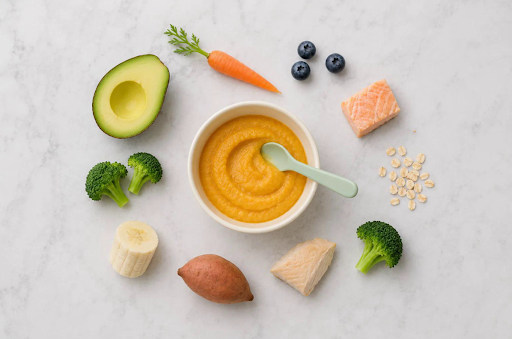
There is no magic first food. Iron rich options are commonly recommended because a baby's own iron stores begin to run down around this age. Good starting places include:
Iron fortified infant cereal mixed thin
Well cooked and pureed sweet potato, carrot, or butternut squash
Mashed avocado or banana, which need no cooking at all
Pureed peas or green beans
Soft cooked apple or pear
Introduce one new food at a time and wait two or three days before adding another. If a reaction shows up, you will know what caused it.
A few firm rules for the first year:
No honey. This one is not negotiable.
No added salt or sugar. Baby taste buds are far more sensitive than yours, and plain food genuinely tastes like something to them.
No whole nuts, whole grapes, popcorn, or anything else round and firm.
No cow's milk as a main drink before twelve months, though it is fine in cooking.
Making baby food at home
Store bought pouches are convenient, and there is no reason to feel bad about using them. But making food at home gives you full control over ingredients and texture, and it costs a fraction as much per serving.
The classic method involves a steamer basket, a pot, a separate blender, and a sink full of dishes afterward. Which is exactly why most people give up on it by week three.
An all in one machine solves the logistics. A baby food blender glass style appliance steams and blends in the same bowl, so you add chopped fruit or vegetables, press a button, and end up with puree without transferring anything between containers.
A few tips that make home cooking sustainable:
Batch cook once a week. Set aside an hour on a quiet morning and prepare several varieties at once.
Freeze in ice cube trays. Each cube is roughly one serving for a beginner. Once frozen, pop them into labeled freezer bags with the date.
Steam instead of boiling. Boiling pulls nutrients into the water, which you then pour away. Steaming keeps more of them in the food.
Thin with breast milk, formula, or the steaming water. This adjusts texture and adds a familiar taste.
Start smooth and build texture gradually. Fully smooth at first, then slightly lumpy, then soft small pieces around eight or nine months.
Frozen purees keep well for about three months. Thaw in the fridge overnight rather than at room temperature.
Feeding away from home
Life does not stop for the feeding schedule, and the first year involves a surprising number of car seats, waiting rooms, and visits to relatives.
For solids, the practical answer is small insulated containers and simple foods that travel well. Avocado, banana, and thick purees in a sealed pot handle a few hours out fine.
Milk feeds are the harder part, because cold milk from a cooler bag is not what most babies want. A portable bottle warmer runs on its own battery and heats a bottle in the car or in a park without needing an outlet or a cup of hot water borrowed from a cafe. If you travel often or spend long days out, it removes one recurring source of stress.
Whatever you use, look for automatic shutoff. Breast milk is sensitive to heat and overheating damages some of what makes it valuable, so a device that measures temperature rather than just running on a timer is worth the small difference in price.
Making it a pleasant part of the day
The practical stuff matters less than the atmosphere, honestly.
Sit together. Eat your own meal at the same time when you can. Babies learn to eat by watching people eat.
Let them make a mess. Squishing food is how a baby learns about texture. Put a mat under the chair and let it happen.
Follow their lead on stopping. Turning the head away, closing the mouth, and pushing the spoon back all mean the same thing. Respect it. Pressuring a baby to finish creates food battles that last years.
Expect rejection, then try again. A food refused today may be accepted in two weeks. Research generally suggests it can take many exposures before a new flavor is accepted. Offer without pressure and keep offering.
Keep it short. Ten to fifteen minutes is plenty at the start. Beyond that everyone gets frustrated.
Common questions
Should I start with vegetables so my baby does not prefer sweet foods? Babies are born preferring sweet tastes, so order probably matters less than variety. Offer a wide range and keep offering vegetables even when they are refused.
How do I know if it is an allergic reaction? Mild reactions can include rash around the mouth or digestive upset. Any swelling, breathing difficulty, or serious reaction is an emergency and needs immediate medical help. Introducing one food at a time makes the cause much easier to identify.
Purees or baby led weaning? Both approaches work and plenty of families combine them. Choose what feels manageable for you and talk it through with your pediatrician.
Do they still need milk? Yes. Milk or formula stays the main source of nutrition through the first year. Solids build alongside it.
The part worth remembering
Six months from now your baby will be eating pieces of whatever is on your plate and none of these early weeks will feel complicated anymore.
Go slowly. Follow the baby. Keep the meals short and cheerful. That is genuinely most of it.
HOW DO YOU FEEL ABOUT FASHION?
COMMENT OR TAKE OUR PAGE READER SURVEY
Featured





Deep clean, seal, and protect your tile & grout in Oceanside, CA. Bring the original shine back to your floors. Request a quote today!