
How to Choose Custom Socks for Style, Comfort, and Brand Identity
PAGE
By PAGE Editor
Socks are small, but they do a lot of work. They are an everyday accessory, and a well-chosen pair can support a team, event, or brand without feeling forced. If they are comfortable and useful, people wear them. If they pinch, slip, or feel cheap, they end up in a drawer.
This guide covers the decisions that matter most: fit, materials, design method, sizing, order minimums, and basic compliance questions. The goal is simple, choose socks that look good, feel good, and make sense for the people who will receive them.
Start with fit and feel
Before you think about logos, think about height and cushioning. That combination decides whether a sock feels natural with the shoes people already wear.
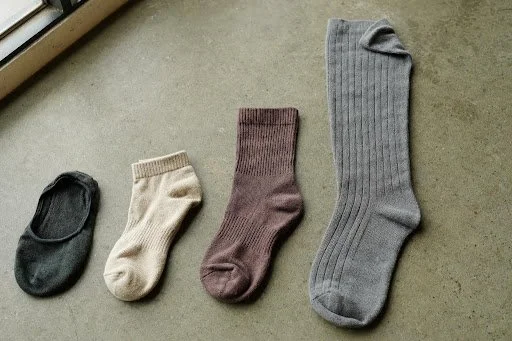
Heights are easy to compare. No-show and ankle socks sit low and work well with sneakers and loafers. Crew socks reach mid-calf and pair well with dress shoes, boots, and casual outfits. Knee-high socks are the tall option, common for skiing, snowboarding, and mountaineering, and they add protection when worn with taller boots.
Cushioning matters too. Thin custom socks keep a slim profile in dress shoes. Midweight cushioning adds comfort for long days. Heavyweight socks add warmth but can change how a shoe fits, so it helps to test a sample with the shoes people are likely to wear.
Pick materials that stay comfortable all day
Fiber choice shapes comfort, breathability, and durability. Look for a blend that manages moisture and keeps its shape after repeated wear.
Merino wool blends are a strong all-around option because merino helps regulate temperature and handle moisture across changing conditions. Synthetic fibers also have a useful role. Nylon and spandex help socks hold their shape, while moisture-wicking polyester fibers can help socks dry faster.
For active wear, avoid 100 percent cotton. Cotton absorbs moisture and dries slowly, which can lead to rubbing and blisters. Cotton can be fine for low-key wear, but for events with lots of walking, a blended fabric is usually safer.
If sustainability is part of your brand story, ask how the fabric is sourced and tested. The OEKO-TEX STANDARD 100 label, for example, tests textiles for a wide range of potentially harmful substances. Supplier showcases built around sustainable textile innovation are a useful reference point for what certified sourcing looks like in practice. Recycled polyester or organic cotton blends can also support a lower-impact program, as long as the sock still feels comfortable and performs well.
Decide how your design is applied
How your artwork lands on the sock affects the final look, the stretch, and the color range. Most custom projects use one of two methods.
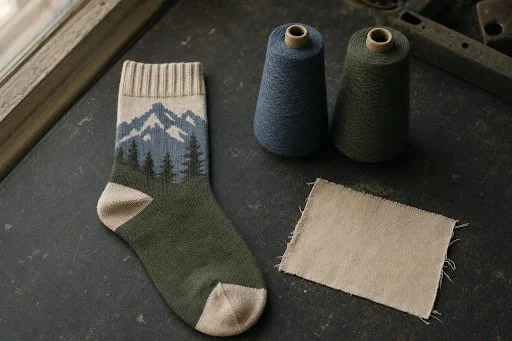
Knit-in (jacquard) designs are built from colored yarn as the sock is made. This method works well for logos, stripes, and simple patterns with a limited number of colors. It also keeps its texture when the sock stretches.
Printed (sublimation) designs allow more color and detail, including photo-style artwork. Sublimation usually works best on white or light polyester surfaces. A common print blank is a polyester and spandex blend. The design stretches with the fabric, though it may show slight white areas at seams or high-stretch points.
Make it wearable branding
The best branded socks are the ones people choose to wear on their own. That usually means using restraint.
Placement can feel modern without being loud. A small mark on the side of the calf, a repeating micro-pattern, or a tonal colorway often works better than an oversized logo. Lean on your palette, initials, or a subtle motif instead of placing a full logo across the front.
Plan for sustainability and compliance
This part is a buyer checklist, not legal advice. Some US states restrict certain fluorinated chemicals, often called PFAS, in apparel. Rules vary by state and product type, and timelines can change.
You do not need to memorize every requirement before ordering. You do need to ask your vendor clear questions. Ask whether the socks comply with applicable state requirements, whether any water- or stain-resistant treatments are used, and whether the vendor can provide certificates or testing documents when relevant. A recognized textile certification can support safer-chemistry claims and give your team something concrete to review.
Order planning: sizes, MOQs, and timelines
Once the design is settled, the logistics decide how smooth the project feels. Minimums and timelines vary, so treat any public numbers as examples that can change from one seller to the next.
On the low-volume end, print-on-demand pairs may be available one pair at a time. Knit-in programs usually start at higher minimums and take longer. As examples, Sock Club publicly lists a 30-pair minimum per design, Custom Sock Lab lists a typical production window of roughly 2 to 4 weeks plus shipping, and The/Studio advertises no-minimum custom options across printed and knit styles.
A few habits save a lot of stress:
Order a sample first. Check color, stretch, and feel on a real pair before you scale up.
Simplify sizing. Unisex size bands based on shoe size make distribution easier for teams and events.
Build in buffer time. Approval and payment usually start the clock, so pad your deadline.
Keep care instructions in mind too. Under the FTC Care Labeling Rule, hosiery items do not need a permanent sewn-in care label, but care instructions must appear on a hang tag, package, or other conspicuous place.
For projects that need uploaded logos or images, custom socks options often include several heights, such as crew, ankle, knee-high, and compression styles. Confirm current minimums, artwork rules, and timelines directly with the seller before you finalize the design.
Bringing it together
Choosing socks people actually wear comes down to three steps. Start with the fit and cushioning, pick materials that stay comfortable through a full day, then choose the design method that best suits your artwork. Add simple sizing and a realistic timeline, and the final product is more likely to be used than stored.
Keep the design tasteful, order a sample, and let comfort lead. The pairs that get worn are the ones that quietly carry the branding for you.
HOW DO YOU FEEL ABOUT FASHION?
COMMENT OR TAKE OUR PAGE READER SURVEY
Featured




Deep clean, seal, and protect your tile & grout in Oceanside, CA. Bring the original shine back to your floors. Request a quote today!