
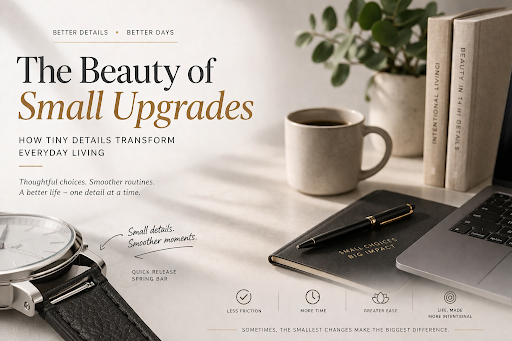
The Beauty of Small Upgrades: How Tiny Details Transform Everyday Living
PAGE
By PAGE Editor
We often think transformation requires big decisions — a new home, a new routine, a complete lifestyle reset. But in reality, the most lasting changes often come from the smallest adjustments. The quiet upgrades. The details we barely notice at first, yet slowly begin to appreciate in our everyday lives.
Even something as simple as a quick release spring bar reflects this idea — a small, functional improvement that makes daily interactions smoother and more intuitive. It’s a reminder that thoughtful design isn’t always about grandeur; sometimes, it’s about making life just a little easier.
Why Small Details Matter More Than Ever
In a fast-paced world filled with noise and distraction, people are beginning to value simplicity and ease. Small improvements can:
Reduce friction in daily routines
Save time and effort
Enhance comfort and usability
Create a sense of calm and control
These micro-upgrades don’t demand attention — but they quietly improve your quality of life.
The Rise of Intentional Living
Intentional living is about making conscious choices that align with how you want to feel. It’s less about having more and more about choosing better.
This mindset applies to everything:
The tools you use
The spaces you create
The routines you follow
When each element is thoughtfully chosen, even the smallest details begin to matter.
Everyday Objects, Reimagined
Many of the items we use daily have remained unchanged for years — but subtle innovations are transforming them into something more efficient and enjoyable.
Ease of Use
Modern design focuses on reducing complexity. Simple mechanisms and intuitive features make everyday objects more accessible.
Time-Saving Design
Small improvements can eliminate unnecessary steps, making routines faster and smoother.
User-Centred Thinking
Design is shifting toward real-life usability, focusing on how people actually interact with products.
The Psychology of Simplicity
There’s a reason small upgrades feel so satisfying. When something works effortlessly, it reduces mental load.
Less Friction, More Flow
When tasks become easier, your mind is free to focus on what truly matters.
Subtle Satisfaction
Even minor improvements can create a sense of ease and enjoyment.
A Sense of Control
Optimising small details gives you greater control over your environment.
Creating a Life That Feels Effortless
You don’t need to overhaul your entire lifestyle to feel more balanced. Instead, focus on refining what you already have.
Start Small
Look at everyday frustrations — even minor ones — and find ways to improve them.
Choose Function Over Complexity
Opt for solutions that simplify rather than complicate.
Appreciate the Details
Take notice of the small things that make your day easier or more enjoyable.
Why These Changes Add Up
Individually, small upgrades may seem insignificant. But over time, they create a ripple effect.
A smoother morning routine
Less daily stress
More efficient use of time
A greater sense of ease
Together, these changes shape a lifestyle that feels more intentional and less overwhelming.
The Future of Thoughtful Design
As people continue to prioritise simplicity and mindfulness, design will evolve to reflect these values.
Expect to see:
More intuitive products
Minimalist functionality
Focus on user experience over excess features
Solutions that prioritise ease and efficiency
Final Thoughts
In a world that often celebrates big changes, it’s easy to overlook the power of small ones. But it’s these quiet, thoughtful improvements that truly shape how we experience everyday life.
By paying attention to the details — and embracing simple, effective upgrades — we can create a life that feels smoother, calmer, and more aligned with what truly matters.
Sometimes, the smallest changes make the biggest difference.
HOW DO YOU FEEL ABOUT FASHION?
COMMENT OR TAKE OUR PAGE READER SURVEY
Featured




Jackets have always been an important part of fashion.