
The Quiet Ritual: How Nicotine Pouches Became a Lifestyle Habit
PAGE
By PAGE Editor
There is a particular gesture you start noticing once you know to look for it. At a café table in Shoreditch or a co-working space in Williamsburg, someone reaches into a jacket pocket, produces a slim round tin — matte white, maybe sage green, designed with the restraint of a skincare brand — and tucks something small under their upper lip. No lighter. No smoke. No trip outside into the cold. The conversation doesn’t even pause. It is nicotine as a private ritual rather than a public performance, and it has quietly become one of the more interesting consumer shifts of the decade. In Britain, where the habit has taken root fastest outside Scandinavia, specialist snus and pouch retailers in the UK have gone from niche import businesses to fixtures of the adult nicotine landscape, the way third-wave coffee roasters once graduated from obsession to infrastructure.
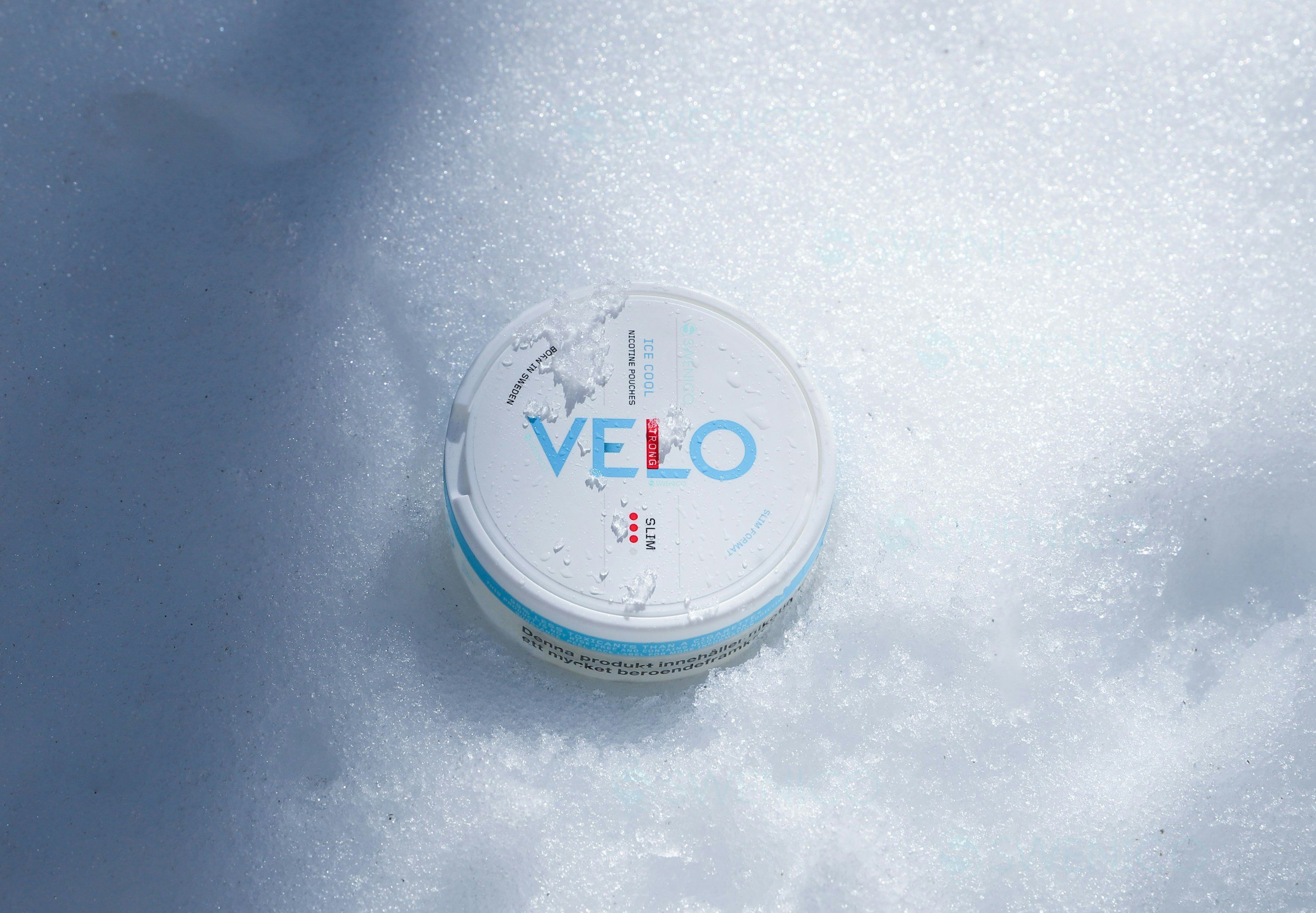
The product driving all of this is disarmingly simple. The modern nicotine pouches behind the trend are small white sachets — tobacco-free, filled with plant fibers, nicotine, and flavor — that sit under the lip for half an hour or so and then go in the tin’s built-in catch lid. That’s the whole event. There is no cloud, no ash, no smell that follows you into a meeting. And it is precisely this absence, this designed-in invisibility, that explains why a product with two-hundred-year-old Scandinavian roots has suddenly found its moment in the age of the open-plan office, the long-haul flight, and the smoke-free city.
A Habit With a Passport
Every trend has a homeland, and this one’s is unambiguous. Snus — moist, tobacco-based, tucked under the lip — has been part of Swedish life since the eighteenth century, when Swedish farmers adapted French snuff-taking into something you didn’t have to sniff. It survived industrialization, emigration, and the twentieth century’s great cigarette takeover, largely because it fit the Nordic temperament: undemonstrative, practical, weatherproof. When the European Union banned the sale of snus in 1992, Sweden negotiated an exemption as a condition of joining the bloc — a cultural carve-out on par with France defending raw-milk cheese.
That stubbornness produced one of the more striking statistical outliers in Europe. Sweden’s daily smoking rate has fallen to around the 5 percent mark that health bodies use to define a country as functionally “smoke-free” — the lowest in the EU, where Eurostat has put the average share of daily smokers at nearly three times that. Researchers still debate exactly how much credit belongs to snus culture versus decades of policy, but the visual fact is hard to argue with: walk through Stockholm and you will see plenty of tins and very few cigarettes.
The tobacco-free pouch is the export version of that heritage — snus redesigned for a world that never acquired the taste for tobacco itself. Swedish manufacturers introduced the all-white format in the late 2000s, swapping tobacco leaf for plant fiber, and in doing so created something with a passport: a product that could legally travel where snus could not, and aesthetically travel where it might not have been welcome.
The Design of Discretion
It’s worth dwelling on the object itself, because the object is doing a lot of the cultural work. The contemporary pouch tin is a small masterpiece of quiet consumer design: palm-sized, seamless, satisfying to open, closer in spirit to a lip-balm compact or a mint tin than to anything from the tobacco aisle. The pouches inside are uniform, white, and faintly clinical — the visual language of oral care rather than vice. Flavors skew toward the spa menu: mint, citrus, berry, coffee.
Compare this to the last nicotine object to achieve cultural saturation. Vaping is, whatever else you think of it, conspicuous — a device, a cloud, a scent, a gesture that announces itself across a room. The pouch inverts every one of those qualities. It produces nothing visible, nothing olfactory, nothing that requires excusing yourself. In an era when adult life increasingly happens in shared, smoke-free, scent-conscious spaces — the office, the airport lounge, the friend’s apartment with the new sofa — discretion isn’t a side benefit. It is the entire proposition.
This is also why the habit photographs so badly and spreads so well. There is no pouch equivalent of the cigarette’s cinematic silhouette, no exhale to shoot in slow motion. What spreads instead is the tin on the table — an accessory, sitting next to the phone and the flat white, legible only to those who already know. Like a niche fragrance or a specific running shoe, it functions as a quiet signal among adults rather than a broadcast.
Crossing the Channel, Crossing the Atlantic
The numbers behind the migration are genuinely startling. In the United States, monthly retail sales of nicotine pouches rose roughly 250 percent between early 2023 and late 2025, according to industry sales tracking — a curve that turned a Scandinavian curiosity into a staple of American convenience stores and, inevitably, a subject of think pieces, celebrity investment, and Senate hearings. The pouch has been through the full American celebrity cycle: adopted, mocked, memed, and normalized.
Britain’s version of the story is less noisy and more interesting. The UK has spent two decades becoming one of the world’s great smoke-free experiments — the indoor smoking ban of 2007, plain packaging, the steady disappearance of the cigarette break as a social institution. According to the UK’s Office for National Statistics, just 10.6 percent of UK adults smoked cigarettes in 2024 — the lowest figure since records began, down from more than 20 percent in 2011. Into that landscape — a country where nicotine use persists but smoking itself is increasingly a social anachronism — the pouch arrived not as a disruption but as a fit. It suits a culture that has already renovated its pubs, its offices, and its train platforms around the absence of smoke.
There’s a neat historical symmetry here, too. Snus first crossed the Atlantic in the pockets of nineteenth-century Scandinavian emigrants, then faded into regional obscurity. Its tobacco-free descendant has made the same journey in reverse order of fame — conquering the US loudly, the UK quietly, and arriving in both as something that feels less like a tobacco product than a piece of Scandinavian lifestyle design, in the same shipment of cultural imports as hygge, fika, and functionalist furniture.
The New Etiquette of Nicotine
Every generation renegotiates the social contract around its vices, and the pouch era has produced its own unwritten rules. The habit is emphatically an adult one — sold with age verification, carried by people old enough to have opinions about their routines — and its etiquette is built around unobtrusiveness. You don’t announce it. You don’t perform it. The used pouch goes in the catch lid, not the saucer. The entire code can be summarized in one line: nobody else should have to notice.
That may be the most telling thing about the whole phenomenon. The cigarette was a social object — offered, shared, lit for strangers, central to a century of flirtation and film. The pouch is a private one, and its rise says something about how adults now prefer their habits: personal, contained, compatible with the rest of life rather than interrupting it. It asks for no break in the day, no designated area, no audience.
Whether the pouch proves to be a durable fixture or a waypoint in nicotine’s long, strange history is a question for the next decade’s trend writers. But as a cultural artifact of this moment, it is nearly perfect: Scandinavian in origin, minimalist in form, discreet by design, and calibrated for a world that has decided smoke belongs to the past. The most visible thing about it is a small tin on a café table — and even that, you’d have to know to look for.
HOW DO YOU FEEL ABOUT FASHION?
COMMENT OR TAKE OUR PAGE READER SURVEY
Featured





Digital rewards strengthen luxury through practical service, selective access, and thoughtful personalization that keeps each purchase valuable for longer.