
Track Extension Kits in Portable Sawmill Operations and Forestry Processing Systems
PAGE
By PAGE Editor
In the United Kingdom, forestry and small scale timber processing have gained importance due to demand for local wood supply and sustainable resource use. Landowners, forestry managers, and independent operators increasingly rely on portable sawmills to process timber close to the source. However, variations in log length and site conditions often require flexible equipment configurations. Track extension kits play an important role in improving the usability and efficiency of portable sawmill systems.
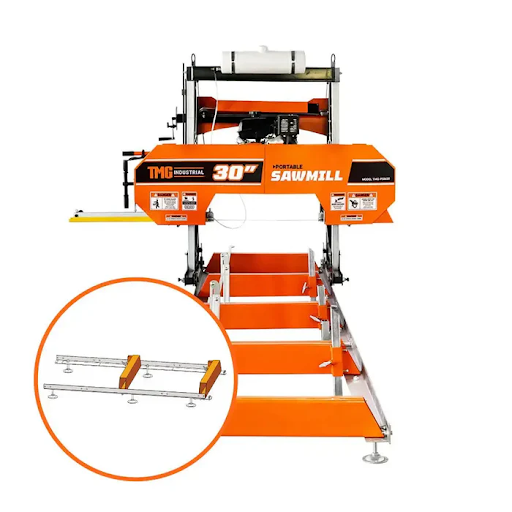
Solutions such as a track extension kit allow operators to increase cutting capacity by extending the working length of a sawmill track. This supports processing of longer logs and improves workflow in forestry environments.
Overview of Techniques and Use Cases
Portable sawmills operate by moving a cutting head along a fixed track to process logs into usable timber. A track extension kit increases the length of this track, allowing larger logs to be positioned and cut without repositioning.
Common use cases include:
· Processing long timber logs in forestry sites
· Custom cutting for construction materials
· On site milling in remote locations
· Improving workflow efficiency in small scale sawmill operations
This approach allows operators to adapt equipment to varying log sizes and project requirements.
Importance of Efficiency, Safety, and Productivity
Efficiency in timber processing is critical for reducing labour time and improving output. Without sufficient track length, operators must reposition logs, which increases handling time and risk.
· Reduced need for log repositioning
· Improved cutting continuity
· Lower manual handling requirements
· Increased processing efficiency
These factors contribute to safer and more productive sawmill operations.
Technical Fundamentals and Capacity Considerations
A track extension kit is designed to integrate with an existing sawmill track system. It extends the rail structure, allowing the cutting head to travel a longer distance. This directly increases the maximum log length that can be processed.
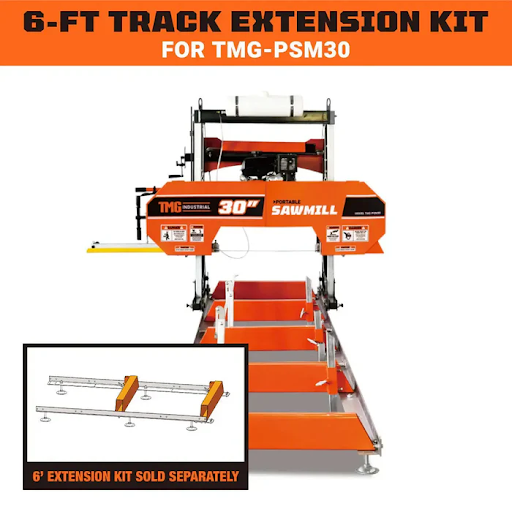
Key technical factors
· Compatibility with the sawmill model
· Structural alignment and stability
· Load bearing capacity of the extended track
· Ease of installation and adjustment
Correct installation ensures accurate cutting and safe operation.
Factors Affecting Performance and Effectiveness
The effectiveness of a TMG Industrial track extension depends on both equipment condition and operating environment. Proper setup is essential for maintaining precision.
· Alignment of track sections
· Ground stability and level surface
· Condition of rollers and guide systems
· Weight and size of processed logs
· Operator handling techniques
Regular inspection helps maintain consistent cutting performance.
Safety Considerations and Best Practices
Safety is a critical concern in sawmill operations, especially when handling large logs and moving equipment. Track extensions increase working length, which requires additional attention to stability and control.
· Ensure all track connections are securely fastened
· Maintain a level and stable ground surface
· Inspect structural components before operation
· Keep the working area clear of obstacles
· Use protective equipment during operation
These practices reduce the risk of accidents and improve operational safety.
Equipment Types, Tools, and Attachments
Track extension kits are part of a wider system used in portable sawmill operations. Supporting tools and equipment improve functionality and efficiency.
· Portable sawmill units
· Log loading equipment such as winches or loaders
· Measurement tools for accurate cutting
· Maintenance tools for track and blade systems
These components work together to support efficient timber processing.
Advantages and Limitations
Advantages
· Increased log length capacity
· Improved workflow efficiency
· Reduced need for repositioning materials
· Flexible configuration for different projects
Limitations
· Requires proper installation and alignment
· Needs stable ground conditions
· May increase setup time on site
Real World Example
A forestry operator in the United Kingdom was processing long timber logs for construction use. The standard sawmill track length required frequent repositioning of logs, which slowed production. After adding a track extension kit, the operator was able to process longer logs in a single pass. This improved efficiency and reduced manual handling.
Conclusion and Future Industry Trends
Track extension kits are important components in portable sawmill systems. They support efficient timber processing, improve safety, and allow operators to handle a wider range of log sizes. Their role in forestry and agricultural operations continues to grow as demand for flexible processing solutions increases.
Future developments are expected to focus on improved modular design, enhanced durability, and easier installation. These advancements will help operators adapt to changing project requirements while maintaining safe and efficient operations in forestry environments.
HOW DO YOU FEEL ABOUT FASHION?
COMMENT OR TAKE OUR PAGE READER SURVEY
Featured





A comfortable home should offer more than a place to sleep and eat.