
Why Sunday Batch Cooking Fails Busy People (and Simple Meals That Actually Fit Your Week)

PAGE
By Finixio Digital
If you are a working professional, time is likely your most scarce and valuable resource. You already juggle meetings, tight deadlines, and personal obligations throughout a chaotic workweek. Finding the energy to manage a strict diet on top of those responsibilities often feels like an impossible task.
Working from home saves Americans hours of commute time each day. However, this recovered time is often immediately absorbed by domestic chores like cleaning, organizing, and preparing food. Instead of relaxing, you end up trading your stressful commute for hours spent trapped in the kitchen.
Sacrificing your entire Sunday to batch cook a week's worth of food is an unsustainable habit. While the intention behind meal prep is good, the execution is deeply flawed for anyone with a demanding schedule. The process drains your weekend joy and rarely survives past Wednesday.
This article covers the hidden time costs of traditional batch cooking and why these ambitious plans so often collapse. We will also explore a better, friction-free way to eat healthy without giving up your hard-earned free time.
Key Takeaways
Traditional meal prep demands massive hidden time costs, from grocery shopping to endless clean-up.
Eating the exact same batch-cooked meals leads to mid-week "variety burnout" and derailed diet plans.
Ambitious grocery shopping often results in significant food spoilage and financial waste.
Outsourcing your weekly food to fresh, ready-to-eat meal solutions allows you to eat healthy without the prep.
The Hidden Time Cost of Traditional Meal Prep
How much time does traditional meal prep actually take each week? Most people vastly underestimate the true investment. A standard Sunday prep session is rarely just an hour of casual cooking.
First, you spend at least an hour planning recipes, writing lists, and navigating crowded grocery store aisles. Then, you spend another hour washing, peeling, and chopping ingredients before any actual cooking begins. The active cooking phase, managing multiple pots and pans, takes another hour or two.
Finally, you face the dreaded task of portioning the food into containers and scrubbing a mountain of dirty dishes. All told, a true batch cooking session easily consumes three to five hours of your weekend. Spending three or more hours sweating over a stove on a Sunday feels impossible for modern professionals who just want to relax and recharge.
After realizing that traditional Sunday batch cooking costs you hours of precious weekend time and often leads to mid-week burnout, it might be time to rethink your strategy. Instead of forcing a broken system, you can rely on healthy and hearty prepped meals that actually fit your week, eliminating the prep, cooking, and cleanup entirely. By stepping away from the cutting board, you instantly buy back your Sunday afternoon.
The Mid-Week Wall: Why Meal Plans Collapse
Even if you successfully power through a massive Sunday cooking session, the battle is only half won. By the time Wednesday rolls around, a strange phenomenon occurs. You open your refrigerator, stare at the neat rows of plastic containers, and completely lose your appetite.
The Reality of "Variety Burnout"
What exactly is variety burnout, and how do you avoid it? Variety burnout is the psychological and physical fatigue of eating the exact same meal multiple days in a row. It is that sinking feeling you get when you realize you have to eat that dry chicken breast and bland broccoli for the fourth consecutive day.
Why do you always give up on your meal prep routine by Wednesday? The answer lies in basic human biology and psychology. We are hardwired to crave dietary variety to ensure we get a wide spectrum of nutrients. When you restrict your diet to a single flavor profile for an entire week, your brain naturally rebels and pushes you toward the nearest takeout menu.
Long-term healthy eating requires sustainability and flexibility, not extreme restriction. Forcing yourself to eat a meal you are completely bored with drains your willpower. If your diet plan requires you to ignore your natural cravings for different textures and tastes, it will eventually fail.
The True Cost of Food Spoilage
How can you reduce the amount of food and money you waste each week? The first step is acknowledging the financial trap of aspirational grocery shopping. We often buy bags of fresh spinach, colorful peppers, and premium proteins with the best intentions of cooking them.
However, when variety burnout hits on Wednesday and you order pizza instead, those fresh ingredients sit untouched. By Friday, that expensive produce is rotting in the crisper drawer. In the United States, food waste is estimated at between 30-40 percent of the food supply, and much of this comes straight from household kitchens.
This cycle of buying, avoiding, and tossing food is a massive drain on your wallet. A family of four wastes nearly $3,000 worth of food each year, representing about 11 percent of their total spending on food. When your meal prep plans collapse, you are essentially throwing hard-earned cash directly into the trash can.
Alternative Strategies for the Time-Poor Professional
What are the best strategies for eating healthy when you have zero time to cook? The answer is to abandon the "all or nothing" mindset of traditional batch cooking. You do not have to cook every single macro-balanced meal yourself to stay on track.
One effective alternative is component cooking. Instead of making fully assembled meals, you prepare a few versatile base ingredients, like a large batch of quinoa or roasted sweet potatoes. You can then mix and match these bases with different fresh proteins and sauces throughout the week to keep things interesting.
Another excellent strategy is leaning heavily into healthy outsourcing. You can bypass the grocery store entirely by relying on high-quality, heat-and-eat solutions. This approach guarantees macro-friendly eating without requiring any kitchen skills or weekend sacrifice.
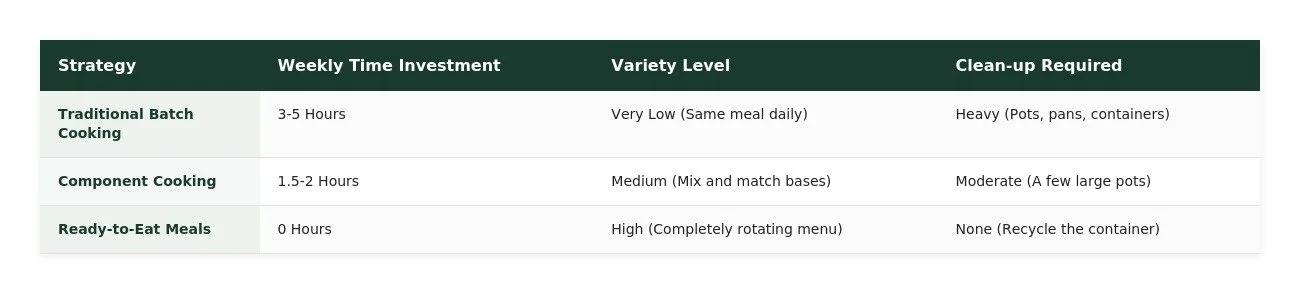
Here is a quick look at how these different strategies compare when it comes to your valuable time:
Fresh, Ready-to-Eat Solutions: Reclaiming Your Weekend
Are there simple meal solutions that do not require hours of Sunday prep? Yes, and they are specifically designed for people who want to eat well without the hassle. FreshFit405 provides a methodology that serves as the ultimate answer to the meal prep paradox.
The system relies on a "4 Simple Steps to 3 Square Meals" process. First, professional chefs source the ingredients and cook the food. Second, you pick your favorite dishes from a diverse menu. Third, the meals are delivered to your door or picked up at a local storefront. Finally, you simply heat the food and enjoy a healthy meal in just one to two minutes.
This process completely eliminates variety burnout. The weekly menu rotates constantly, offering exciting new flavors that cater directly to gluten-free, dairy-free, and low-carb dietary needs. You get the nutritional benefits of a strict meal prep routine with the exciting variety of a restaurant menu.
Flexibility is a core part of this approach. Best of all, there are absolutely no mandatory monthly commitments, meaning you can use the service exactly when your schedule demands it.
Conclusion
You do not have to sacrifice your hard-earned weekend to eat well during a busy workweek. The traditional model of spending hours grocery shopping, chopping, and cooking on a Sunday is outdated and unnecessary. It is a system built for burnout.
By shifting away from traditional meal prep, you instantly save hours of your time. You also prevent the inevitable mid-week variety burnout that leads to fast food runs and stops the expensive cycle of food waste. Outsourcing your nutrition is an investment in your mental health and your free time.
HOW DO YOU FEEL ABOUT FASHION?
COMMENT OR TAKE OUR PAGE READER SURVEY
Featured




Finding the right job in human resources or recruitment can take time, especially when you're searching online.