
You can learn a surprising amount about someone from the picture they hang beside the door.
PAGE
By PAGE Editor
Sometimes it’s a photograph from a trip they still talk about. Sometimes it’s a print they bought before they could afford to frame it properly. And sometimes it’s a portrait of a small dog wearing an embroidered coat, looking considerably more composed than he does when the doorbell rings.
That last choice tells you a few things. Someone loves that dog. They enjoy a little theatricality. They were willing to put something on the wall because it made them smile.
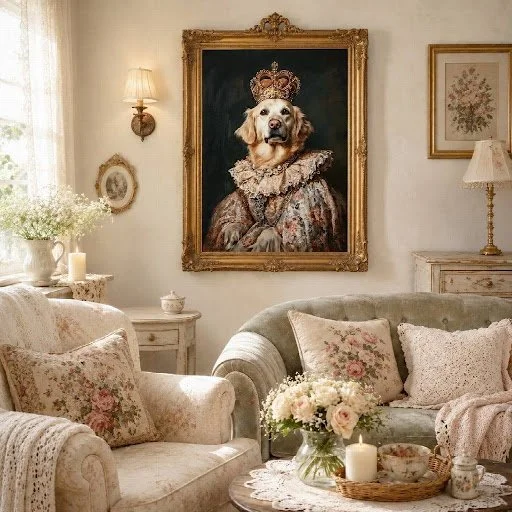
There’s an appealing confidence in that decision. Choosing art for a home can become strangely formal, especially when every purchase seems to require an explanation about color, provenance, or how it completes the room. A pet in aristocratic clothing offers a more personal place to begin.
The Pieces That Reveal Who Lives Here
Think about the objects you remember after visiting a friend’s home. You might struggle to recall the sofa, yet remember a tiny painting in the kitchen because your friend told you where it came from.
A personal story gives an object something to do beyond filling space. It starts a conversation, brings back a particular afternoon, or quietly reminds the owner of someone they love.
Pets belong in that collection of references. They’re present for the ordinary hours that rarely make it into family albums: working late at the dining table, folding laundry, waiting for the kettle. Their habits become part of the household’s rhythm. Eventually, even an empty chair can suggest the animal who usually occupies it.
A portrait gives that presence a visible place among the other things you choose to keep.
The style can say something about you, too. You might favor a spare drawing, a colorful interpretation, or a deliberately grand composition. The choice comes from the same instincts that draw you to a particular jacket or an unusual piece of jewelry. You recognize something in it, and you want to live with it.
A Familiar Face in an Unexpected Wardrobe
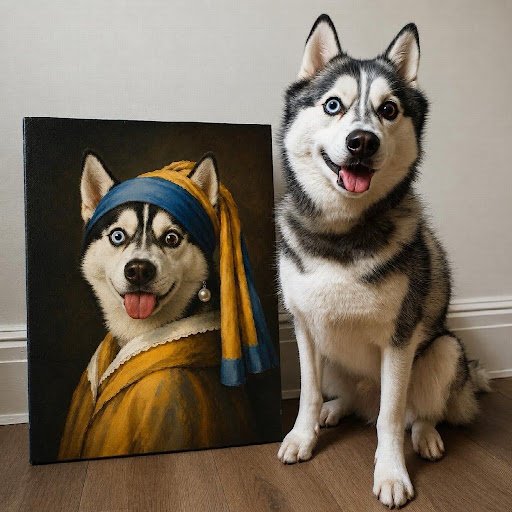
Much of the charm of royal pet portraits lies in the clothing. A high collar changes how you read a lifted chin. Decorative trim lends ceremony to a dog’s attentive stare. A richly colored coat can make a cat’s usual expression of mild disapproval seem perfectly appropriate to the occasion.
The face remains familiar, while everything around it suggests a different life.
It’s easy to see the connection with dressing up. Clothing supplies a role before anyone speaks: a formal coat, an elaborate neckline, a carefully arranged accessory. Placed around an animal who ordinarily sleeps beside a radiator, those details become gently absurd.
Some pets seem particularly suited to the treatment. A terrier with an alert, serious expression may look surprisingly convincing in a formal outfit. A long-haired cat can carry an elaborate silhouette with apparent ease. An exuberant dog might bring a welcome lack of decorum to an otherwise stately composition.
That tension is worth preserving. The most enjoyable choice may be the one that makes you say, “Of course that’s what she would wear,” even though she has never willingly worn anything except a collar.
There’s no need to dress the actual animal for the photograph. A clear image of their face provides the starting point, with the costume belonging to the finished artwork.
Personalization Begins With Recognition
A pet’s face is familiar in ways that can be difficult to describe until a picture gets it wrong.
You know how far apart the eyes should look. You notice when a white marking is too symmetrical, or when an ear has been made upright despite its lifelong commitment to folding over. Those small details carry a great deal of recognition.
When choosing custom pet portraits from photos, spend time selecting the photograph before becoming absorbed in the outfit. Look for even lighting, a clear view of the face, and an expression you associate with your pet.
The most dramatic photograph isn’t necessarily the most useful. A close-up taken from above can distort the proportions. Deep shadows may conceal markings. A favorite image from years ago might have sentimental value but offer very little detail.
If you’re uncertain, gather a few options and ask which will work best. Include a reference image for any feature that matters especially to you.
Then review the artwork as someone who knows the animal. Does the face feel right? Is the expression familiar? A portrait becomes personal through those decisions. The embroidered coat can wait until you’re satisfied with the eyes.
Good Taste Can Have a Sense of Humor
There’s something refreshing about a beautiful room that allows for an unexpected detail.
A formal pet portrait can sit comfortably near an abstract print, a shelf of paperbacks, or a lamp with a simple shade. Its theatrical quality gives it a distinct presence. The surrounding objects don’t have to adopt the same period or mood.
A plain frame can make the elaborate clothing more noticeable. An ornate frame can extend the joke, especially when the rest of the setting is relatively quiet. Either choice can work if you enjoy the result.
The temptation is to keep adding things that reinforce the theme: a miniature crown, a matching cushion, a plaque with a royal title. Those additions might suit your home, but the portrait may already say everything you want it to say.
Leave yourself room to decide. Place the picture among objects you already own and see what happens. A combination that would never appear in a coordinated shop display can feel entirely convincing in the home of the person who chose it.
Humor often works best when it’s allowed to be discovered. A visitor notices the formal composition, looks again, and recognizes the dog currently trying to steal something from their bag.
Choose the Portrait You’ll Still Enjoy After the Joke
The costume will probably get the first reaction. Over time, you’ll become used to it. You may stop noticing the elaborate collar every time you pass.
What remains is the face.
That’s a useful consideration when choosing the artwork. Pick a composition you like looking at, with colors you enjoy and an expression that feels familiar. If you’re buying it as a gift, think about the recipient’s taste rather than choosing the most extravagant option available.
Imagine the portrait on an ordinary evening, after it has been hanging there for a year. Nobody is commenting on it. Your pet is asleep somewhere nearby, perhaps in a position that would disappoint their painted counterpart.
You glance at the wall and recognize them immediately. The same eyes, the same slightly impatient expression—just better dressed.
HOW DO YOU FEEL ABOUT FASHION?
COMMENT OR TAKE OUR PAGE READER SURVEY
Featured


A designer creates a flowing metallic dress that changes color with every movement.