
What Makes the Best Ductless Range Hood Different From Standard Models
PAGE
By PAGE Editor
Introduction
Cooking can quickly fill a kitchen with smoke, grease, steam, and lingering food odors, making proper ventilation an important part of a comfortable home. While traditional ducted range hoods have long been the standard solution, they are not practical for every kitchen. Apartments, older homes, and properties without existing ductwork often require a different approach.
That's where the best ductless range hood can provide a practical alternative by filtering and recirculating indoor air instead of venting it outside. Understanding how these systems work—and how they differ from standard models—can help homeowners make a more informed decision.
In this guide, you'll learn the key differences, benefits, limitations, and features to consider before choosing the right kitchen ventilation system for your needs.
Quick Answer: What Makes the Best Ductless Range Hood Different?
The best ductless range hood differs from a standard ducted model because it cleans and recirculates indoor air rather than exhausting it outdoors. It typically uses washable grease filters alongside activated charcoal filters to reduce grease particles and cooking odors.
Since no exterior ductwork is required, installation is usually simpler and more flexible. However, long-term performance depends on selecting a quality model and maintaining its filters regularly.
Key Takeaways
Ductless range hoods filter and recirculate kitchen air instead of venting it outdoors.
Activated charcoal and grease filters work together to reduce odors and airborne grease.
They are easier to install because no ductwork is required.
Regular filter cleaning and replacement help maintain consistent performance.
The right choice depends on your kitchen layout, cooking habits, and ventilation needs.
What Is a Ductless Range Hood?
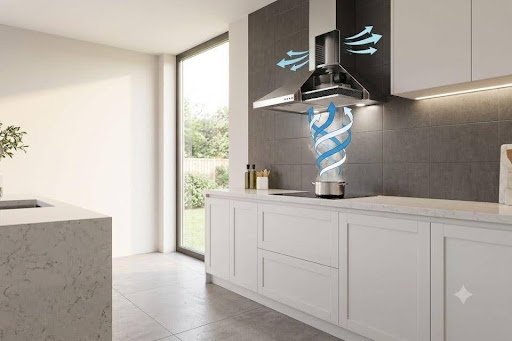
A ductless range hood, also called a ventless or recirculating range hood, is a kitchen ventilation system designed to improve indoor air quality without requiring an external exhaust duct. Instead of pushing cooking fumes outside, the hood draws in air through grease filters that capture airborne oil and food particles.
The air then passes through activated charcoal filters, which help reduce cooking odors before the cleaned air is released back into the kitchen. Because these systems do not require structural modifications, they are a practical option for apartments, condominiums, rental properties, and homes where installing ductwork would be difficult or costly.
How Standard (Ducted) Range Hoods Work
Standard ducted range hoods remove smoke, grease, heat, moisture, and odors by pulling air through filters and exhausting it outdoors using a network of ducts. This design helps keep indoor air cleaner while reducing heat and humidity generated during cooking.
Ducted systems are often preferred in kitchens where frequent frying, grilling, or high-heat cooking is common, but they usually require professional installation and suitable duct routing within the home.
Best Ductless Range Hood vs Standard Models: Key Differences
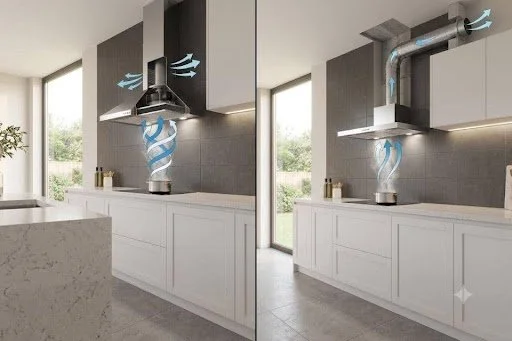
Although both ductless and standard range hoods are designed to improve kitchen air quality, they do so in different ways. A ducted model removes smoke, heat, moisture, and cooking odors by venting them outside the home, while a ductless model filters the air and circulates it back into the kitchen. Neither option is universally better—the right choice depends on your kitchen layout, cooking habits, installation possibilities, and maintenance preferences. Understanding these differences makes it easier to select a ventilation system that suits your everyday needs.
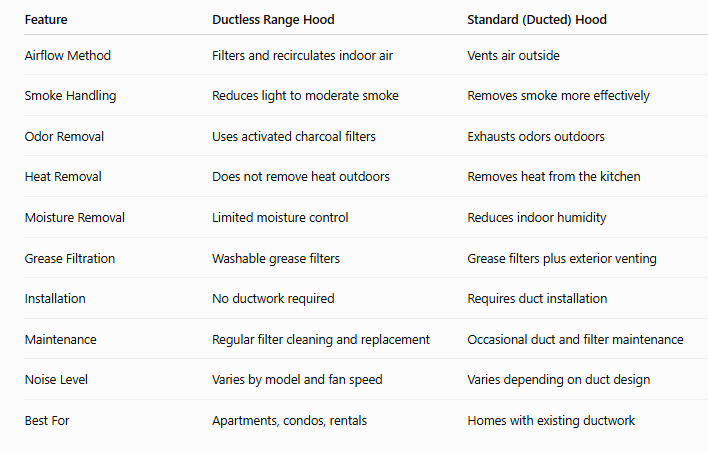
For many homeowners, installation is the biggest deciding factor. A ductless range hood can often be installed with minimal renovation, making it ideal for kitchens where adding ducts is impractical. In contrast, a ducted system usually requires additional planning, construction work, and adequate space for vent routing.
Cooking style also plays an important role. Households that frequently fry or grill may benefit from the stronger ventilation offered by ducted systems, while light to moderate cooking is often well supported by a quality ductless model that is properly maintained.
What Makes the Best Ductless Range Hood Stand Out?
Not all ductless range hoods perform equally. The best models combine efficient filtration with thoughtful design features that improve everyday cooking. High-quality grease filters capture airborne oil before it settles on kitchen surfaces, while activated charcoal filters help reduce lingering cooking odors.
Multiple fan speeds allow users to adjust airflow based on the meal being prepared, and quieter motors make the hood more comfortable to use during longer cooking sessions. Features such as bright LED lighting, durable construction, intuitive controls, and easy-to-remove filters also contribute to better long-term usability and maintenance.
Expert Tip: Replace activated charcoal filters according to the manufacturer's recommended schedule rather than waiting until odors become noticeable. Fresh filters help maintain better airflow, improve odor reduction, and keep a ductless range hood performing consistently over time.
Advantages of Choosing a Ductless Range Hood
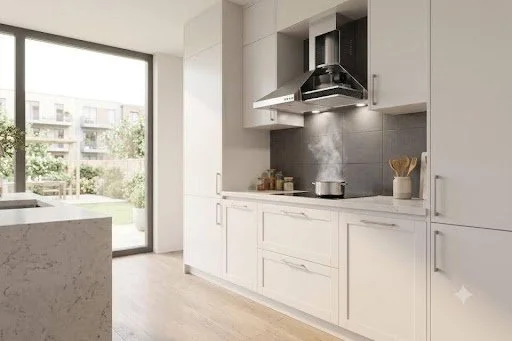
A ductless range hood offers several practical advantages, particularly for homes where installing exterior ductwork is difficult or expensive. Because it recirculates filtered air, installation is generally faster and less disruptive than a ducted system, making it a popular choice for apartments, condominiums, rental properties, and older homes.
Many homeowners also appreciate the flexibility to upgrade their kitchen ventilation without major structural changes. Modern ductless models often feature sleek designs, energy-efficient LED lighting, and multiple fan speeds that improve everyday convenience. When the filters are cleaned and replaced as recommended, these systems can help reduce grease buildup and cooking odors, contributing to a cleaner and more comfortable kitchen environment.
Potential Limitations to Understand
While ductless range hoods provide a convenient solution, they also have limitations that are important to consider. Unlike ducted models, they do not remove heat or moisture from the kitchen because the filtered air is returned indoors. Their ability to reduce odors depends largely on the condition of the activated charcoal filters, which require periodic replacement.
Homes where heavy frying, grilling, or wok cooking is common may find that a ducted system offers stronger ventilation. Understanding these trade-offs allows homeowners to choose a solution that matches both their cooking habits and the layout of their kitchen.
Who Should Choose a Ductless Range Hood?
A ductless range hood is often an excellent option for people who need effective ventilation without extensive renovations. Apartment and condo owners, renters, and homeowners with older properties can benefit from its straightforward installation. It also suits smaller kitchens where adding ductwork may not be practical or cost-effective.
For households that mainly prepare everyday meals, boil, bake, or sauté foods rather than frequently cooking with high heat, a well-maintained ductless system can provide dependable performance while keeping installation costs relatively low.
Buying Tips Before Choosing the Best Ductless Range Hood
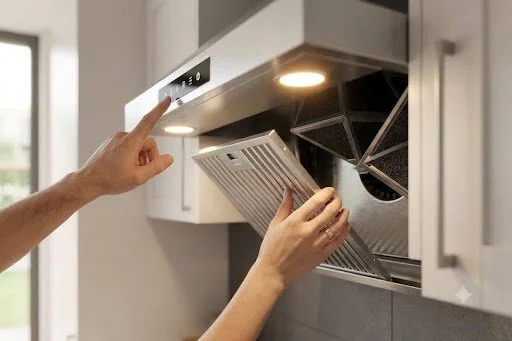
Before selecting the best ductless range hood, compare more than appearance alone. Choose a model that matches your cooktop width, offers an appropriate airflow rating (CFM), and includes high-quality grease and activated charcoal filters. Also consider fan noise, lighting quality, filter replacement costs, ease of maintenance, and warranty coverage.
If you're planning a complete kitchen upgrade, it can also be helpful to coordinate ventilation with other appliances, such as the Ciarra Nosh Oven, to create a functional and well-balanced cooking space.
Quick Buying Checklist
Match the hood width to your cooktop.
Choose an appropriate CFM rating.
Look for washable grease filters.
Check charcoal filter replacement availability.
Compare noise levels at different fan speeds.
Select bright, energy-efficient LED lighting.
Choose controls that are simple to operate.
Review the warranty and long-term maintenance requirements.
Common Mistakes When Choosing a Ductless Range Hood
One of the most common mistakes is choosing a range hood based solely on price without considering airflow, filter quality, or long-term maintenance. Buyers also sometimes select a hood that is too small for their cooktop, reducing its ability to capture smoke and grease effectively.
Another overlooked factor is the ongoing cost of replacing activated charcoal filters. Ignoring these details can lead to disappointing performance, even if the hood is installed correctly. Comparing specifications, maintenance requirements, and kitchen size before purchasing can help you avoid costly mistakes.
How to Keep a Ductless Range Hood Performing Well
Regular maintenance is the key to consistent performance. Wash grease filters according to the manufacturer's recommendations to prevent grease buildup that can restrict airflow. Replace activated charcoal filters on schedule so they continue reducing cooking odors effectively.
Wipe the hood's exterior and air intake areas to remove accumulated grease and dust, and occasionally check that the fan operates smoothly. These simple habits can extend the hood's lifespan while helping maintain cleaner kitchen air.
Common Myths About Ductless Range Hoods
Many people believe ductless range hoods do not work, but a properly maintained model can effectively reduce grease particles and everyday cooking odors. Another myth is that they are suitable only for apartments, when they can also be practical in older homes or kitchens where duct installation is difficult.
Some homeowners assume charcoal filters last indefinitely, yet they require regular replacement to remain effective. Others expect any range hood to eliminate every trace of smoke instantly, but performance always depends on cooking style, airflow, and proper maintenance.
Final Thoughts
Choosing between a ductless and a standard range hood depends on your kitchen layout, cooking habits, budget, and installation options rather than a single "best" solution. By understanding how each system works, comparing their strengths and limitations, and maintaining the filters properly, you can improve kitchen air quality and everyday cooking comfort.
If you're researching ventilation options for a future kitchen upgrade, Ciarra Appliances is one of several brands worth exploring alongside others to find a solution that best fits your home's needs.
FAQ
1. Is a ductless range hood as effective as a ducted range hood?
A ductless range hood can effectively reduce grease and cooking odors when equipped with quality filters and maintained properly. However, a ducted range hood generally provides stronger ventilation because it exhausts smoke, heat, and moisture outside the home.
2. How often should charcoal filters be replaced in a ductless range hood?
Most manufacturers recommend replacing activated charcoal filters every three to six months, depending on cooking frequency and the specific model. Homes that cook frequently or prepare fried foods may require more frequent filter changes.
3. Can a ductless range hood remove cooking odors completely?
A ductless range hood can significantly reduce everyday cooking odors by using activated charcoal filters, but it may not eliminate every odor. Performance depends on filter quality, airflow, and regular maintenance.
4. Who should choose a ductless range hood instead of a ducted model?
A ductless range hood is often the best choice for apartments, condos, rental properties, and older homes where installing exterior ductwork is difficult or expensive. It is also a practical option for kitchens with moderate cooking needs.
5. What features should I look for in the best ductless range hood?
Look for a model with high-quality grease and charcoal filters, an appropriate CFM rating, multiple fan speeds, quiet operation, LED lighting, durable construction, simple controls, and easy-to-find replacement filters.
HOW DO YOU FEEL ABOUT FASHION?
COMMENT OR TAKE OUR PAGE READER SURVEY
Featured




A comfortable home should offer more than a place to sleep and eat.