
Beyond the Trend Cycle: DSF Antique Jewelry on Vintage Fine Jewelry and Modern Style
PAGE
By PAGE Editor
From Renaissance rings and Art Deco cufflinks to signed designer pieces, jewelry from earlier eras is finding an easy place in contemporary style.
Fashion lives in refresh mode. New collections arrive, the feed moves on and suddenly last month’s obsession already feels overexposed. Yet the pieces that give an outfit real character are often the ones that have been here much longer.
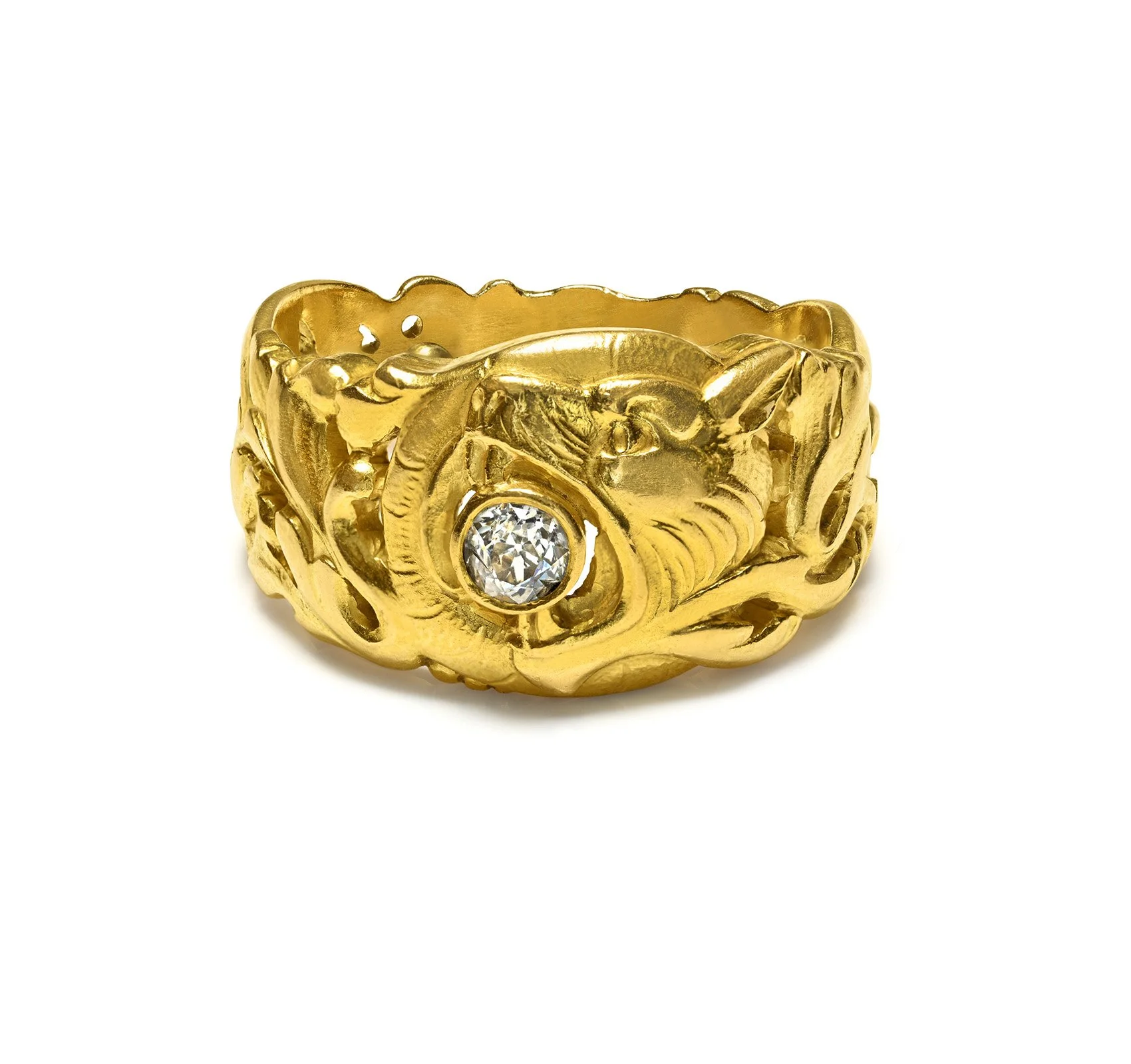
A hand-worked gold ring, a pair of geometric cufflinks or an old diamond cut carries something a newly manufactured accessory cannot reproduce on demand: time. Not nostalgia for its own sake, but evidence of another eye, another hand and another way of making.
That is why vintage and antique fine jewelry feels especially relevant now. It does not ask the wardrobe to travel backward. It simply brings another layer into the present.
At DSF Antique Jewelry, the collection moves across centuries—from original Renaissance jewels and Victorian objects to Art Deco designs, signed pieces and selected contemporary jewelry. Seen together, they make one point very clearly: great jewelry does not belong to a single period or a single way of dressing.
Style the object, not the date
Wearing antique jewelry does not require recreating the era that produced it. In fact, the most natural combinations often come from a little contrast.
A Renaissance ring can sit against a black cashmere sleeve, a crisp white cuff or faded denim. Art Deco cufflinks make sense with relaxed tailoring and an oversized shirt rather than a rigid formal uniform. A Victorian stick pin can move from a cravat to a jacket lapel, a scarf or a carefully folded ribbon.
The idea is not to create a historical costume. One older piece, placed within a clean modern look, can provide all the detail an outfit needs.
The same principle works with signed designer jewelry. Diamond chandelier earrings do not have to wait for a formal gown; they can sharpen a white shirt or bring movement to minimal black knitwear. A substantial gold dome ring can sit comfortably beside denim, soft tailoring or an otherwise restrained evening look.
Personal style becomes more interesting when everything does not come from the same decade—or follow the same rules.
Small jewelry, strong point of view
Some of the most expressive vintage jewelry was originally designed on a surprisingly small scale. Cufflinks, stick pins, dress sets and compact brooches gave jewelers only a few centimeters in which to work, yet those spaces could hold engraving, enamel, miniature painting, unusual gemstones and complex mechanical details.
A pair of Art Deco platinum cufflinks set with multicolored sapphires and diamonds can read almost like a tiny geometric painting. Reverse-crystal cufflinks may hold hand-painted animals beneath carved rock crystal. A stick pin might contain an old mine-cut diamond, an intaglio or a mythological figure rendered in gold.
Historically, many of these objects were categorized as men’s jewelry. Contemporary style does not need to observe those boundaries quite so closely. Cufflinks, pins and dress jewels can be selected for their design rather than the gender originally assigned to them.
The DSF collector guide to antique cufflinks and stick pins explores how these pieces developed between the Victorian era and the mid-20th century. Their appeal today lies partly in their versatility, but also in the intimacy of their details. They reward a closer look.
A famous name is only one part of the story
A Cartier, Bulgari or Tiffany & Co. signature may provide history, context and an established design language. For collectors, signatures, serial numbers, maker’s marks and original documentation can all be important.
But a recognizable name is not the only route to collectible fine jewelry.
An unsigned jewel may reveal exceptional goldwork, unusual proportions, an imaginative gemstone arrangement or a mechanism that could only have been produced by a highly skilled workshop. Sometimes the maker has been lost while the quality remains completely visible.
Looking closely matters. How does the reverse look? Are the settings carefully finished? Does a clasp move as it should? Are the gemstones appropriate to the period? Has the piece retained its original proportions, or has it been heavily altered?
Condition is not the same as perfection. A jewel that has survived for a century or more will often show signs of having been worn. The question is whether those signs belong naturally to its history or interfere with its design and function.
This slower way of looking feels particularly useful in a culture of rapid scrolling. The object asks for more than an instant reaction.
Conscious style without the sermon
Vintage jewelry should not be treated as an automatic sustainability claim. Age alone does not explain how an object was originally sourced or produced.
What vintage and estate jewelry can offer, however, is continued use. These pieces already exist. Preserving, repairing and wearing them allows well-made objects to remain in circulation rather than being forgotten or replaced simply because a new season has arrived.
Fine jewelry is particularly suited to this kind of long life. Rings can sometimes be resized. Clasps and fittings can be maintained. A brooch can move from a coat to a jacket. A jewel originally chosen for an evening wardrobe can be restyled decades later in a completely different context.
Longevity becomes practical when an object is not only admired but actually worn.
Collect for the wardrobe you have
The best vintage-jewelry purchase is not necessarily the rarest piece in the room or the one carrying the most recognizable signature. It is the piece that brings together quality, condition and a genuine connection with the person wearing it.
Consider how it will live. Will the ring work with clothing already in the wardrobe? Is the brooch comfortable on the fabrics you wear? Can the earrings move between daytime tailoring and an evening look? Does the piece feel personal rather than simply impressive?
Collecting does not have to begin with a grand strategy. It can begin with one object that changes the mood of familiar clothes.
Great style rarely comes from one decade. It happens when a centuries-old ring meets a modern shirt, when an Art Deco cufflink catches the light beside denim, or when a vintage jewel gives a simple silhouette an unexpected point of view.
The jewelry does not need to imitate the present. It only needs a wearer who knows how to make it present.
HOW DO YOU FEEL ABOUT FASHION?
COMMENT OR TAKE OUR PAGE READER SURVEY
Featured





From Renaissance rings and Art Deco cufflinks to signed designer pieces, jewelry from earlier eras is finding an easy place in contemporary style.