
Best Window Treatments for Kitchens That Balance Privacy and Natural Light
PAGE
By PAGE Editor
A kitchen window has to do more than brighten the room. It may sit above a sink, face a sidewalk, catch strong afternoon sun, or overlook a neighbor’s yard. That makes the right window treatment less about decoration alone and more about managing daily life.
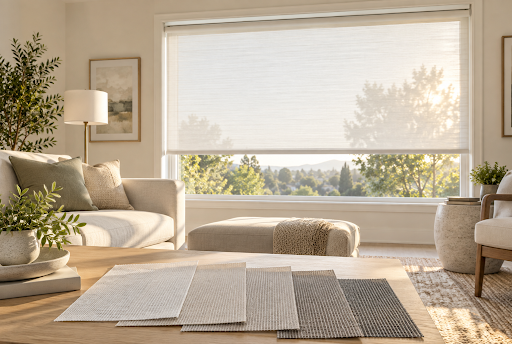
For kitchens that feel dim with heavier coverings, light filtering roller shades can soften direct sunlight without shutting the room off from daylight. Their flat profile also works well above counters and sinks, where bulky fabric can feel inconvenient. The key is choosing coverage for the view you have: a street-facing window needs something different from a window facing a private backyard.
Start With the View Outside Your Kitchen
Before choosing a style, stand at the sink and look outward. Can someone on the sidewalk see directly into the room? Does a neighboring house line up with your breakfast table? Or does the window face a private yard?
Street-level kitchens often benefit from treatments that protect the lower or full portion of the glass while still allowing daylight in. Café curtains work well when the privacy problem is mainly at eye level. Adjustable shades are more flexible when the view changes through the day or when interior lights make the kitchen more visible after sunset.
The goal is not to block the window. It is to cover only as much as the setting requires.
Choose Light Control for the Way You Use the Room
Morning light over a breakfast nook can be pleasant. Late-afternoon sun hitting a prep counter can be harder to live with. A west-facing kitchen may need glare reduction during dinner prep, while a north-facing room often benefits from keeping as much daylight as possible.
This is where roller shades fit naturally into busy kitchens. Light-filtering fabric can soften bright sun while keeping the room visually open. Home cooks using recipe tablets, parents helping with homework at the island, and people working from the kitchen table may appreciate less glare without the cave-like feeling of blackout coverage.
For hard-to-reach windows behind deep counters, motorized operation can also make adjustments easier.
Use Two Layers When Day and Night Needs Differ
Some kitchens need opposite things depending on the hour. During the day, you may want filtered light and an open feel. After dark, especially in homes close to neighbors or busy streets, stronger coverage can matter more.
That is where double blinds can make sense. A dual-layer setup lets you use a light-filtering layer while the kitchen is active during the day, then lower a darker layer when privacy becomes the priority. This is especially useful in open-plan kitchens where the same windows serve cooking, dining, and evening entertaining.
The flexibility also suits households with different schedules. One person may want a bright breakfast space at 7 a.m., while another wants a more enclosed room for dinner.
Match the Material to Mess, Moisture, and Reach
A beautiful fabric is not automatically a good kitchen fabric. Windows near a sink deal with splashes, and treatments near cooking areas can collect grease or odors. Smooth, simple surfaces are usually easier to maintain than deep folds or heavy drapery in the busiest part of the room.
Think about reach, too. A shade above a sink should raise cleanly out of the way. A treatment beside a breakfast banquette can be softer because it sits farther from water and cooking residue. Families with young children may also prefer cordless or motorized controls to avoid dangling hardware.
Placement should drive material choice, not just the color of the cabinets.
Let the Window Treatment Support the Kitchen Style
Privacy and light control matter first, but the treatment should still belong in the room. Flat roller shades suit modern kitchens because they disappear neatly when raised. Café curtains add softness to cottage, farmhouse, or traditional spaces. Woven textures bring warmth to kitchens dominated by stone, tile, stainless steel, or painted cabinetry.
A quiet neutral can keep attention on a garden view, while subtle texture can prevent an all-white kitchen from feeling sterile. In a kitchen with patterned tile or strong cabinet color, a simpler treatment gives those finishes room to stand out. For breakfast nooks away from the cooking zone, softer textiles can introduce pattern and warmth without creating the same cleaning concerns as fabric placed beside a sink or range.
HOW DO YOU FEEL ABOUT FASHION?
COMMENT OR TAKE OUR PAGE READER SURVEY
Featured



A comfortable home should offer more than a place to sleep and eat.