
Chewing Gum and the Modern Breath Ritual: A Guide for Design-Conscious, Ingredient-Literate Buyers
PAGE
By PAGE Editor
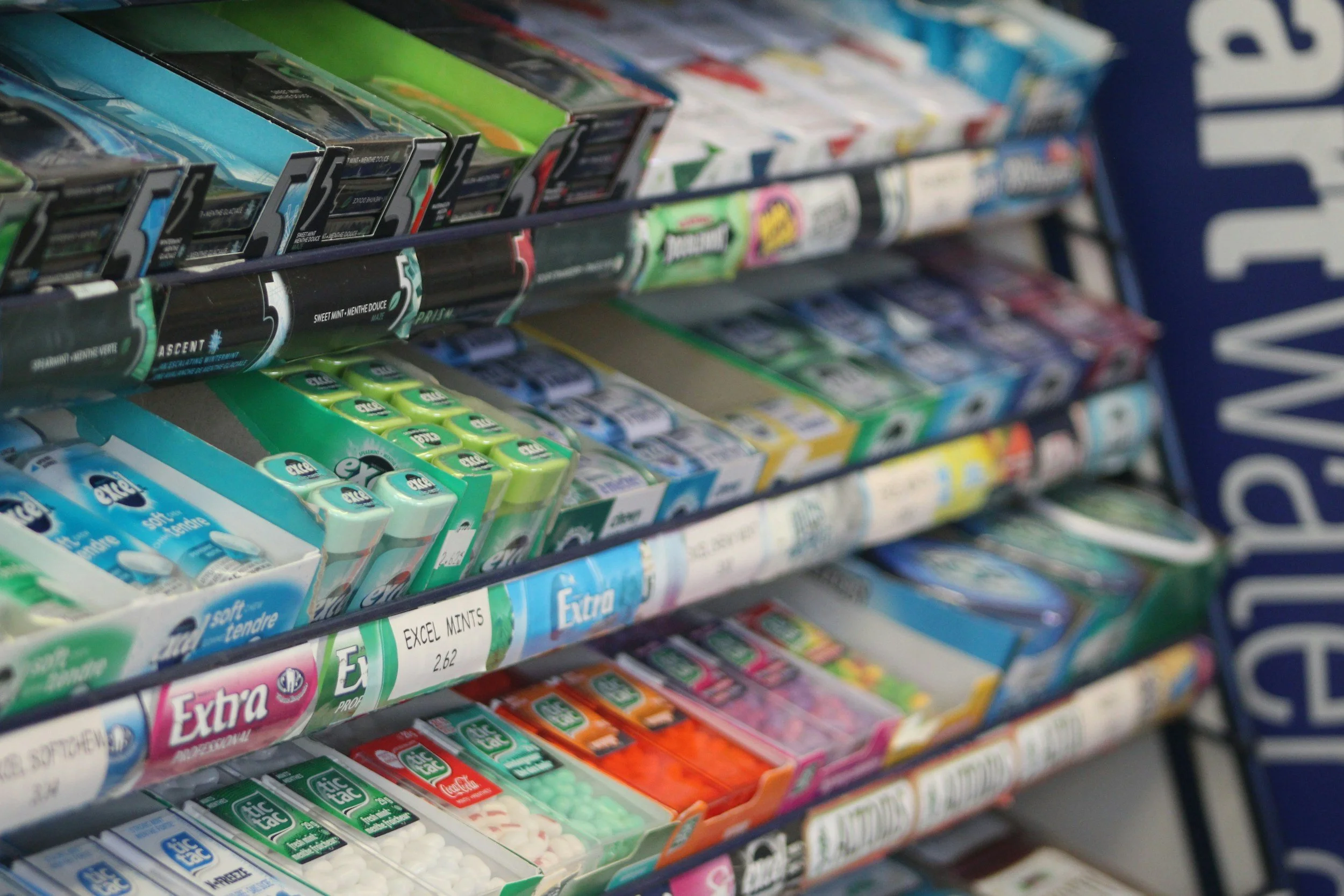
There's a jar of gum sitting on my desk right now, and it has outlasted three desk lamps, two standing plants, and one very expensive coffee subscription. That's the strange thing about gum. It's an afterthought purchase that becomes a daily habit, which is exactly why it deserves more thought than most people give it.
Here's what you'll get from this guide: a clear way to read a gum label without a nutrition degree, a styling system for making a gum jar look intentional instead of accidental, and a simple rule set for keeping gum where you'll actually reach for it. If you've ever bought gum on impulse at a checkout counter and then watched it turn into a rock in your bag, this is the fix. The short version is that a well-chosen jar of xylitol chewing gum is a daily-use object, and daily-use objects earn a spot on your desk or in your rotation only when the format is right. The 100-count jar format is the one I keep coming back to because it solves the exact problem most people don't notice until they've lived with it.
Why a Jar Beats a Pack: The Case for Buying Bulk Gum You Keep
Small packs are great in a jacket pocket. They're a disaster on a desk. The foil sleeve gets crushed, the gum dries out, and eventually you're digging through a drawer at 3 p.m. looking like you lost something.
A jar changes the behavior. It's visible, it has a lid, and it reads as furniture rather than snack. That visual cue is the whole trick: if the gum is in front of you, you use it before you need it, which is the entire point of a routine. This is the kind of small design decision that quietly improves your day and nobody ever credits.
The format also matters for portioning. A jar makes it easy to take two pieces and stop, because you can see how many are left. Small packs invite the opposite behavior: eat the whole sleeve, then feel weird about it.
Reading the Label Without a Chemistry Lecture
You don't need to memorize a label. You need to know which line to look at first and which lines are noise.
Start with the first ingredient. Ingredient lists run in order of quantity, and on a gum product, the sweetener almost always leads. If you're comparing products, compare that first line, then compare the gum base. Everything else, the flavors and the coatings, is basically the finish on a piece of furniture. It matters to the experience, not to the function.
And here's the regulatory context that actually helps you: the FDA sets the rules for how ingredients get listed and what claims are permitted on packaging, so a correctly labeled product gives you real information to compare. You can check general food labeling guidance through the Food and Drug Administration if you want to understand what the label is required to disclose. I'd pick a product with a short ingredient list over one with a long one every single time, because shorter lists are easier to audit and easier to trust.
One more thing worth saying plainly: xylitol is not interchangeable with sugar in large quantities, and the product page for the jar I keep makes that clear. Read the label on that front before you build a habit around it.
The Three-P Desk Ritual: A Framework You Can Actually Run
Most gum advice stops at "pick a flavor." That's useless. Here's a small framework I use, and I've stuck with it because it survives contact with a real week.
Placement, portion, and pace
Placement: One jar, one location. Desk, entryway table, or car console, never all three. Gum in too many places becomes invisible.
Portion: Two pieces maximum per session. The jar is a scale, so use it as one.
Pace: Reach for it after coffee, after lunch, and before a meeting, not constantly. Three touchpoints a day is a routine. Twelve is a nervous habit.
I'd skip the mint tin in your bag entirely and keep the bag out of the picture. The bag-gum habit is where most people's product turns into dust, and the desk jar is where the habit actually works.
Desk Styling for People Who Own Exactly One Pretty Thing
A gum jar can be a design object or a clutter object, and the difference is where you put it relative to everything else. My rule: give it its own zone. An empty corner, a small tray, or the edge of a notebook. Objects that sit alone read as intentional. Objects that sit in a pile read as mess.
Here's the scenario I keep coming back to. A friend of mine works in a Brooklyn styling studio, and the desk is a rotating museum of small objects: fabric swatches, brass clips, three camera batteries, a candle. The one thing that stays fixed is a jar of gum near the door. It started as a functional thing and quietly became part of the room's vocabulary, because it was placed deliberately rather than dropped.
Two more details that matter. First, light. A clear jar of anything looks better near natural light because the contents pick up texture instead of reading as gray shapes. Second, height. Give the jar something taller and something shorter nearby, and it'll look composed. Designers call this the three-height rule, and it works on a desk with a total of three objects.
If you're photographing your setup for social, the same rule applies. A gum jar next to a coffee cup and a notebook is a story. A gum jar in the middle of a crowded desk is a mess. And if you're sharing a review with a brand you mention, the Federal Trade Commission's guidance on endorsements and disclosures is worth knowing, since the rules around how you present things online are stricter than they used to be. You can read the basics at the Federal Trade Commission.
Storage, Shelf Life, and What Goes Wrong Quietly
Gum doesn't spoil fast, but it does degrade. Moisture is the enemy. Heat is the accomplice. A jar on a sunny windowsill will end up soft and tacky within days, and you'll blame the product instead of the placement.
Keep the jar out of direct sun and away from a hot car. Once the lid is off, close it the same day. Sugar-free products absorb humidity around them, which is why bulk jars hold up better than loose sleeves, and why the jar format itself is a storage decision, not just a packaging one.
Want a baseline on shelf life and what storage conditions actually do to food products? The US Department of Agriculture publishes practical guidance on food storage and handling, and the general principle applies here too: cool, dry, and sealed. I'd trust a product in a jar over one in a paper sleeve every time, no contest.
The Small Etiquette Rules Nobody Teaches You
Gum is social. Most people get this wrong once and never quite recover.
Offer before you take. If you're in a shared office or a meeting, hold the jar out. It costs nothing and it turns a personal habit into a moment of small generosity. Don't chew and speak when the room is small. And wrap and dispose, always, because a stray piece under a desk is a reputation problem.
That's three rules, and they cover almost every awkward gum moment I've seen in a real office. The habit is better when it's shared, and gum is one of the few cheap things you can share that everyone accepts.
What to Do Next
You've got the full picture. Choose a jar over a pack, read the first ingredient before the flavor, place it once, and reach for it three times a day. Keep it cool and dry, and offer it around.
Start with the small decision first: pick your one spot, then pick your flavor, then leave it alone. If you want a starting point, the jar format is the one worth trying before you invest in anything fancier. Which corner of your desk is getting the jar?
HOW DO YOU FEEL ABOUT FASHION?
COMMENT OR TAKE OUR PAGE READER SURVEY
Featured



Sixteen-year-old creator Embreigh Courtlyn's new tween fashion line, the Embreigh Edit, generated more than $2.2 million in sales in its first two weeks at Target, according to the brand, which helps explain why fashion creators are treating an existing audience, as opposed to the product itself, as the real launch asset when launching a boutique brand.