
How Helical Pile Systems Support Smarter, Sustainable Builds
PAGE
By PAGE Editor
Last year, I reviewed a foundation plan for a modular school on reactive clay that swells and shrinks. The neighbours were close, and the client wanted proof of lower embodied carbon, the emissions created before the building opens.
Concrete piers would have meant truck traffic, curing delays, and a spoil problem. We changed to helical piles, the crew finished in two days, and the next trades started straight away.
That choice reflects a bigger shift in 2025. Australian project teams need lower upfront impact, tighter schedules, and clear compliance with AS 2159, and this footing method can meet all three when the ground is right.
Key Takeaways
These systems work best when you need speed, low site disruption, and a clear carbon case.
Lower embodied carbon potential. A UK modular case study found helical piles among the lowest-emission foundation options against strip and pad footings, and you can test savings with the EFFC/DFI Carbon Calculator.
Immediate loading after install. No curing wait means follow-on trades can start the same day, which helps protect the main schedule.
Minimal vibration, noise, and spoil. That makes them a good fit for urban infill, schools, hospitals, and contaminated redevelopment sites.
AS 2159 compliance. The standard explicitly includes steel screw piles and screwing methods for design, construction, and testing.
Soil suitability matters. Coarse gravels, cobbles, and buried obstructions can limit placement, so geotechnical review is essential.
Track the value. A carbon and time ledger helps you record kilograms of CO2e saved and days recovered.
What Screw Piles Are
A screw pile is a steel shaft with welded helical plates that turns into the ground like a large screw.

Installers use a hydraulic torque head to rotate it into place. Installation torque, the turning force needed to advance the pile, is compared with soil shear strength, the ground's resistance to sliding, and checked against site data and testing to confirm capacity.
The appeal is easy to see. Cement production creates about eight percent of global carbon dioxide emissions, Infrastructure Australia has pushed embodied carbon higher up the agenda, and smaller sites leave less room for excavation, spoil, and delay.
Why They Work for Sustainable Builds
The main gains come from lower material use, faster delivery, and a lighter site footprint.
Reduce Carbon and Waste
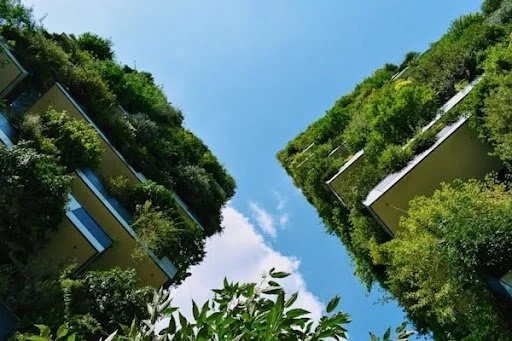
Less concrete, less excavation, and almost no spoil can cut upfront impact. Because piles can be removed with little damage, they also suit temporary works and projects that value reuse. Steel can then be recycled at end of life.
To test the claim, model two footing options with the EFFC/DFI Carbon Calculator. Include transport, plant time, and spoil disposal. In the UK modular case study, helical piles ranked among the lowest-emission options, though Australian results still depend on mix design, logistics, and soil conditions.
Protect the Program
There is no curing wait, so follow-on trades can start as soon as the last pile is cut off. One Australian installer reports output of up to about 120 piles per day per machine, depending on the soil and site access.
Wet weather can still slow a job, but this method usually holds the schedule better than concrete. Set torque windows, book data logging, and lock in cut-off levels before work starts so the handover stays smooth.
Limit Site Impacts
Practice Note 28 points to low vibration and lower construction noise, which matters near schools, hospitals, underground services, and older buildings. Installation also creates very little spoil.
That makes urban infill and contaminated ground strong candidates. For broader context on how low-impact construction methods are reshaping urban development, see our guide on modular construction trends. If the design has high sideways or earthquake loads, raise connection and cap details early, because those forces may need heavier steel or a different solution.
Procurement and Partnering
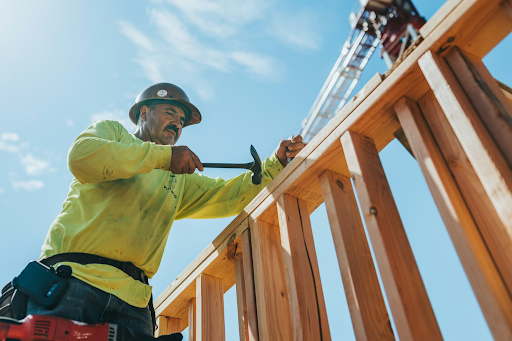
Tender documents should ask for proof, not promises.
When you go to market, ask each bidder for the same technical and delivery information.
AS 2159 design calculations with a stated geotechnical basis
An inspection and test plan with torque logging and acceptance criteria
Sample as-built drawings and a certification pack
A carbon line item using EFFC/DFI outputs for option comparison
A program that shows immediate follow-on works after installation
Durability assumptions, corrosion allowances, and maintenance guidance
For Australian projects that need fast, standards-compliant installs with clear QA handover, it helps to speak with a specialist early so design assumptions, site access, torque records, testing needs, and certification requirements are aligned before procurement closes. In that situation, talk to Blade Pile, an experienced local delivery partner and screw piles company, about design-to-install delivery for urban infill and wet-ground sites.
Where They Fit Best
The best projects combine workable soil, tight access, and clear value from faster installation.
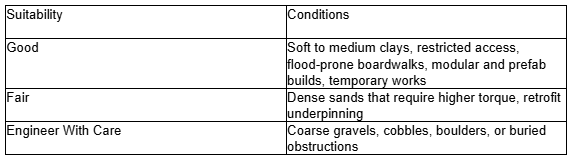
Redevelopment sites and modular projects tend to gain the most. Almost no spoil reduces disposal headaches, and immediate loading helps when factory-built units arrive to a fixed date.
Engineering and Compliance in Australia
Good results depend on geotechnical data, proper design, and disciplined records.
AS 2159:2009 sets the minimum rules for design, construction, and testing of piled footings in Australia, and it explicitly includes steel screw piles and screwing methods.
Site investigation must extend below the planned pile depth. Torque data can indicate soil strength and help estimate ultimate capacity, but it does not replace proof testing when the design calls for it. Log torque, depth, angle, and any point where the pile stops before target depth.
Durability also needs attention. Corrosion allowances, coatings, and concrete infill may be needed to achieve design life. Coarse gravels and buried obstructions can affect position and load transfer into the cap, so those risks should sit in the geotechnical report before installation day.
How to Measure Impact
A simple ledger turns sustainability claims into numbers a client can check.
Step 1: Build a carbon baseline for each footing option with the EFFC/DFI Calculator. Include materials, plant, transport, and spoil disposal.
Step 2: Calculate the schedule difference. Count curing days removed and translate them into site overhead savings.
Step 3: Record site disturbance. Track spoil loads, concrete deliveries, steel deliveries, and total truck movements.
Step 4: Summarise the result on one page for client sign-off.
This document makes tender reviews easier and gives you a repeatable template for future work.
Conclusion
When the soil profile suits it, this method gives you a faster and cleaner footing strategy.
It can shorten the main schedule, reduce truck movements, and provide a measured route to lower upfront carbon within the AS 2159 framework. Run a two-option carbon and time check early, then buy against verified outcomes instead of assumptions.
FAQs
These are the questions clients raise first, before design is locked in or tenders go out.
Do Helical Piles Meet Australian Requirements?
Yes. AS 2159:2009 covers this steel pile type and its installation method. Your designer should provide compliant calculations, and the installer should supply torque logs, depth records, and test results when required.
Can They Be Installed in Wet Conditions or High Water Tables?
Yes, if the working platform is safe, the rig can access the position, and the ground still allows the required torque. Those checks matter more than the weather label on its own.
What Ground Conditions Cause Problems?
Coarse gravels, cobbles, boulders, and buried obstructions can lead to refusal or make precise placement harder. Raise those risks early with the geotechnical engineer so you can assess pre-drilling or alternate footing options.
How Should You Compare Them With Concrete Piers?
Compare the full installed cost, not just the unit rate. Include lost curing time, spoil disposal, truck movements, and the carbon difference so the decision reflects the whole job.
HOW DO YOU FEEL ABOUT FASHION?
COMMENT OR TAKE OUR PAGE READER SURVEY
Featured



When parents evaluate physical learning kits or STEM toys on an ecommerce storefront, they make purchase decisions under acute time pressure and cognitive overload.