
How to Build a Streetwear Distribution Network From the Ground Up

PAGE
By PAGE Editor
What if your next streetwear drop sells out before your operation is ready?
That sounds like a nice problem until cartons are scattered across the floor, customers are asking where their orders are, and a retailer wants stock you’ve already allocated elsewhere.
The U.S. Census Bureau estimates that e-commerce sales reached $1.23 trillion in 2025, accounting for 16.4% of total retail sales. For a growing label, distribution is no longer background plumbing. It’s part of the customer experience.
Here's how to build a system that can keep up without becoming unnecessarily complicated.
1. Start With the Market, Not the Warehouse
A warehouse can look like progress. Rows of shelves, scanners beeping, boxes everywhere. But signing a lease before understanding where your customers are is an easy way to build an expensive solution to the wrong problem.
Start with demand. Map your biggest customer locations, sales channels, and likely order volumes. A label selling mostly around New York might need a completely different setup from one shipping regularly to London, Lagos, and Tokyo.
Think about geography first, infrastructure second. The network should follow the customer.
2. Define Your Distribution Mix
Not every streetwear brand needs a distributor, multiple warehouses, and a dozen retail accounts. In fact, starting too big can make inventory harder to control.
A simple mix could include direct-to-consumer sales, selected boutiques, and occasional pop-ups. As the label grows, distributors or regional fulfillment partners can be added where they genuinely solve a problem.
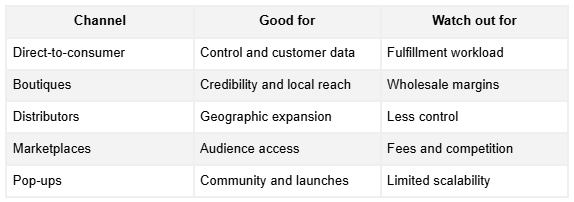
The trick is knowing when to add another lane. More channels aren't automatically better.
3. Build a Retailer and Partner Pipeline
Finding retail partners is less about collecting contacts and more about spotting fit. Walk into the store. Look at the brands on the racks. Notice the customers. Does your collection belong there?
A neighborhood boutique with a loyal following may outperform a much larger account where your clothes disappear among hundreds of labels.
Research tools can make the prospecting side less tedious.
Platforms such as GTM AI connect AI tools with ZoomInfo's B2B intelligence, including company data, contact information, and buying signals, which can help structure account research rather than relying entirely on manual prospecting.
The human part still matters, though. A tool can identify a retailer; it can't tell you whether your collection belongs on its racks.
4. Make the Wholesale Offer Easy to Understand
A buyer shouldn't have to dig through old emails to find your wholesale price.
Put the essentials in one place: pricing, minimum order quantities, size runs, payment terms, delivery windows, and product information. Keep the line sheet clean, too. Buyers are busy people, and confusion is an easy reason to move on.
Say you approach a boutique in Chicago with 12 styles. If the owner can understand the offer in five minutes, you've already made the relationship easier.
Small advantage. Big difference.
5. Choose Fulfillment Partners That Can Handle Your Rhythm
Streetwear demand doesn't always arrive gradually. A collaboration can sit quietly for weeks and then explode after a single post.
Ask fulfillment providers how they handle peak periods, returns, international orders, storage, and pick-and-pack costs. You want capacity without paying for an enormous operation you'll barely use.
Returns deserve particular attention. Ask yourself: where do returned hoodies go? Who checks them? How quickly do sellable items return to inventory? Those details matter.
6. Keep Inventory Visible
Nothing ruins a successful drop quite like selling something that isn't actually available.
Your website, warehouse, and wholesale accounts should share the same inventory picture wherever possible. Track stock by size and color, not simply by product. That black medium can disappear while a mountain of XXL remains untouched.
Watch stockouts, too. Repeated shortages are telling you something about demand. Slow-moving products tell you something else, usually about where your cash is sitting.
7. Let the Network Grow With the Brand
Your first distribution setup shouldn't resemble a global sportswear giant. It should resemble your actual business.
Track where orders come from, which retailers reorder, where delays happen, and which products sell through repeatedly. Those numbers will eventually tell you when to change carriers, add storage, or bring in another fulfillment partner.
Growth should create the next version of the network naturally. Don't build tomorrow's infrastructure with today's money.
Final Thoughts: Build the Roads Before the Traffic Arrives
A good distribution network is almost invisible. Customers receive their orders, retailers get their stock, and nobody spends Saturday night hunting for a missing carton.
Start close to the market, keep the channel mix manageable, and make inventory impossible to ignore. Then watch what happens. Demand will change, retailers will surprise you, and one product will probably sell far faster than expected.
That's the fun part. Your network just needs to be ready when it does.
HOW DO YOU FEEL ABOUT FASHION?
COMMENT OR TAKE OUR PAGE READER SURVEY
Featured





Coordinate apartment painting and flooring with a practical plan for dusty work, skirting boards, access, floor protection, and final touch-ups.